
A toolbox can look roomy on the outside and still feel surprisingly cramped once trays, dividers, handles, and bulky tools take over. That is why I prefer looking at actual storage volume instead of trusting labels like “small,” “large,” or “heavy-duty.” So, How Many Cubic Feet Is a Toolbox Organizer?
Most models offer roughly 0.1 to 3.0 cubic feet of storage, while larger rolling systems can reach 5 cubic feet or more. Knowing that number makes it much easier for me to compare organizers, plan garage or truck space, and choose a toolbox that can actually handle my tools without wasting room.
How Many Cubic Feet Is a Toolbox Organizer?
When I compare tool storage for a garage, workshop, truck, or jobsite, cubic footage tells me more than labels such as “small” or “large.” How Many Cubic Feet Is a Toolbox Organizer? A typical toolbox organizer ranges from about 0.1 to 3.0 cubic feet. Small organizer bins may hold 0.1 to 0.3 cubic feet, handheld toolboxes often provide 0.5 to 1.2 cubic feet, and larger rolling modules can reach 2 to 5 cubic feet or more.
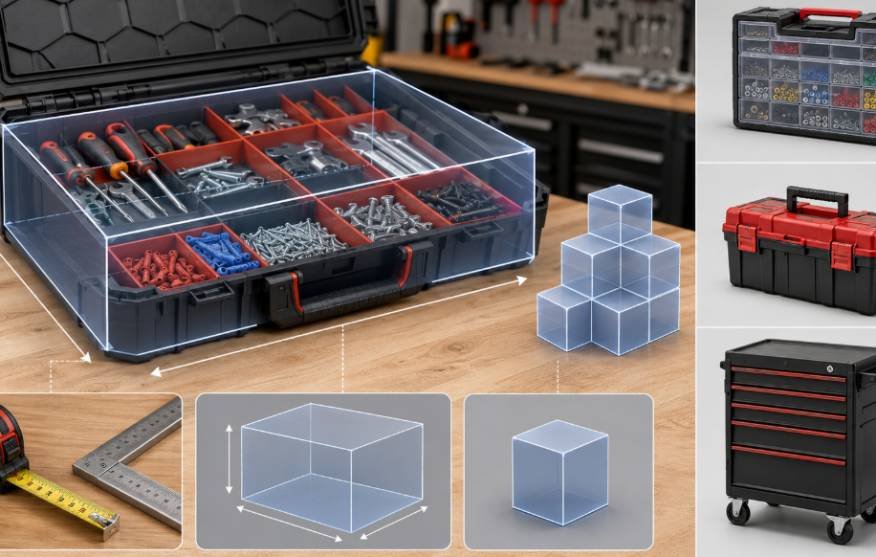
The exact toolbox capacity depends on internal dimensions, trays, dividers, wall thickness, handles, wheels, and drawer hardware. I therefore separate usable storage capacity from exterior volume.
What Is the Average Toolbox Organizer Capacity?
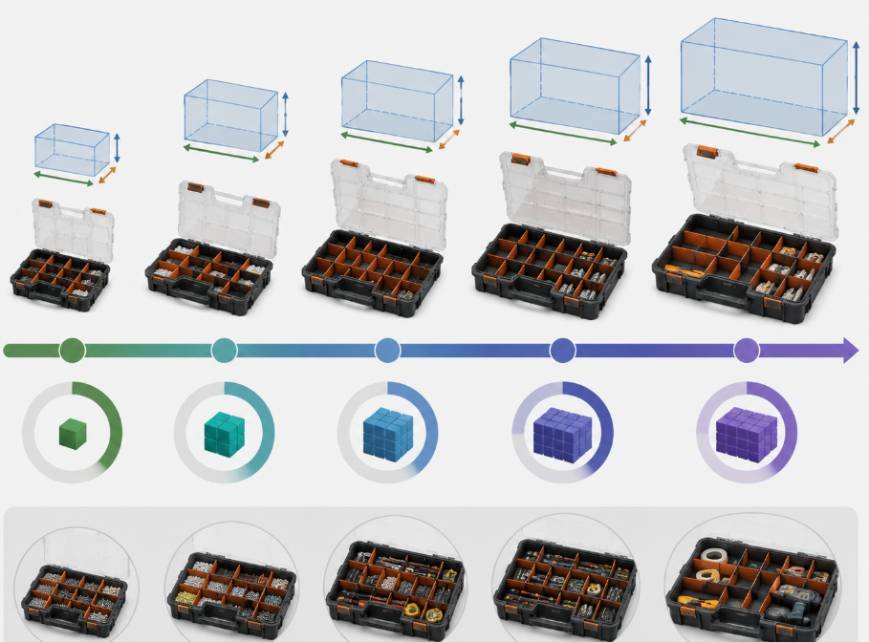
There is no standard tool organizer size. A compact parts organizer needs far less room than a portable toolbox for hand tools, while a rolling tool chest can provide several cubic feet.
| Toolbox Type | Typical Volume |
| Small organizer bin | 0.1–0.3 cu. ft. |
| Handheld toolbox | 0.5–1.2 cu. ft. |
| Large portable toolbox | 1.0–2.5 cu. ft. |
| Modular toolbox | 1.0–3.0 cu. ft. |
| Rolling toolbox | 2.0–5.0+ cu. ft. |
| Full-size tool chest | 5.0–15.0+ cu. ft. |
These are planning ranges, not fixed standards. Trays, thick walls, drawer slides, and wheel housings can reduce usable tool storage volume.
How Do I Calculate Toolbox Organizer Cubic Feet?
If I know the internal toolbox dimensions in inches, I use:
Length × Width × Height ÷ 1,728 = cubic feet
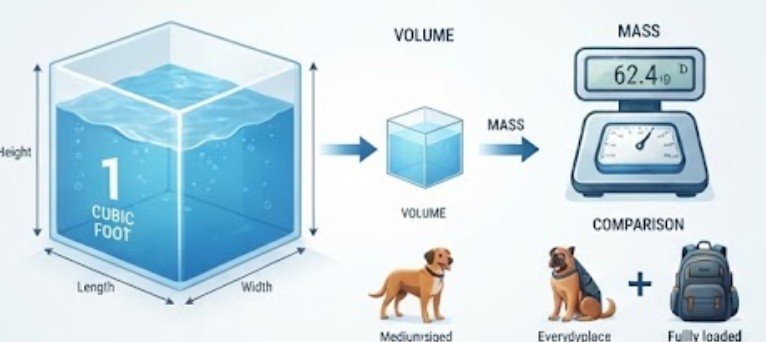
There are 1,728 cubic inches in one cubic foot, so this works as a quick cubic feet calculator.
For example, if a portable toolbox measures 20 inches long, 10 inches wide, and 9 inches high inside, 20 × 10 × 9 equals 1,800 cubic inches. Dividing 1,800 by 1,728 gives about 1.04 cubic feet.
That figure estimates internal capacity. Rounded corners, built-in trays, and dividers can reduce the true usable space.
Should I Measure the Inside or Outside of a Toolbox?
I use interior measurements when I want to know what tools will fit, excluding hinges, latches, molded handles, drawer slides, and structural ribs. Exterior dimensions tell me how much room the box will occupy on a garage shelf, under a workbench, inside a pickup, or in a work van.
Internal measurements estimate toolbox storage capacity; external measurements help with transportation and workspace planning.
When I need a more accurate estimate, I use a calculate cubic feet from measurements tool to compare the available space.
Why Is Usable Toolbox Capacity Smaller Than Exterior Volume?
Most toolboxes are not perfect empty rectangles. Molded walls, reinforced corners, handles, wheels, removable trays, and telescoping hardware reduce interior volume.
Manufacturer specifications also show how widely products vary. Compact systems such as the DEWALT TSTAK organizer can stay well below 1 cubic foot, while deeper Milwaukee PACKOUT boxes may approach or exceed that level depending on the model.
What Size Toolbox Do I Need for Hand Tools and Power Tools?
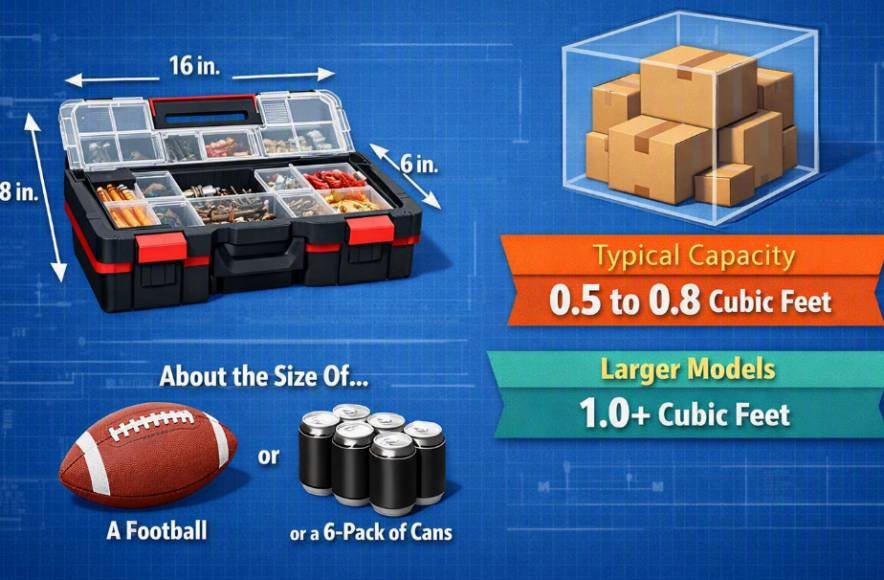
For basic household hand tools, less than 1 cubic foot can work for screwdrivers, pliers, tape measures, utility knives, and common wrenches. If I also store socket sets, hammers, clamps, and specialty tools, roughly 1 to 2 cubic feet gives me more flexibility.
Power tools need more room because drills, impact drivers, batteries, chargers, and saws have bulky shapes. For a small cordless collection, I generally plan for 1 to 2 cubic feet. Larger collections may need a modular or rolling toolbox offering 2 to 5 cubic feet.
Is a Modular Toolbox Better for Storage Capacity?
A modular toolbox lets me separate power tools, hand tools, and fasteners. To estimate total modular toolbox capacity, I calculate each module separately and add the cubic-foot values. This setup works especially well for contractors, electricians, plumbers, mechanics, and remodelers who move tools between vehicles and jobsites.
How Do I Convert Toolbox Liters to Cubic Feet?
Some manufacturers list tool organizer capacity in liters. One cubic foot equals approximately 28.3 liters. A 28-liter toolbox is close to 1 cubic foot, while a 56-liter box is close to 2 cubic feet.
This conversion is particularly useful when I compare imported or internationally sold tool storage systems with US models that provide toolbox dimensions in inches.
What Else Should I Check Before Buying a Toolbox Organizer?
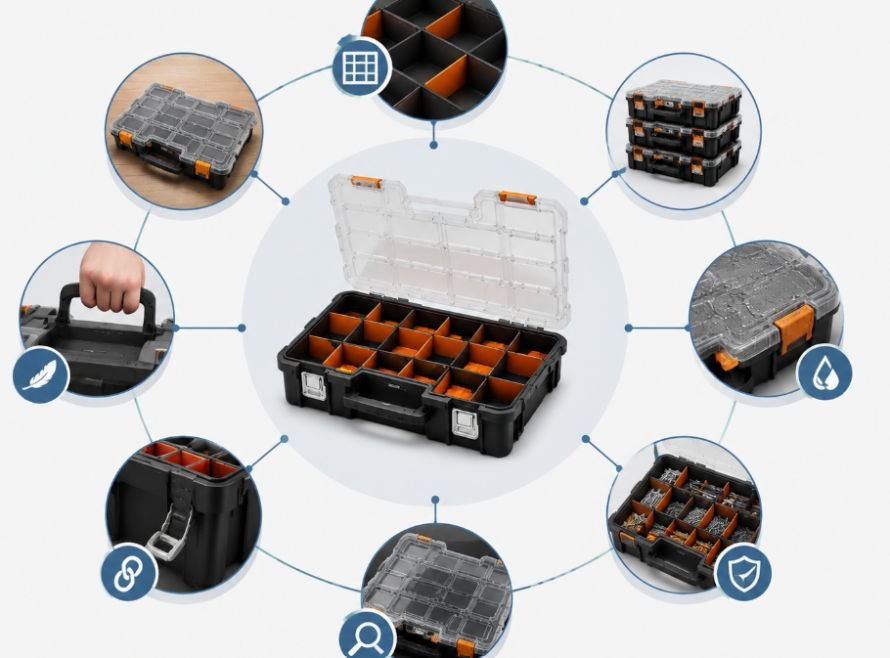
Cubic footage matters, but I also check compartment shape, drawer depth, divider layout, weight capacity, weather resistance, portability, and overall footprint. A shallow organizer may suit sockets and wrenches, while a deeper box may work better for bulky power tools.
I also consider where I plan to use the organizer. A homeowner may prioritize compact garage storage, while a contractor may need a rugged portable toolbox that stacks securely in a pickup or work van. The best toolbox capacity is the one that accommodates my equipment without wasting valuable storage space.
If your organizer is competing with other jobsite or garage equipment for room, my filing cabinet size guide walks through the same interior-vs-exterior math for office and storage furniture.
Frequently Asked Questions
1. How Many Cubic Feet Is a Toolbox Organizer?
Most toolbox organizers hold about 0.1 to 3.0 cubic feet. Small parts bins often stay around 0.1 to 0.3 cubic feet, handheld boxes commonly range from 0.5 to 1.2 cubic feet, and larger rolling modules may provide 2 to 5 cubic feet or more.
2. How Many Cubic Inches Are in One Cubic Foot?
One cubic foot contains 1,728 cubic inches. I divide cubic inches by 1,728 when converting toolbox volume into cubic feet.
3. Should I Use Internal or External Toolbox Dimensions?
I use internal dimensions to estimate usable storage capacity and external dimensions to determine how much shelf, garage, truck, or van space the toolbox will occupy.
4. Is a Tool Chest Larger Than a Toolbox Organizer?
Usually, yes. Portable organizers generally stay under a few cubic feet, while full-size rolling tool chests can reach 5 to 15 cubic feet or more.
Final Takeaway
When I compare toolbox organizer cubic feet, I start with the tools I need to store. Small organizers may require only a fraction of a cubic foot, handheld boxes often stay near 0.5 to 1.2 cubic feet, and modular or rolling systems can provide several cubic feet.
For the most accurate estimate, I measure the usable interior, multiply length by width by height in inches, and divide by 1,728. I then account for trays, dividers, handles, wheels, and other hardware. That helps me choose storage that fits both my tools and the available space in my garage, work truck, or jobsite.

Ryan Mitchell
Ryan Mitchell holds a degree in Civil Engineering and spent over a decade working in construction project estimation, where accurate volume and material calculations were part of his daily work — from concrete pours to landscaping material orders. He founded this site to bring that same precision to everyday calculations, helping DIYers, contractors, and students get fast, accurate cubic footage results without the guesswork. Ryan reviews every calculator and formula on this site for accuracy and writes guides based on real-world measurement scenarios he's encountered on job sites.