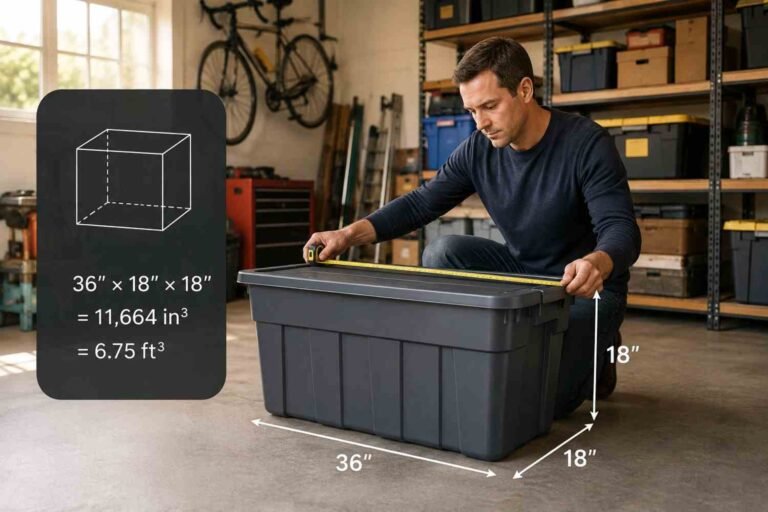

A standard tall kitchen cabinet holds about 42 cubic feet of total volume, but up to 40% of that space goes completely wasted due to poor shelf height and deep, unreachable corners. If you are trying to stretch your grocery budget by buying in bulk, knowing the actual volume of your kitchen storage is just as critical as tracking your monthly spending.
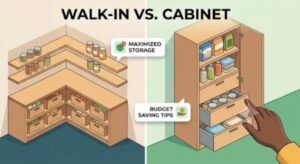
So, how many cubic feet is a pantry? The short answer depends entirely on your layout: a standalone cabinet generally provides 30 to 50 cubic feet, a compact walk-in offers 75 to 100+ cubic feet, and a full-scale walk-in room delivers anywhere from 150 to over 400 cubic feet of storage.
Understanding this spatial math stops you from overbuying food that ends up expiring in hidden corners. When every dollar counts, mastering your storage volume keeps cash in your bank account instead of the trash bin.
Decoding Pantry Dimensions: From Cabinets to Walk-Ins
When evaluating storage space, floor square footage tells only half the story. You live in two dimensions, but your food lives in three. The vertical headroom inside a pantry dramatically changes how much food you can stockpile efficiently.
| Pantry Type | Floor Space (Sq. Ft.) | Total Volume (Cu. Ft.) | Usable Storage Volume |
| Reach-In / Cabinet | 4–6 sq. ft. | 30–50 cu. ft. | 20–35 cu. ft. |
| Small Walk-In | 25 sq. ft. (5 × 5) | 75–100+ cu. ft. | 45–60 cu. ft. |
| Large Walk-In | 30–100 sq. ft. | 150–400+ cu. ft. | 90–250 cu. ft. |
1. Tall Cabinet and Reach-In Pantries
A standard tall pantry tower measures roughly 36 inches wide, 24 inches deep, and 84 inches tall. That math works out to 42 gross cubic feet squeezed into a tiny 6-square-foot footprint. These units are ideal for small apartments or starter homes, but their 24-inch depth can turn into a black hole where canned goods go to hide.
These units are ideal for small apartments or starter homes, but their 24-inch depth can turn into a black hole where canned goods go to hide. If you’re also mapping out storage for pots, pans, and dishware nearby, the cubic-foot capacity of a kitchen cabinet can help you compare gross space with practical usable storage.
2. Small Walk-In Pantries
A compact 5×5-foot walk-in room takes up 25 square feet of floor space. Assuming standard 8-foot ceilings, the open room contains 200 cubic feet of raw room volume. However, because you need physical standing room to move around inside, the actual custom-shelved storage volume lands closer to 75 to 100 cubic feet.
3. Large Walk-In and Butler Pantries
Ranging from 6×5 feet up to a massive 10×10 feet, large walk-in pantries boast 150 to over 400 cubic feet of usable storage. These setups handle bulk items, spare paper goods, and small kitchen appliances easily. The trick is avoiding over-cluttering just because you have room to spare.
The Hidden Storage Loss: Gross Volume vs. Usable Volume

Architects calculate gross cubic footage by multiplying overall height, width, and depth. But in real life, you cannot fill a room from floor to ceiling with loose dry beans.
The U.S. Department of Agriculture (USDA) emphasizes that proper food storage requires clear air circulation, easy physical access, and visible expiration dates to prevent food waste. When shelf gaps are too wide, or when deep shelves force items to stack behind one another, your usable volume plummets.
For instance, a 24-inch-deep shelf stacked with 3-inch soup cans leaves 21 inches of empty space in front—or forces you to push items to the back where they get forgotten. According to home management guidelines, clean and disinfect your home regularly.
Calculating Your Pantry Volume in 3 Simple Steps
Calculating your storage space helps you avoid wasting money on storage bins that don’t fit. Grab a tape measure, a pencil, and follow this quick process.
- Measure Shelf Dimensions: Measure the width, depth, and vertical height (clearance) of every individual shelf in inches.
- Calculate Cubic Inches per Shelf: Multiply WidthDepthHeight for each shelf. For a shelf that is 30 inches wide, 12 inches deep, and 10 inches high, the equation is 301210=3,600cubicinches.
- Convert to Cubic Feet: Divide your total cubic inches by 1,728 (the number of cubic inches in a cubic foot). 3,6001,728=2.08cubicfeet of usable shelf space.
Maximizing Every Cubic Foot on a Tight Budget

You don’t need expensive custom cabinetry to double your functional pantry volume. A few budget-friendly adjustments yield massive returns.
- Add Shelf Riser Trays: Wire or plastic risers create a stadium-seating effect for canned goods, instantly turning dead vertical air into usable space.
- Install Under-Shelf Bins: Slide-on wire baskets utilize the empty air underneath fixed shelves, perfect for snack packs, wraps, or lightweight boxes.
- Use Lazy Susans in Corners: Corner spaces in walk-in pantries waste up to 50% of their cubic capacity. Rotating turntables bring back-corner items front and center.
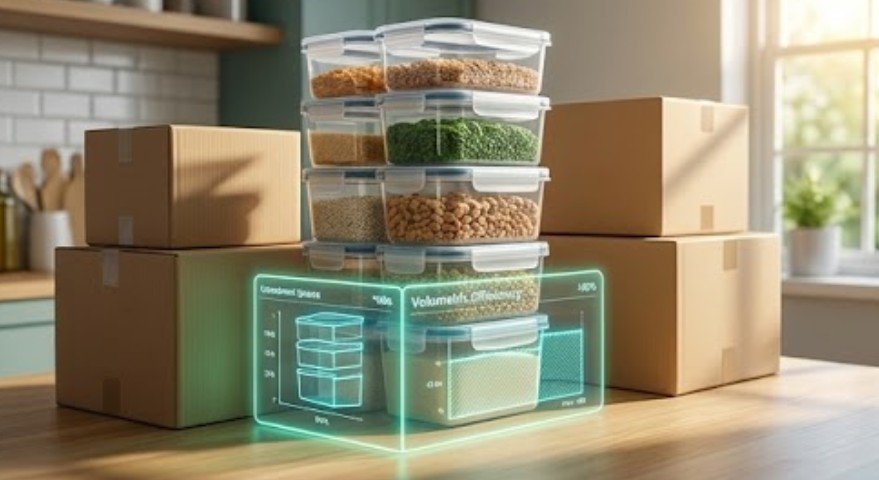
- Standardize Clear Containers: Rectangular food containers stack tighter than mismatched original cardboard packaging, reclaiming up to 25% of lost shelf volume. Rectangular food containers stack tighter than mismatched original cardboard packaging, reclaiming up to 25% of lost shelf volume. If your pantry space is limited, pairing it with a compact mini refrigerator can extend your effective food storage without requiring a full kitchen remodel.
Common Misconceptions About Pantry Space
- “Bigger is Always Better”: Larger walk-ins often waste more square footage on walkway clearance than built-in cabinet towers do.
- “Deep Shelves Hold More”: Deep shelves actually encourage clutter. Shallow 12-inch to 14-inch shelves ensure every item remains visible, cutting down on duplicate purchases.
- “Vertical Space Doesn’t Matter”: Standard shelf spacing often leaves 8 to 10 inches of empty air above low items like canned goods. Adjusting track shelves down to tighter margins reclaims valuable cubic capacity. Organizing food by shelf height and visibility reduces family food waste significantly over time.
Frequently Asked Questions
1. What is a standard size for a pantry?
A standard walk-in pantry is typically 5×5 feet, while a reach-in cabinet pantry generally spans 36 inches wide by 24 inches deep and 84 inches high.
2. Is 4 feet wide enough for a pantry?
Yes. A 4-foot-wide space works well for a deep reach-in pantry or a narrow step-in pantry with shallow 12-inch shelves along one side.
3. What is the typical size of a butler’s pantry?
A typical butler’s pantry ranges from 5×6 feet to 8×10 feet, providing integrated counter space, staging areas, and custom cabinetry alongside regular storage.
4. What is the standard size of a pantry unit?
A standard freestanding or built-in pantry cabinet unit measures 30 to 36 inches wide, 24 inches deep, and 84 to 96 inches tall.
Conclusion
Knowing how many cubic feet is in a pantry transforms how you shop, organize, and budget for groceries. Whether you are working with a 35-cubic-foot reach-in cabinet or a 100-cubic-foot walk-in room, calculating your true storage volume prevents overbuying and eliminates wasted space. By utilizing simple additions like shelf risers, shallow depth layouts, and clear storage containers, you can stretch your kitchen’s capacity and keep your household budget firmly on track.

Ryan Mitchell
Ryan Mitchell holds a degree in Civil Engineering and spent over a decade working in construction project estimation, where accurate volume and material calculations were part of his daily work — from concrete pours to landscaping material orders. He founded this site to bring that same precision to everyday calculations, helping DIYers, contractors, and students get fast, accurate cubic footage results without the guesswork. Ryan reviews every calculator and formula on this site for accuracy and writes guides based on real-world measurement scenarios he's encountered on job sites.