

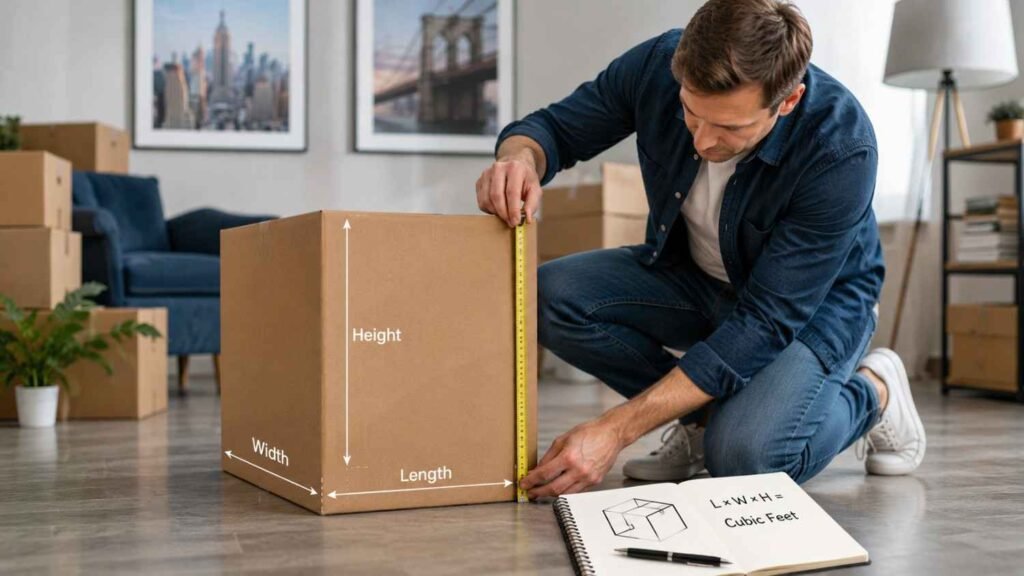
I used to look at a shipping box, read the dimensions printed on the side, and assume I could tell how much space it offered. Then I compared boxes that looked similar but held different amounts. The difference came down to cubic volume, which is easy to calculate once dimensions are clear.
I also noticed that shipping and packing conversations often use words like size, capacity, and dimensional weight as though they mean the same thing. They do not. Once I separated those ideas, figuring out a box’s actual volume became much simpler, and choosing packaging became more practical.
What Does Cubic Feet Mean for a Shipping Box?
Cubic feet measures three-dimensional space. For a rectangular shipping box, it tells you how much room exists inside the box based on its length, width, and height. It is useful for estimating packing capacity, storage, and multiple packages.
There is no universal cubic-foot size for a shipping box. A small parcel might hold less than one cubic foot, while a large carton can hold several cubic feet. The number depends entirely on the box dimensions.
One cubic foot contains 1,728 cubic inches. That conversion matters because most boxes are measured in inches, especially when preparing a parcel for a carrier. Once the three measurements are multiplied, dividing the result by 1,728 converts cubic inches into cubic feet.
How to Calculate the Cubic Feet of a Shipping Box
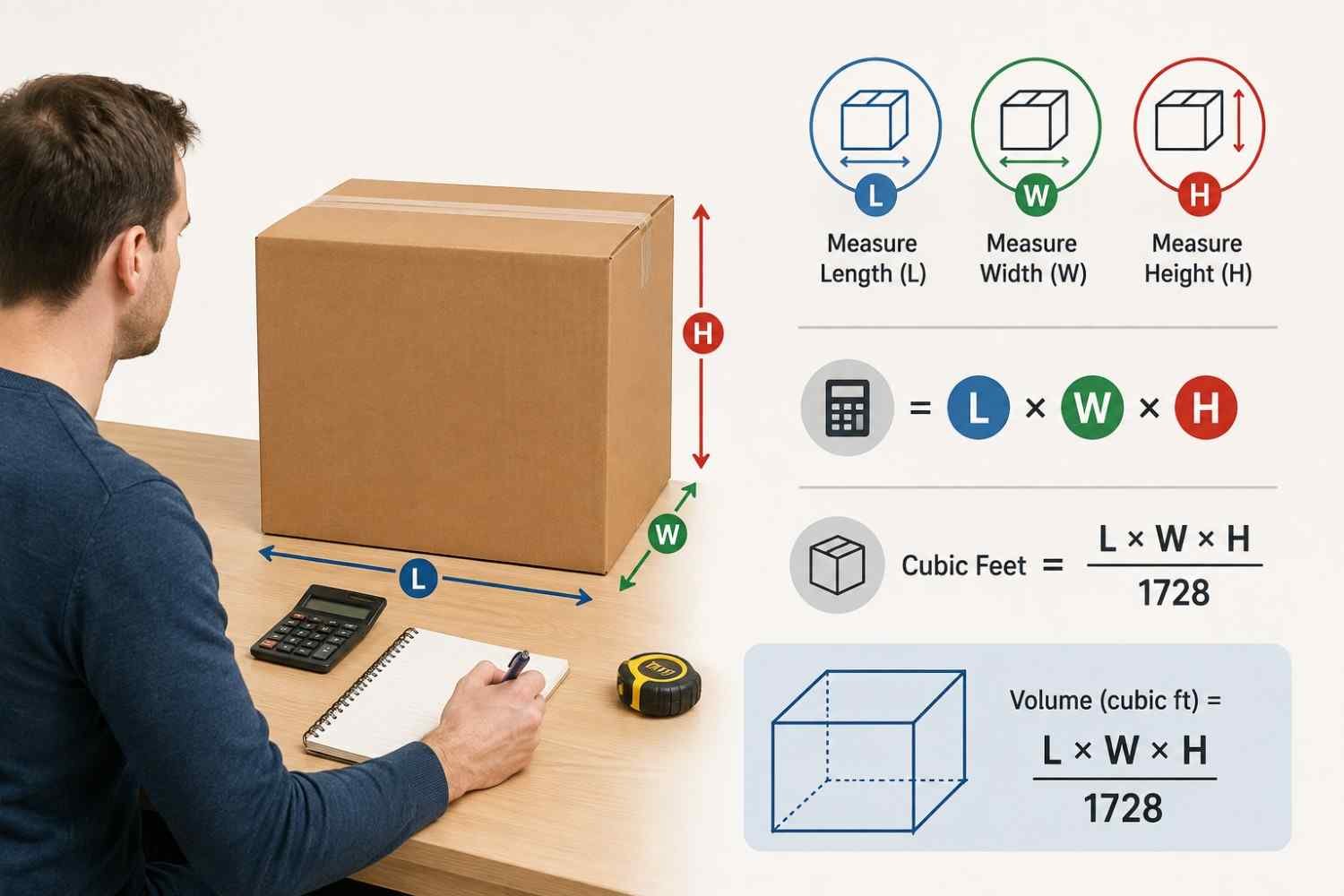
The basic formula is:
Length × Width × Height ÷ 1,728 = cubic feet
Measure all three sides in inches, multiply them together, then divide by 1,728. Keep the measurements consistent.
For example, take a box measuring 24 × 18 × 12 inches. First multiply 24 by 18 by 12, giving 5,184 cubic inches. Then divide 5,184 by 1,728. The result is exactly 3 cubic feet.
The same process works for any rectangular carton. If dimensions include fractions, use a calculator rather than rounding too early.
Common Shipping Box Sizes and Their Volume
Box labels such as small, medium, or large are helpful, but they are not standardized across every supplier. Actual dimensions are more reliable when calculating capacity.
A 16 × 12 × 12-inch box has 2,304 cubic inches, or about 1.33 cubic feet. An 18 × 18 × 16-inch box has 5,184 cubic inches, which equals 3 cubic feet. A 24 × 18 × 18-inch box contains 7,776 cubic inches, or 4.5 cubic feet.
A 12 × 12 × 12-inch carton is exactly 1 cubic foot, making it a convenient reference when estimating other boxes.
The same logic applies when comparing the shoe box with a carton. A small box can suit dense individual items, but many small packages may occupy more combined space because of gaps between them.
Does Cubic Volume Affect Shipping Cost?
Cubic feet tells you how much physical space a box occupies, but it does not automatically tell you what shipping will cost. Carriers can use dimensional weight when a package takes up substantial space compared with its actual weight. In that situation, dimensions become part of the pricing calculation.
Dimensional weight is calculated from length, width, and height in inches using a carrier-specific divisor. The divisor varies by service, so cubic feet should not replace a carrier’s shipping calculator.
This is why oversized packaging can become expensive. A lightweight item surrounded by empty space may occupy more room in a delivery vehicle than its scale weight suggests. Right-sizing the carton can reduce wasted space and packing material.
Inside Dimensions vs. Outside Dimensions
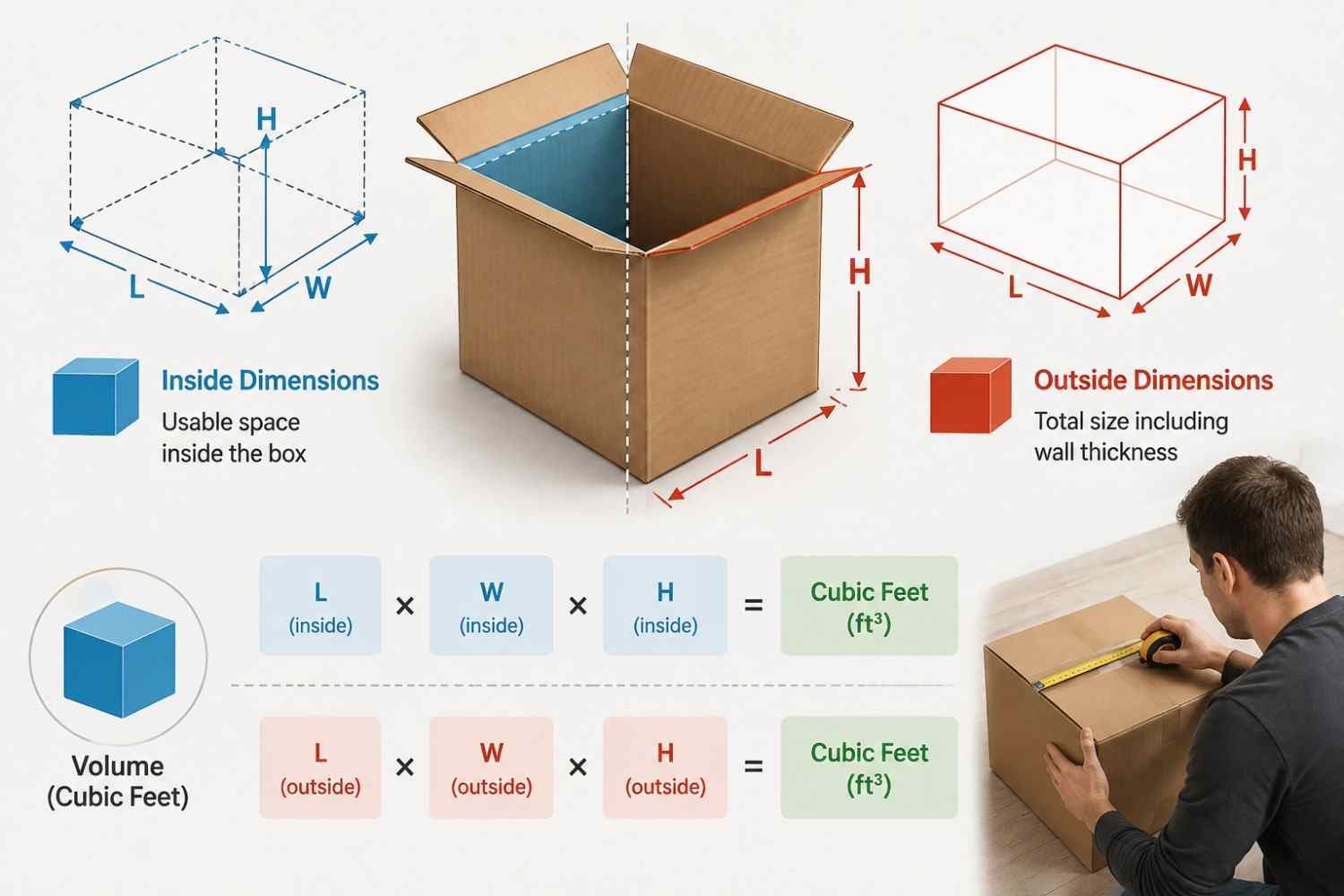
The dimensions you use should match what you are trying to determine. Interior measurements are more useful when estimating how much product, clothing, household goods, or other contents can actually fit inside.
Exterior measurements matter more for transportation and carrier requirements. Cardboard thickness and protective padding also take up space, so usable capacity will not always equal outside volume.
How to Choose the Right Shipping Box Size
The best box is usually not the biggest available. Start with the item, then allow enough room for cushioning without creating unused air. Fragile products may need more clearance, while durable items can often fit more closely.
Weight matters, too. A carton that can hold many goods may become difficult to lift once packed. Smaller boxes generally suit dense items, while larger boxes work better for lightweight, bulky belongings.
A useful comparison is large moving box sizes. Their capacity can be several cubic feet, but that does not mean every shipment should use one. Choosing a carton around the contents can make packing easier.
Calculating Cubic Feet for Multiple Boxes
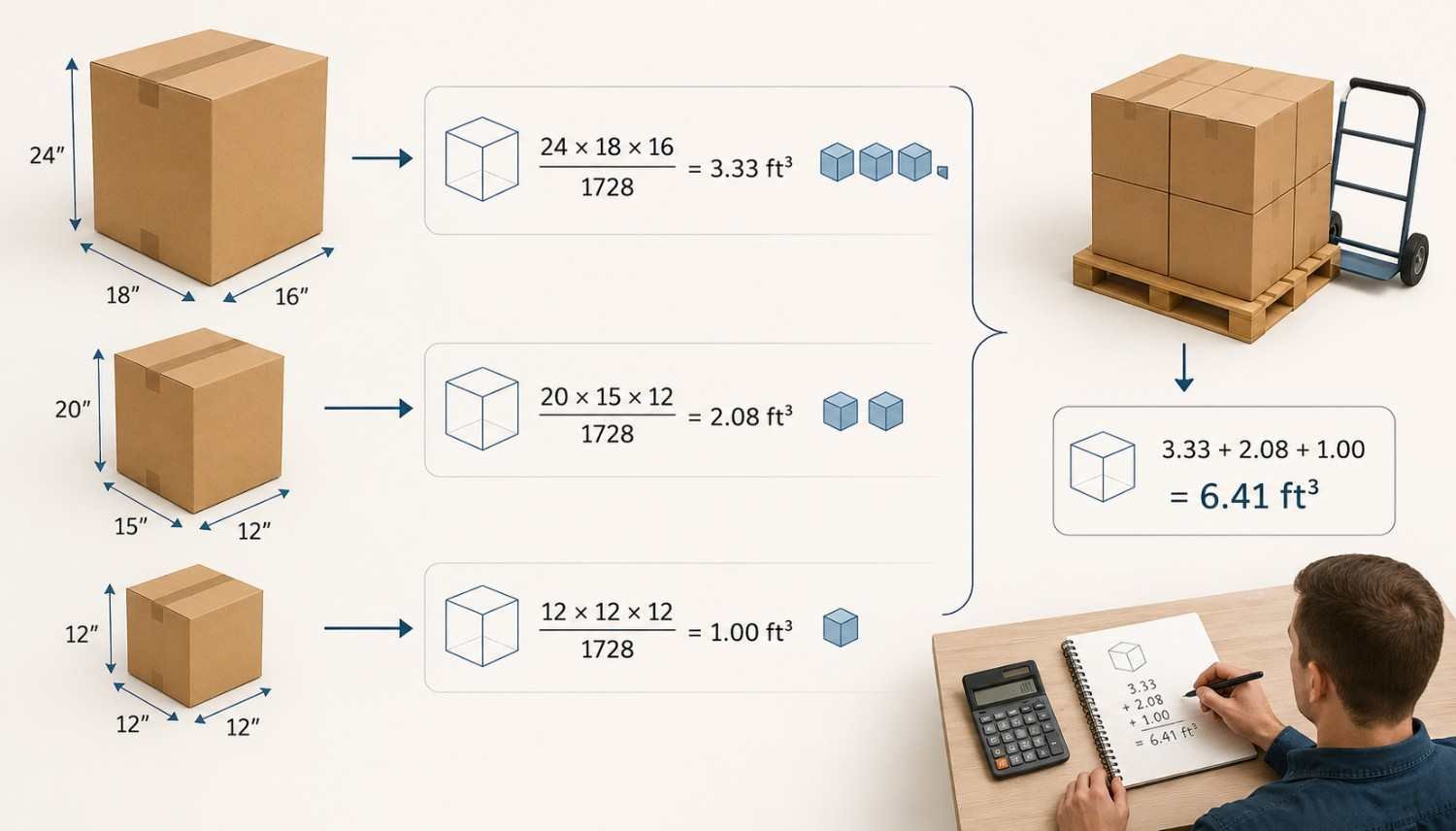
If you have several shipping boxes, calculate each box separately before adding the results. For example, three identical 2-cubic-foot cartons represent 6 cubic feet of total physical volume. This is useful for storage planning and comparing groups of packages.
Remember that total cubic footage is a space measurement, not a promise that every inch can be filled efficiently. Gaps between cartons can change usable space in practice.
FAQs: How Many Cubic Feet Is a Shipping Box? How to Calculate Box Volume
1. How many cubic feet is a standard shipping box?
There is no single standard size. Shipping boxes come in many dimensions, so capacity depends on length, width, and height.
2. How do you calculate cubic feet from inches?
Multiply the length, width, and height in inches. Then divide the result by 1,728 to convert cubic inches into cubic feet.
3. Does a box’s cubic feet determine shipping cost?
Not by itself. Carriers may consider dimensional weight, actual weight, service type, and other shipment details when calculating the billable amount.
4. Should you use inside or outside dimensions?
Use inside dimensions when estimating usable packing capacity. Outside dimensions are generally more appropriate for transportation and carrier measurements.
Why Accurate Box Measurements Matter More Than They Seem
Knowing the cubic footage of a shipping box turns an ordinary carton into a measurable part of a larger packing plan. Instead of guessing whether an item will fit or how much space several packages will consume, you can work from actual numbers. That becomes useful when storage is limited, or packaging costs matter.
The calculation takes seconds. The real value comes from using it thoughtfully: measure carefully, choose a box that fits the contents, protect what needs protection, and keep unnecessary empty space under control.

Ryan Mitchell
Ryan Mitchell holds a degree in Civil Engineering and spent over a decade working in construction project estimation, where accurate volume and material calculations were part of his daily work — from concrete pours to landscaping material orders. He founded this site to bring that same precision to everyday calculations, helping DIYers, contractors, and students get fast, accurate cubic footage results without the guesswork. Ryan reviews every calculator and formula on this site for accuracy and writes guides based on real-world measurement scenarios he's encountered on job sites.


