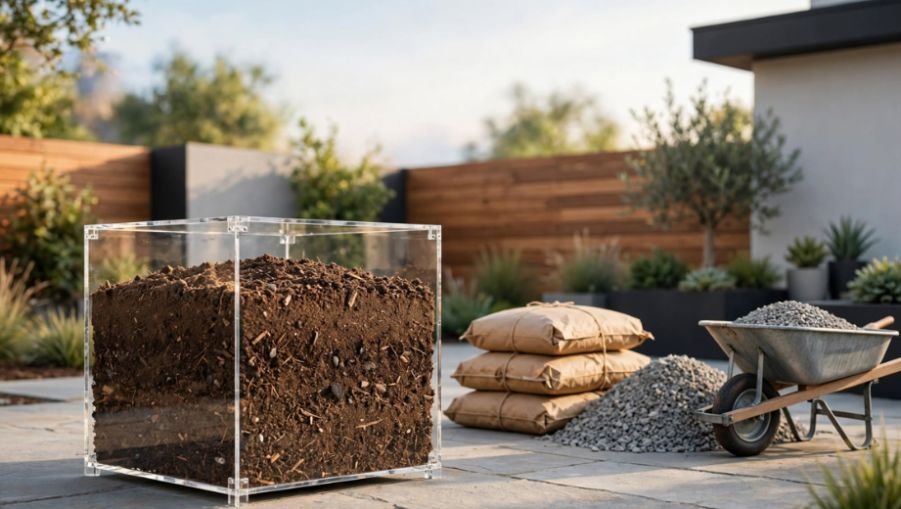
The answer is exactly 27 cubic feet. When someone asks me how many cubic feet are in a yard, I first confirm that “yard” means a cubic yard, not a linear or square yard.
This distinction prevents costly ordering mistakes. A cubic yard measures volume and represents a space that is 3 feet long, 3 feet wide, and 3 feet high.
The Quick Answer
One cubic yard contains 27 cubic feet.
The calculation is simple:
3 feet × 3 feet × 3 feet = 27 cubic feet
The National Institute of Standards and Technology confirms this exact volume conversion in its official measurement tables.
In landscaping and construction, suppliers often shorten “cubic yard” to “yard.” Therefore, one yard of soil, mulch, gravel, sand, or concrete usually means 27 cubic feet of material.
Why One Cubic Yard Equals 27 Cubic Feet
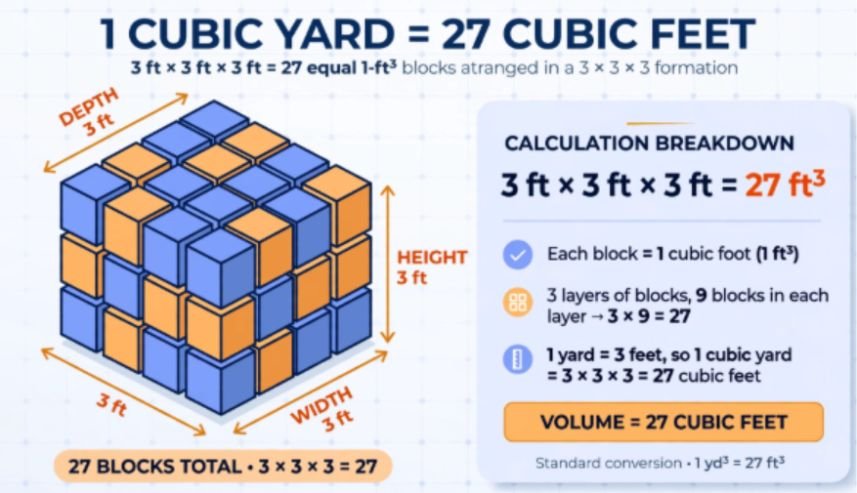
A linear yard equals 3 feet. Volume uses three dimensions, so that conversion must be cubed:
1 cubic yard = 3 ft × 3 ft × 3 ft
Multiplying those measurements gives 27 cubic feet. You cannot convert a yard to cubic feet by multiplying by three only. The calculation must include length, width, and height.
Linear, Square, and Cubic Yards
These three measurements describe different things:
| Measurement | What it measures | Equivalent |
| Linear yard | Length | 3 feet |
| Square yard | Area | 9 square feet |
| Cubic yard | Volume | 27 cubic feet |
This difference matters when buying bulk materials. Square feet describe surface area, while cubic feet and cubic yards account for depth.
Cubic Yards to Cubic Feet Conversion Table
If you regularly order bulk material, this quick-reference table removes repeated calculations.
| Cubic yards | Cubic feet |
| 0.25 | 6.75 |
| 0.50 | 13.5 |
| 1 | 27 |
| 2 | 54 |
| 3 | 81 |
| 5 | 135 |
| 10 | 270 |
Use this formula whenever you need to know how many cubic feet are in a yard or several yards:
Cubic feet = cubic yards × 27
For example, four cubic yards of mulch contain:
4 × 27 = 108 cubic feet
How to Convert Cubic Feet to Cubic Yards
Reverse the formula when your measurements produce cubic feet but the supplier sells material by the yard:
Cubic yards = cubic feet ÷ 27
Suppose a garden bed needs 45 cubic feet of soil:
45 ÷ 27 = 1.67 cubic yards
I would normally order more than the exact calculated volume. Soil may settle, and an uneven surface can increase the amount required. Confirm the supplier’s ordering increments before rounding.
Iowa State University Extension also recommends dividing cubic feet by 27 when converting mulch requirements into cubic yards.
How Much Area Does One Cubic Yard Cover?
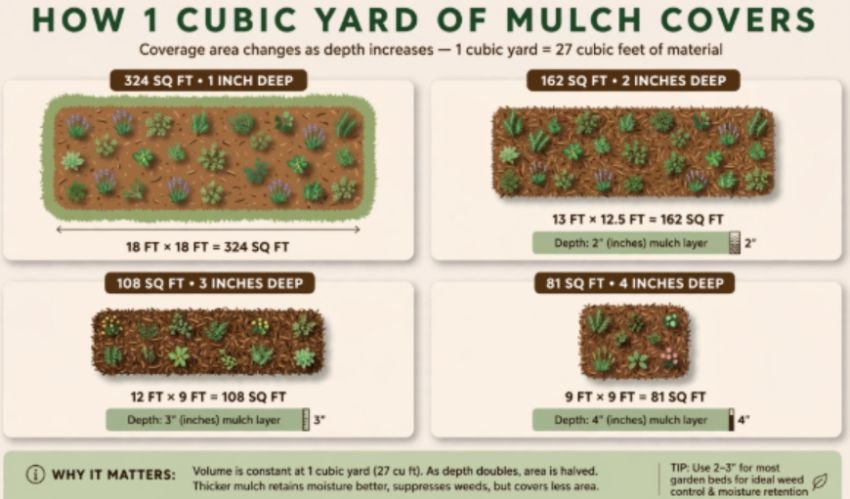
Volume alone does not determine coverage. The spreading depth controls how many square feet one yard covers.
Use this formula:
Coverage in square feet = 324 ÷ depth in inches
| Material depth | Coverage from one cubic yard |
| 1 inch | 324 square feet |
| 2 inches | 162 square feet |
| 3 inches | 108 square feet |
| 4 inches | 81 square feet |
| 6 inches | 54 square feet |
The 1-inch figure comes from spreading 27 cubic feet across a shallow layer. Because 1 inch equals one-twelfth of a foot, each cubic foot covers 12 square feet.
Actual coverage can vary slightly across slopes, holes, and uneven ground. The University of California Agriculture and Natural Resources uses the same area-times-depth method for estimating mulch.
Converting a Yard into Bags of Material
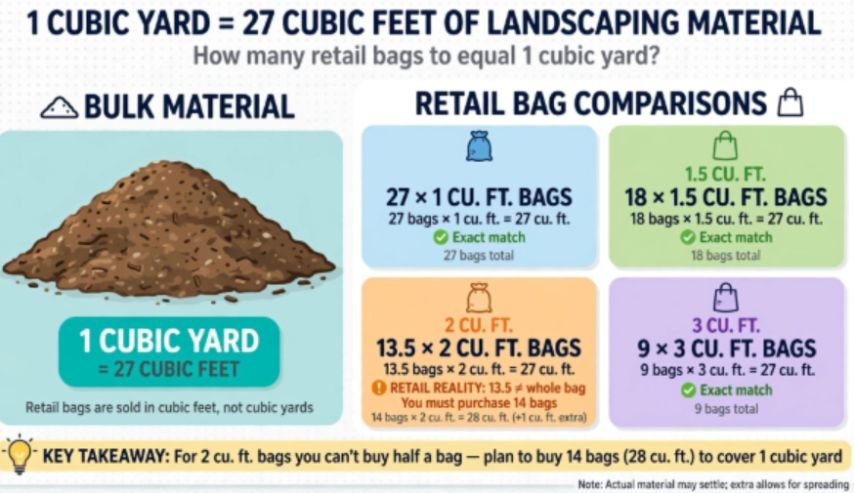
Bulk products use cubic yards, but a bag of mulch and soil use cubic feet. Knowing how many cubic feet are in a yard makes price comparisons much easier.
| Bag size | Exact bags per cubic yard | Whole bags to buy |
| 1 cubic foot | 27 | 27 |
| 1.5 cubic feet | 18 | 18 |
| 2 cubic feet | 13.5 | 14 |
| 3 cubic feet | 9 | 9 |
One yard equals exactly 13.5 two-cubic-foot bags. However, stores do not sell half a sealed bag, so you need 14 bags to meet or slightly exceed one cubic yard.
The Home Depot mulch calculator allows calculations by area, dimensions, depth, and bag size. It also warns that project quantities remain estimates.
A Worked Landscaping Example
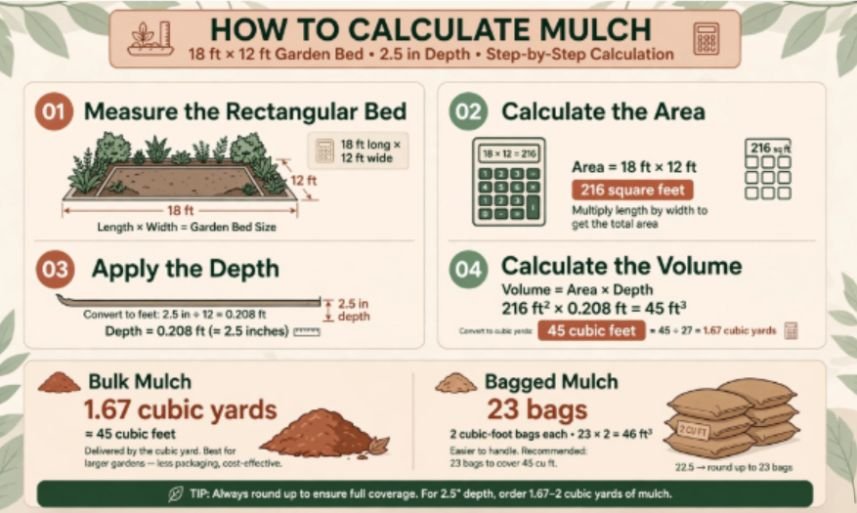
Here is a calculation I use for an irregular project estimate. Imagine a rectangular garden bed measuring 18 feet by 12 feet. It needs a 2.5-inch layer of mulch.
First, calculate the area:
18 × 12 = 216 square feet
Next, calculate the cubic yards:
216 × 2.5 ÷ 324 = 1.67 cubic yards
That equals:
1.67 × 27 = approximately 45 cubic feet
The project therefore needs about 23 two-cubic-foot bags. For bulk delivery, I would discuss ordering increments and expected settling with the supplier.
This example adds a practical detail many calculators miss: fractional depths matter. Rounding 2.5 inches down to 2 inches would leave this bed about nine cubic feet short.
Why Delivered Volume May Look Different
A delivered yard will rarely resemble a neat 3-foot cube. Loose mulch forms an irregular pile. Gravel compacts, while fluffy products may settle after rain.
Volume and weight also measure different properties. Every cubic yard contains 27 cubic feet, but its weight changes with material type, particle size, and moisture. Never estimate a truck’s payload from volume alone.
Ask the supplier whether the product is measured loose, compacted, or after screening. That detail can affect the usable amount.
Cubic Yards for Moving and Storage
Moving companies usually quote capacity in cubic feet rather than cubic yards. Divide cubic feet by 27 if you need a yard-based comparison.
For example, 270 cubic feet of belongings equals 10 cubic yards. You may encounter this conversion when comparing a furniture moving package with the estimated volume of an entire room of furniture.
Furniture does not pack into a solid cube. Empty spaces between chairs, tables, and boxes mean the required truck capacity will exceed the objects’ combined solid volume.
Frequently Asked Questions
1. How many cubic feet are in a yard of mulch?
One cubic yard of mulch contains exactly 27 cubic feet.
2. How many 2-cubic-foot bags equal one cubic yard?
Exactly 13.5 bags equal one yard, but you must purchase 14 whole bags.
3. How many square feet will one cubic yard cover?
It covers 324 square feet at 1 inch deep, 162 at 2 inches, or 108 at 3 inches.
4. How do I convert cubic feet into cubic yards?
Divide the number of cubic feet by 27.
Measure Once, Order Smart
When I need to remember how many cubic feet are in a yard, I picture a 3-by-3-by-3-foot cube. That gives the answer immediately: 27 cubic feet.
Measure the project area, convert the depth into feet, and calculate the total volume. Then add a modest allowance for settling or uneven ground. That small step beats paying for a second delivery—and saves your weekend from an avoidable supply run.

Ryan Mitchell
Ryan Mitchell holds a degree in Civil Engineering and spent over a decade working in construction project estimation, where accurate volume and material calculations were part of his daily work — from concrete pours to landscaping material orders. He founded this site to bring that same precision to everyday calculations, helping DIYers, contractors, and students get fast, accurate cubic footage results without the guesswork. Ryan reviews every calculator and formula on this site for accuracy and writes guides based on real-world measurement scenarios he's encountered on job sites.