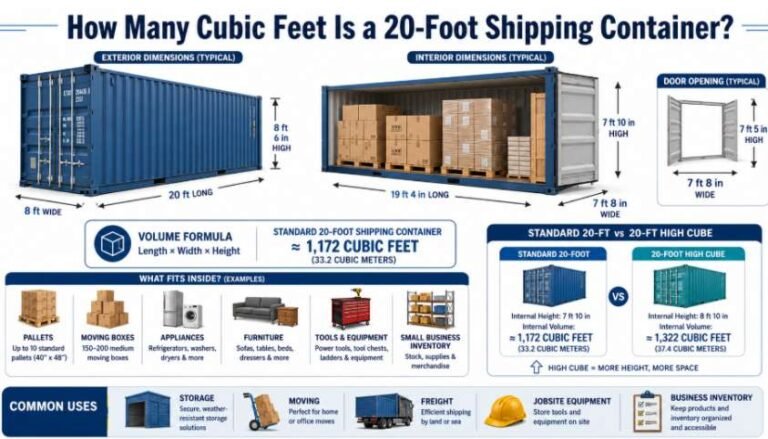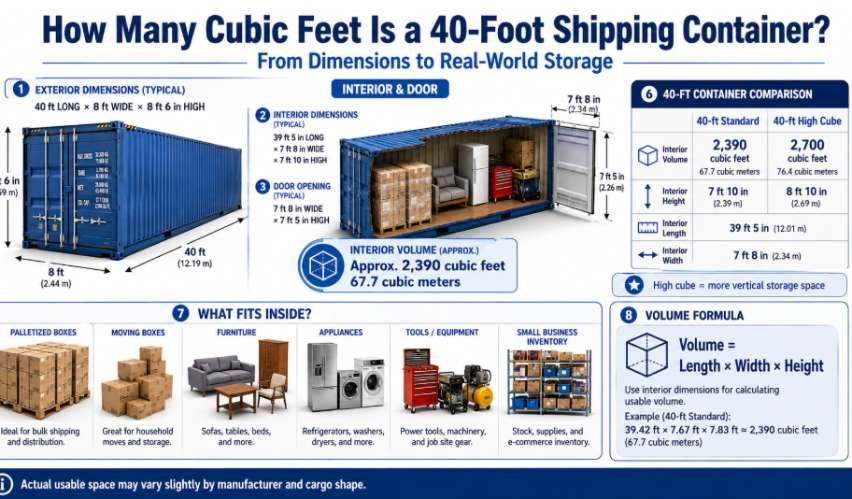
A shipping container may look like a simple steel box, but choosing the right size requires more than knowing its length. When I first compared container options for storage and transportation, I discovered that a 40-foot container’s advertised size does not always match the space you can actually use. The walls, height differences, loading methods, and cargo shapes all affect the final capacity.
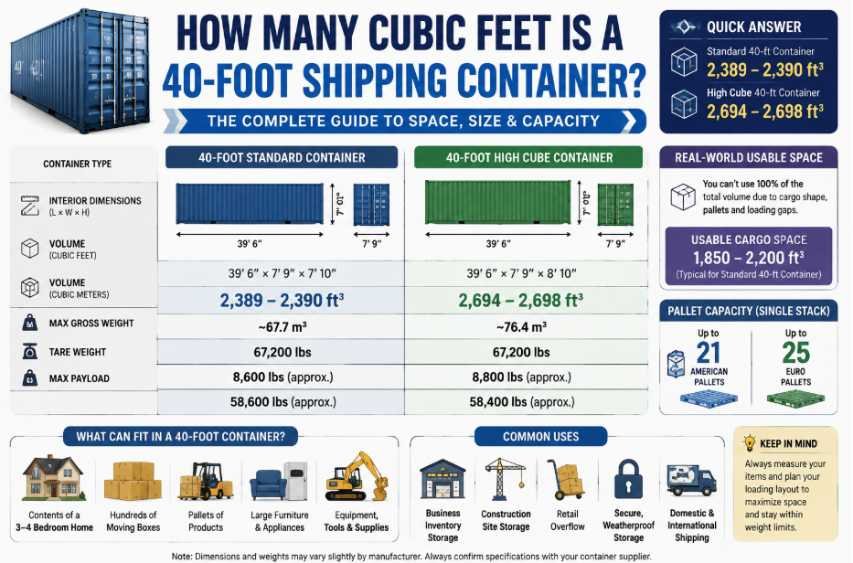
The most common question buyers and businesses ask is: How Many Cubic Feet Is a 40-Foot Shipping Container? A standard 40-foot shipping container offers approximately 2,389–2,390 cubic feet of internal volume, while a 40-foot high cube container provides nearly 2,700 cubic feet of additional storage capacity.
Whether you are planning a household move, expanding business inventory storage, or searching for a secure on-site storage solution in the US, understanding the true cubic footage helps you choose the right container without wasting money on unnecessary space.
In this blog, I’ll break down the exact dimensions, usable cargo capacity, pallet limits, and practical storage possibilities of a 40-foot shipping container.
How Much Space Is Inside a Standard 40-Foot Shipping Container?
A standard 40-foot shipping container is one of the most widely used container sizes in the US because it offers a balance between storage capacity, transportation convenience, and cost.
The exterior dimensions are typically:
- Length: 40 feet
- Width: 8 feet
- Height: 8 feet 6 inches
However, the usable interior space is smaller because the container walls, flooring, and structural supports reduce the available area.
The typical internal dimensions are approximately:
- Length: 39 feet 6 inches
- Width: 7 feet 9 inches
- Height: 7 feet 10 inches
Using the cubic feet formula:
Length × Width × Height = Cubic Feet
The calculation looks like this:
39.5 ft × 7.75 ft × 7.83 ft = approximately 2,390 cubic feet
This equals roughly 67.7 cubic meters of storage volume.
For comparison, that is enough space to store the contents of a large home, multiple pallets of products, or significant amounts of business inventory.
How Many Cubic Feet Is a 40-Foot High Cube Container?
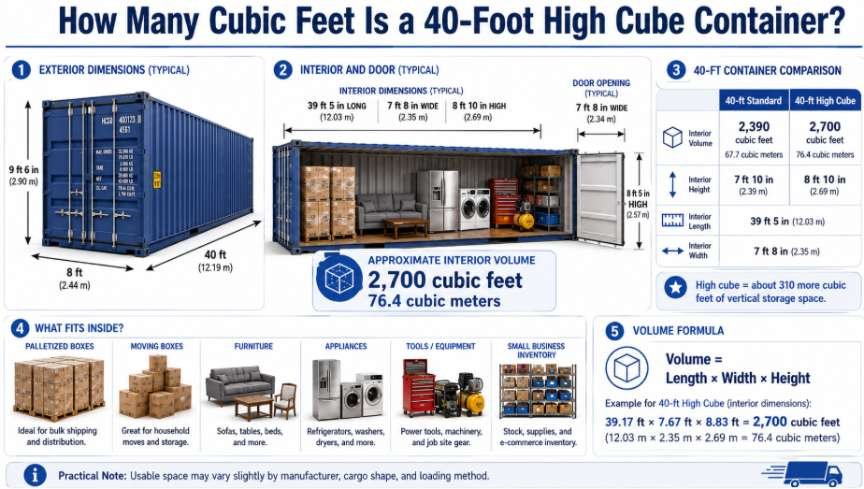
A high cube container is similar to a standard 40-foot container but provides extra vertical space. The main difference is height.
A standard container has an exterior height of about 8 feet 6 inches, while a high cube container reaches approximately 9 feet 6 inches.
That additional foot creates noticeably more storage capacity.
A 40-foot high cube container typically provides:
- Interior length: 39 feet 6 inches
- Interior width: 7 feet 9 inches
- Interior height: 8 feet 10 inches
- Volume: approximately 2,694–2,698 cubic feet
- For businesses storing bulky items, tall equipment, or stacked inventory, the extra height can make a high cube container a better investment.
Standard 40-Foot Container vs 40-Foot High Cube Capacity
Choosing between these two container types usually depends on how much vertical space you need.
| Container Type | Interior Dimensions | Capacity |
| 40-Foot Standard | 39’6″ × 7’9″ × 7’10” | 2,389–2,390 cubic feet |
| 40-Foot High Cube | 39’6″ × 7’9″ × 8’10” | 2,694–2,698 cubic feet |
The high cube option provides approximately 300 additional cubic feet of storage. That extra room can be valuable when storing tall furniture, shelving systems, machinery, or commercial goods.
How Much Usable Cargo Space Does a 40-Foot Container Really Have?
The advertised cubic capacity represents the total internal volume, but real-world loading is different.
In practical situations, you usually cannot fill every inch of space because cargo shapes, packaging, pallets, and safety requirements create unused areas.
Understanding shipping carton capacity can also help when estimating how efficiently smaller packaged items will fit within the available container space.
A standard 40-foot container may have approximately:
- Total volume: 2,390 cubic feet
- Practical usable cargo space: around 1,850–2,200 cubic feet
The actual usable amount depends on what you are storing and how efficiently everything is arranged.
For example, neatly stacked boxes will use more available volume than irregular items like furniture, machinery, or construction materials.
How Many Pallets Fit Inside a 40-Foot Shipping Container?
For US businesses, pallet capacity is often more important than cubic feet because most commercial goods are transported on pallets.
A standard 40-foot container can typically accommodate:
- Up to 21 standard American pallets
- Around 25 Euro pallets when arranged efficiently
The final number depends on pallet size, cargo weight, stacking restrictions, and loading method.
A company shipping lightweight products may focus on maximizing volume, while heavier products may reach weight limits before filling the entire container.
How Do You Calculate Shipping Container Cubic Feet?
Calculating container volume is useful when comparing storage options or planning a shipment.
The formula is:
Length × Width × Height = Cubic Feet
For example:
39.5 feet × 7.75 feet × 7.83 feet
= approximately 2,390 cubic feet
This same calculation method works for other storage spaces, including warehouses, garages, storage units, and cargo trailers.
The same volume-based comparison can be useful when considering sedan trunk space for smaller cargo and everyday transportation needs.
Using a cubic feet calculation tool can also help estimate how much space your items require before renting or purchasing a container.
What Can Fit Inside a 40-Foot Shipping Container?
A 40-foot container provides enough room for many residential and commercial applications.
For US homeowners, it can often store:
- Furniture from a multi-bedroom home
- Appliances
- Moving boxes
- Seasonal equipment
- Outdoor items
For businesses, it can be used for:
- Retail inventory storage
- Construction supplies
- Manufacturing materials
- Agricultural equipment
- Warehouse overflow
Many companies choose shipping containers because they provide secure, weather-resistant storage without the cost of building permanent storage structures.
Is a 40-Foot Shipping Container Enough for a House Move?
For many residential moves in the United States, a 40-foot container is one of the largest practical options available.
A typical family moving from a three- or four-bedroom home may find this size suitable, especially when items are packed efficiently.
However, large furniture, oversized appliances, and specialty items can reduce available space. Planning the arrangement before loading helps prevent wasted areas.
When estimating moving requirements, I recommend measuring large items first and comparing their total volume with the container’s usable cubic footage.
Frequently Asked Questions
1. How many cubic feet is a 40-foot shipping container?
A standard 40-foot shipping container has approximately 2,389–2,390 cubic feet of internal volume. A high cube model provides about 2,694–2,698 cubic feet.
2. How many boxes can fit in a 40-foot container?
The number depends on box size, but a 40-foot container can hold several hundred standard moving boxes when packed efficiently.
3. What is the difference between a 40-foot and 40-foot high cube container?
The main difference is height. A high cube container is about one foot taller, increasing capacity by roughly 300 cubic feet.
4. Can a vehicle fit inside a 40-foot container?
Many cars and smaller vehicles can fit inside a 40-foot container, but the exact fit depends on vehicle dimensions and loading requirements.
Final Thoughts
Knowing How Many Cubic Feet Is a 40-Foot Shipping Container? helps you make smarter decisions when planning storage, transportation, or commercial shipments. A standard container provides about 2,390 cubic feet, while a high cube version increases capacity to nearly 2,700 cubic feet.
For most US storage and shipping needs, the right choice depends on more than just size. You should consider usable cargo space, item dimensions, pallet requirements, and how efficiently you can organize the container.
By calculating cubic volume before renting or purchasing, you can avoid paying for unnecessary space while making sure everything fits properly.

Ryan Mitchell
Ryan Mitchell holds a degree in Civil Engineering and spent over a decade working in construction project estimation, where accurate volume and material calculations were part of his daily work — from concrete pours to landscaping material orders. He founded this site to bring that same precision to everyday calculations, helping DIYers, contractors, and students get fast, accurate cubic footage results without the guesswork. Ryan reviews every calculator and formula on this site for accuracy and writes guides based on real-world measurement scenarios he's encountered on job sites.