Before buying a car, most people focus on mileage, price, and features, but one practical question often gets overlooked: How Many Cubic Feet Is a Sedan Trunk? A trunk may seem like a simple storage area, yet it plays a major role in how easily I handle daily tasks, weekend trips, and unexpected hauling needs.
A sedan can carry much more than just a few shopping bags. With carefully designed trunk layouts, many modern sedans provide enough room for suitcases, sports gear, groceries, and everyday essentials.
The actual storage capacity depends on the vehicle size, trunk design, and how efficiently the available space is used. By understanding sedan trunk volume in cubic feet, I can quickly compare different models and find out whether a sedan offers the right amount of cargo space for my lifestyle.
What Is the Average Sedan Trunk Capacity?
A sedan trunk is typically measured in cubic feet because this measurement shows the total three-dimensional storage volume .Unlike SUVs and hatchbacks, sedans have a separate enclosed trunk compartment located behind the rear seats.
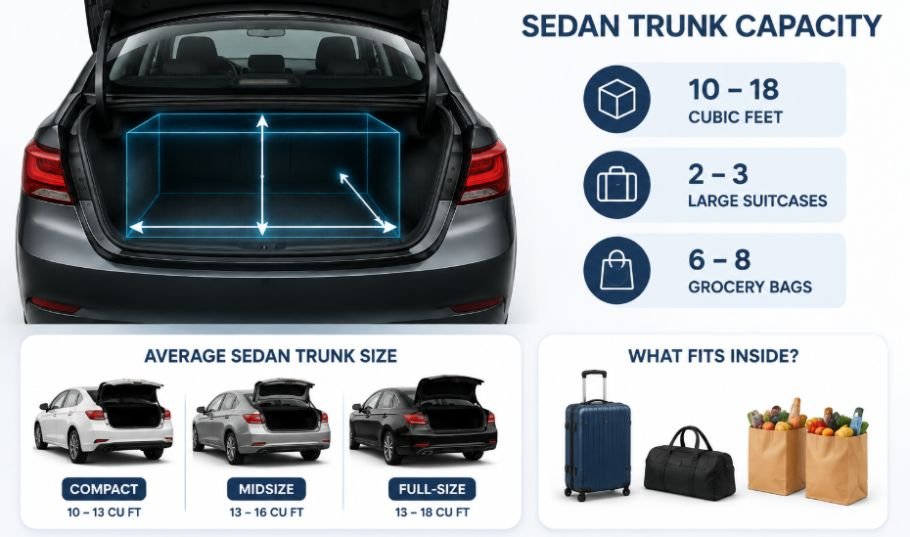
Most sedans sold in the United States fall into these general cargo ranges:
Compact Sedan Trunk Space
Compact sedans usually provide about 12 to 15 cubic feet of trunk space. These vehicles focus on affordability, fuel efficiency, and easy city driving while still offering practical storage.
Popular examples include models such as the Honda Civic, Toyota Corolla, and Nissan Sentra. A compact sedan trunk is generally large enough for grocery shopping, backpacks, carry-on luggage, and smaller travel bags.
Midsize Sedan Trunk Capacity
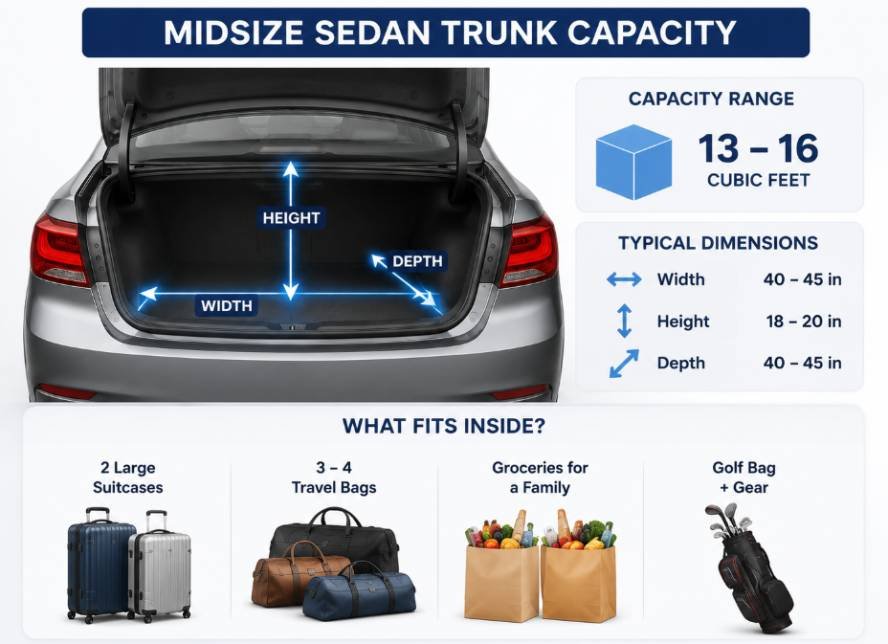
Midsize sedans usually provide between 14 and 17 cubic feet of cargo space. These vehicles are often the preferred choice for American families because they offer a better balance between passenger comfort and storage.
For example, the Honda Accord provides up to 16.7 cubic feet of cargo volume, while the Toyota Camry offers around 15.1 cubic feet depending on configuration.
A midsize sedan trunk can usually handle several suitcases, shopping bags, and travel equipment without requiring an SUV.
Full-Size and Luxury Sedan Cargo Space
Large sedans and luxury models can vary significantly. Some provide spacious trunks approaching 18 cubic feet, while others sacrifice cargo room for styling, performance components, or additional technology.
The design of the vehicle often matters more than the sedan category itself. A well-designed compact sedan may provide more usable storage than a poorly shaped larger trunk.
How Do You Calculate Sedan Trunk Cubic Feet?
Manufacturers measure vehicle cargo volume by calculating the total available space inside the trunk area. If I want to estimate my own trunk size, I can use a simple cubic feet formula:
Length × Width × Height ÷ 1,728 = Cubic Feet
For example, if a trunk measures:
- 42 inches long
- 36 inches wide
- 20 inches high
The calculation would be:
42 × 36 × 20 ÷ 1,728 = approximately 17.5 cubic feet
However, this calculation provides an estimate because real trunks are not perfect rectangles. Wheel wells, trunk hinges, curved panels, and spare tire compartments can reduce the usable storage area.
What Fits Inside a Typical Sedan Trunk?
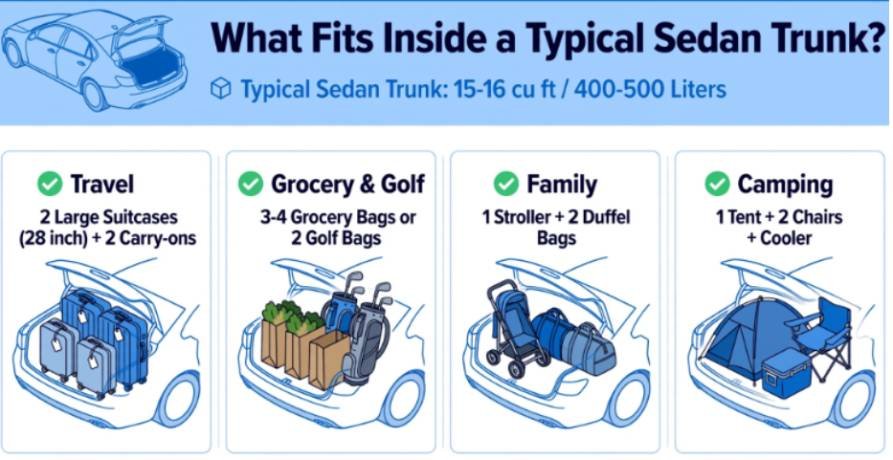
The number of items I can fit depends on how efficiently I arrange them. A trunk with 15 cubic feet of capacity may sound small, but the space can be surprisingly useful.
A typical sedan trunk can usually hold:
- Two large suitcases
- Several grocery bags
- Carry-on luggage
- Small moving boxes
- Sports equipment
- Emergency supplies
For many US drivers, a sedan trunk is enough for airport trips, weekend vacations, and everyday transportation needs.
Soft bags often work better than rigid luggage because they can fit around corners and fill unused gaps.
The car trunk opening also matters because having plenty of storage space is not useful if bulky items cannot fit through the available opening.
How Does Sedan Cargo Space Compare With SUVs?
When comparing sedan vs SUV cargo space, the biggest difference is not only the cubic feet measurement. The shape and accessibility of the cargo area also matter.
Sedans offer:
- A secure enclosed trunk
- Better protection from weather
- Lower loading height
- Hidden storage
SUVs provide:
- More vertical cargo room
- Larger openings
- Fold-down rear seats
- Better space for oversized items
A compact SUV can often provide significantly more cargo volume because it uses the entire rear cabin area rather than a separate trunk. However, many drivers choose sedans because they are more fuel-efficient, easier to park, and more affordable.
What Factors Affect Usable Sedan Trunk Space?
The advertised cargo volume does not always represent the storage experience. Several design elements influence how practical a trunk feels.
Trunk Shape
A wide and square trunk usually makes packing easier than a narrow, deep design. Two trunks with identical cubic footage can feel completely different because of their layouts.
Trunk Opening Size
Bulky items such as large suitcases, furniture, or sports equipment may be difficult or impossible to load through a narrow opening, even when the available interior space is sufficient.
Fold-Down Rear Seats
Some sedans include split-folding rear seats that expand cargo flexibility. This feature allows longer objects to extend from the trunk into the passenger area.
Spare Tire Placement
A spare tire stored underneath the trunk floor can reduce available cargo volume. Some vehicles use repair kits instead to maximize storage capacity.
Is a Sedan Trunk Big Enough for Everyday Driving?
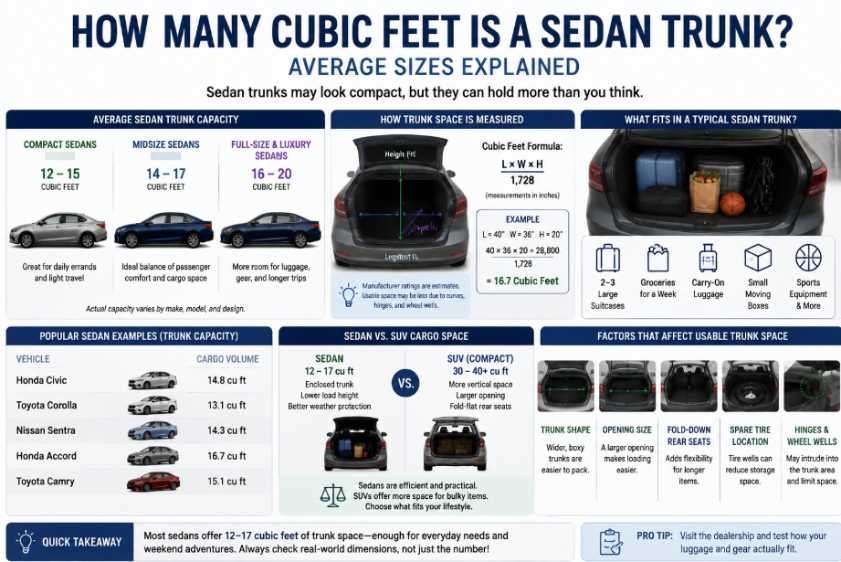
For most American drivers, the answer is yes. A sedan trunk between 12 and 17 cubic feet provides enough space for normal commuting, shopping, and occasional travel.
When I evaluate a sedan, I look beyond the number and consider how I actually use the vehicle. A trunk that efficiently stores luggage and daily items can be more valuable than a larger but poorly designed cargo area.
Understanding How Many Cubic Feet Is a Sedan Trunk? allows buyers to choose a vehicle based on real needs instead of simply assuming they need an SUV.
Frequently Asked Questions
1. How many cubic feet is a sedan trunk on average?
Most sedan trunks provide between 12 and 17 cubic feet of cargo space. Compact sedans are usually smaller, while midsize sedans often offer more storage capacity.
2. Is 15 cubic feet enough trunk space?
Yes. A 15 cubic foot trunk can usually hold multiple grocery bags, luggage, and everyday cargo. It is a practical size for many commuters and small families.
3. Does a sedan have enough space for a road trip?
A sedan can handle most road trips when luggage is packed efficiently. Midsize sedans generally provide enough room for several passengers’ bags and travel equipment.
4. How do I measure my car trunk’s cubic feet?
Measure the trunk’s length, width, and height in inches, multiply those numbers, and divide by 1,728 to estimate the cubic feet.
Final Thoughts
I believe trunk space is one of the most overlooked factors when choosing a vehicle. While SUVs receive attention for their larger cargo areas, many sedans provide enough room for everyday life without the added cost and size.
A sedan trunk between 12 and 17 cubic feet can handle most common needs, including shopping, commuting, and travel. By understanding How Many Cubic Feet Is a Sedan Trunk, I can make a smarter decision and choose a vehicle that matches my actual storage requirements.
I can also use a trunk volume tool to estimate available space and compare different vehicle options.

Ryan Mitchell
Ryan Mitchell holds a degree in Civil Engineering and spent over a decade working in construction project estimation, where accurate volume and material calculations were part of his daily work — from concrete pours to landscaping material orders. He founded this site to bring that same precision to everyday calculations, helping DIYers, contractors, and students get fast, accurate cubic footage results without the guesswork. Ryan reviews every calculator and formula on this site for accuracy and writes guides based on real-world measurement scenarios he's encountered on job sites.