
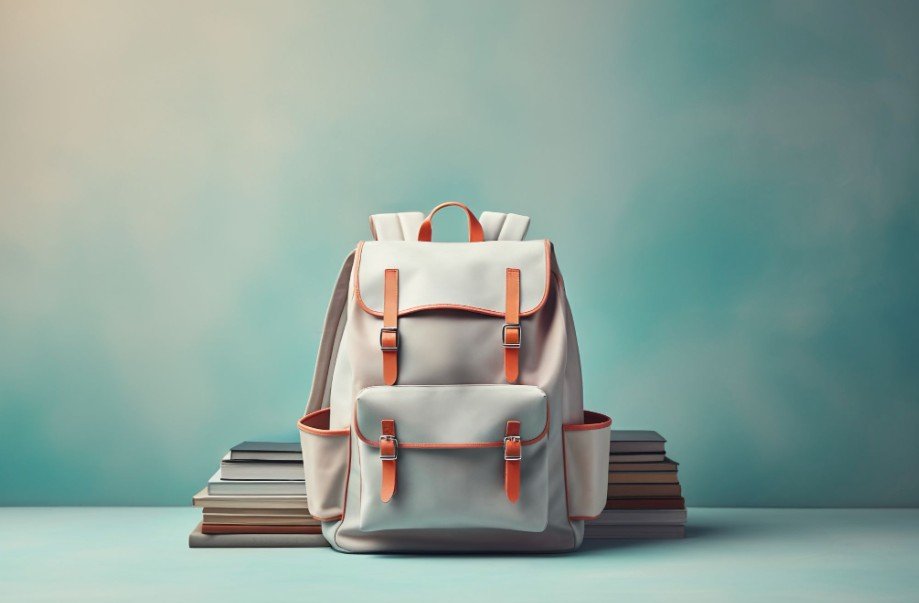
A backpack can look surprisingly compact until you try to fit a laptop, lunch, clothes, chargers, and everything else you carry into it. That is why knowing capacity matters more than judging a bag by appearance alone.
So, How Many Cubic Feet Is a Backpack? Most everyday backpacks hold roughly 0.7 to 1.4 cubic feet, while large hiking and expedition packs can reach 3 cubic feet or more. Since manufacturers usually advertise backpack capacity in liters, I’ll break those numbers into familiar cubic-foot measurements so you can quickly tell which size actually fits your needs.
What Is the Average Backpack Size in Cubic Feet?
There is no single standard backpack size because a student’s backpack serves a very different purpose from an expedition pack.
A typical kids backpack with a 20- to 25-liter capacity provides approximately 0.7 to 0.9 cubic feet. This is generally enough room for textbooks, notebooks, a lunch box, a laptop, and a few everyday essentials. When comparing bag sizes, I use a convert liters to cubic feet tool to understand the actual storage volume and make better capacity comparisons.
A commuter or weekender backpack commonly falls between 30 and 40 liters, equal to about 1.1 to 1.4 cubic feet. These packs work well for work, commuting, overnight trips, and light travel.
Multi-day hiking packs typically offer around 50 to 65 liters, or approximately 1.8 to 2.3 cubic feet. Large expedition trekking packs may hold 70 to 85 liters or more, which translates to roughly 2.5 to 3.0+ cubic feet.
WIRED’s backpack sizing guidance follows a similar progression, placing student-oriented packs around 20 to 29 liters, heavier everyday and weekend packs around 30 to 39 liters, and hiking or camping backpacks around 50 to 80 liters.
Backpack Liters to Cubic Feet Conversion Chart

Because backpack capacity is usually advertised in liters, I find a conversion chart useful when comparing sizes.
| Backpack Type | Typical Capacity | Approx. Cubic Feet | Common Use |
| Small daypack | 15 L | 0.53 ft³ | Essentials and short outings |
| Daypack / school bag | 20–25 L | 0.71–0.88 ft³ | Books, lunch, laptop |
| Large school / commuter pack | 30 L | 1.06 ft³ | Work, college, commuting |
| Commuter / weekender | 30–40 L | 1.06–1.41 ft³ | Overnight or light travel |
| Travel backpack | 40–45 L | 1.41–1.59 ft³ | Carry-on-style travel |
| Multi-day hiking pack | 50–65 L | 1.77–2.30 ft³ | Three- to five-day trips |
| Expedition pack | 70–85+ L | 2.47–3.00+ ft³ | Extended trekking and heavy gear |
This also shows why backpack volume can vary dramatically even when two bags appear similar from the outside.
How Do I Calculate a Backpack’s Cubic Feet?
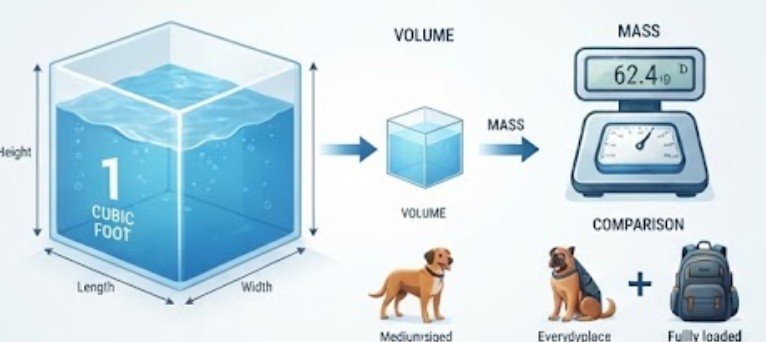
If you know the capacity in liters, divide the total liters by 28.32.
For example:
30 liters ÷ 28.32 = approximately 1.06 cubic feet
If your backpack’s capacity is given in cubic inches, divide the number by 1,728, because one cubic foot contains 1,728 cubic inches.
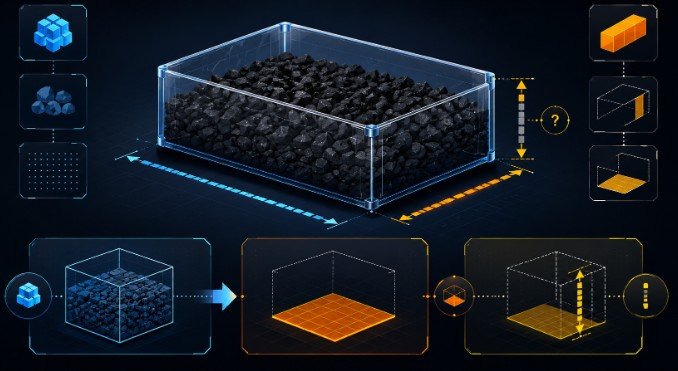
You can also estimate volume from dimensions. Multiply the packed length × width × height in inches and divide the result by 1,728.
For a backpack measuring 18 × 12 × 8 inches:
18 × 12 × 8 = 1,728 cubic inches
1,728 ÷ 1,728 = 1 cubic foot
However, I treat this dimensional method as an estimate. A backpack is rarely a perfect rectangular box. Curved panels, tapered sections, padding, laptop sleeves, and internal dividers reduce the amount of usable interior space.
How Is Backpack Volume Actually Measured?
Manufacturers do not always determine backpack capacity simply by multiplying exterior dimensions.
REI explains that it uses the standardized ASTM F2153 test method for its branded backpacks. The process involves filling the backpack and its usable pockets with small plastic balls and then measuring the volume those balls occupy.
WIRED also describes a similar industry practice based on information from backpack manufacturers.
This explains why two backpacks with similar measurements may advertise very different capacities. External dimensions tell you how much physical space the pack occupies, while liter capacity is intended to describe the storage volume inside it.
How Many Cubic Feet Does a School Backpack Hold?

Most school backpack capacity falls between 20 and 30 liters, or roughly 0.7 to 1.1 cubic feet.
A 20-liter bag can handle basic school supplies and a laptop, while a 25- to 30-liter model gives students more space for textbooks, lunch, gym clothing, chargers, and other items.
For college students and commuters carrying a larger laptop plus books, I generally find the 25- to 30-liter range more versatile without becoming excessively bulky.
How Big Is a Travel Backpack in Cubic Feet?
A 40-liter backpack, for example, equals approximately 1.41 cubic feet and is a common size for travelers trying to pack efficiently.
However, US airline baggage rules usually focus on external dimensions rather than liters. A 30- to 40-liter pack may work as a weekender or light carry-on, but I would not automatically assume it qualifies as a personal item. Personal-item and carry-on limits vary by airline, so checking the carrier’s current measurements before flying is important.
If you’re weighing a backpack against checked or carry-on luggage, comparing suitcase volume can also help, since airlines size bags differently than backpack manufacturers do.
What Size Hiking Backpack Do I Need?
For a short day hike, a 15- to 25-liter backpack, around 0.5 to 0.9 cubic feet, may provide enough room for water, food, layers, and basic outdoor gear.
For multi-day hiking, 50- to 65-liter packs offer about 1.8 to 2.3 cubic feet. Expedition trekking packs in the 70- to 85-liter range provide roughly 2.5 to 3 cubic feet or more.
I would not choose the biggest hiking backpack automatically. Larger packs encourage overpacking, while fit, torso length, weight distribution, shoulder straps, and hip-belt support can matter just as much as capacity.
Does Backpack Shape Change Usable Capacity?
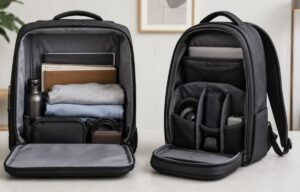
Yes. Advertised backpack capacity does not always translate into equally useful storage space.
A rectangular bag with a wide-opening main compartment may feel roomier than a heavily padded pack with the same liter rating. Thick laptop protection, curved back panels, organizational dividers, and narrow openings can all reduce packing flexibility.
That is why I use backpack volume as one comparison point rather than the only factor when deciding what to buy.
Frequently Asked Questions
1. How Many Cubic Feet Is a Backpack for Travel?
Most travel backpacks hold about 1.1 to 1.6 cubic feet, corresponding to roughly 30 to 45 liters. Larger trekking backpacks can provide considerably more space.
2. How many cubic feet is a 40-liter backpack?
A 40-liter backpack contains approximately 1.41 cubic feet of volume.
3. How many liters equal one cubic foot?
One cubic foot equals approximately 28.32 liters. To convert liters into cubic feet, divide the backpack’s liter capacity by 28.32.
4. Is cubic feet or liters better for measuring backpacks?
Both measure volume, but manufacturers usually use liters for backpack capacity. Cubic feet can be easier for some US shoppers to visualize, while cubic inches still appear on certain outdoor and tactical packs.
Final Takeaway
When I compare backpack sizes, I start with the activity rather than simply buying the biggest bag available. Everyday backpacks generally provide around 0.7 to 1.4 cubic feet, while multi-day hiking and expedition packs can range from about 1.8 to more than 3 cubic feet.
Understanding backpack capacity, backpack volume, standard backpack size, backpack size in liters, cubic inches, and liters-to-cubic-feet conversions makes it much easier to compare bags accurately. Once you combine those measurements with fit and usable interior space, choosing the right backpack becomes far more straightforward.

Ryan Mitchell
Ryan Mitchell holds a degree in Civil Engineering and spent over a decade working in construction project estimation, where accurate volume and material calculations were part of his daily work — from concrete pours to landscaping material orders. He founded this site to bring that same precision to everyday calculations, helping DIYers, contractors, and students get fast, accurate cubic footage results without the guesswork. Ryan reviews every calculator and formula on this site for accuracy and writes guides based on real-world measurement scenarios he's encountered on job sites.