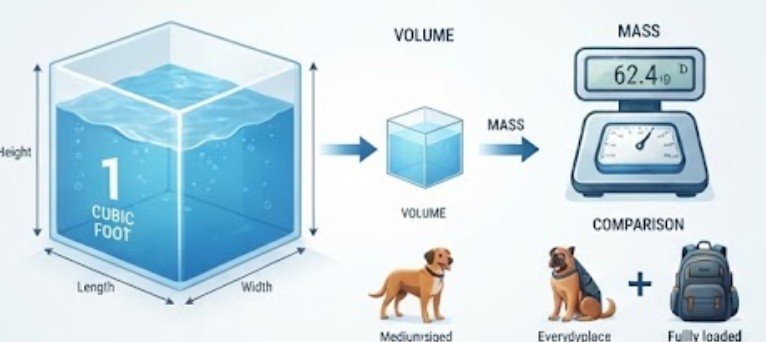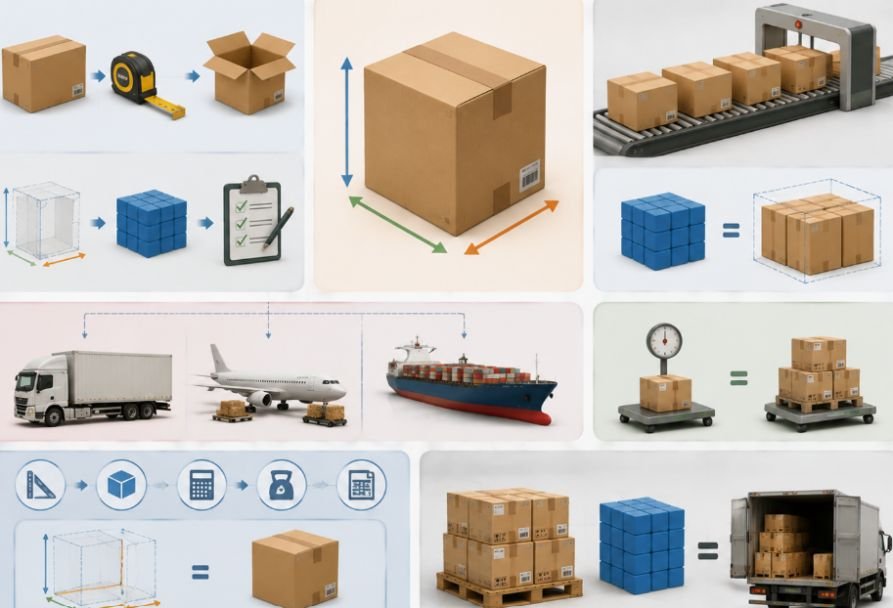
Whenever I prepare a large item for shipping, cubic footage is one of the first measurements I check. It tells me how much trailer or container space the shipment will occupy and helps me anticipate how a carrier may evaluate it. However, How Many Cubic Feet Is a Freight Package? does not have one universal numerical answer. Freight packages range from individual cartons and wooden crates to machinery and fully loaded pallets.
As a useful benchmark, a standard 48-by-40-inch pallet loaded to a height of 48 inches occupies approximately 53.3 cubic feet. Smaller freight packages may take up fewer than 10 cubic feet, while tall palletized shipments can exceed 80 cubic feet.
What Is Considered a Freight Package?
A freight package is an item or collection of items prepared for transportation through a freight carrier. Unlike an ordinary parcel, freight is generally larger, heavier, or more difficult to handle through conventional package-delivery networks. In modern logistics planning, multimodel strategies for mitigating congestion can also improve how freight moves through busy transportation networks.
It may consist of one oversized carton, a wooden crate, a piece of machinery or multiple boxes secured to a pallet. The final cubic-foot measurement must include all exterior packaging, not merely the product inside it.
When that freight is a single crated item rather than a palletized load, my wooden crate size guide covers the same interior-versus-exterior distinction for common crate dimensions.
For palletized freight, the shipment dimensions include the pallet, wrapping, corner protectors, straps and anything extending beyond the pallet’s edges. If a “Do Not Stack” cone is attached, its height may also affect the space the carrier must reserve.
Typical Freight Package Sizes in Cubic Feet
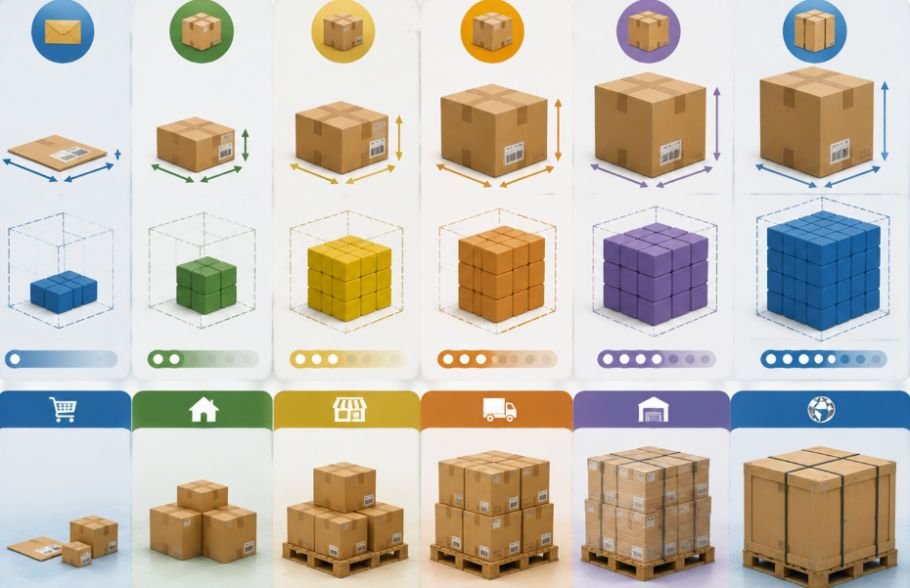
Freight volume differs considerably, but several common dimensions provide practical reference points. A package measuring 24 inches on every side occupies 8 cubic feet. A 36-by-36-by-36-inch crate occupies 27 cubic feet.
A 48-by-40-inch pallet loaded 36 inches high takes up 40 cubic feet. Increasing its height to 48 inches raises the volume to approximately 53.3 cubic feet. At 60 inches high, the same pallet occupies about 66.7 cubic feet. At 72 inches, it reaches 80 cubic feet.
These examples are estimates rather than mandatory freight sizes. Businesses use different pallet footprints, crates and protective materials. The only reliable way to find the volume is to measure the completed shipment.
How to Calculate Freight Package Volume
Measure the package’s exterior length, width, and height in inches. Multiply the three figures to obtain cubic inches. Divide that result by 1,728 because one cubic foot contains 1,728 cubic inches. This simple freight package cubic feet calculation provides the total exterior volume occupied by the shipment.
The formula is:
Length × width × height in inches ÷ 1,728 = cubic feet
For example, consider a palletized load measuring 48 inches long, 40 inches wide and 48 inches high. Multiplying the dimensions produces 92,160 cubic inches. Dividing 92,160 by 1,728 gives 53.33 cubic feet.
When measurements are already in feet, multiply the length, width and height directly. A package measuring four feet by three feet by three feet occupies 36 cubic feet.
Calculating Multiple Freight Pieces
When a shipment contains identical packages, calculate the volume of one piece and multiply it by the quantity. Ten cartons that each occupy three cubic feet have a combined volume of 30 cubic feet.
Different-sized pieces should be calculated separately before their totals are added. Combining all the pieces inside one imaginary rectangular space can overstate the shipment volume, particularly when package dimensions vary.
Measure every piece after it has been boxed, wrapped or placed on a skid. Carriers allocate space according to the shipment they collect, not the unpackaged products described on an order form.
How Cubic Feet Affect Freight Charges
Cubic footage indicates how much three-dimensional space a shipment occupies. Carriers use this information when planning trailer capacity and determining whether freight can move through less-than-truckload, partial-truckload or full-truckload service.
Volume alone does not determine the final price. Weight, density, distance, freight class, handling requirements, stowability and liability can also influence a quote. An unusually light product can still be expensive to transport when it consumes substantial trailer space.
Large low-density shipments may also trigger a carrier’s cubic-capacity or linear-foot rule. The exact threshold varies, although 750 cubic feet and 12 linear feet are frequently discussed as common LTL reference points. Shippers should verify current limits with their selected carrier rather than treating these figures as universal rules.
Cubic Feet Versus Freight Density
Cubic feet measure volume, while freight density measures how much weight is packed into that volume. Density is calculated by dividing the total shipment weight in pounds by its cubic feet.
A 500-pound load occupying 53.3 cubic feet has a density of approximately 9.38 pounds per cubic foot. For palletized freight, the total weight should include the pallet and other packaging.
Density can influence freight classification, but it is not always the only consideration. Handling difficulty, vulnerability to damage and the ability to stack the shipment may also affect classification and pricing.
Cubic Feet Versus Linear Feet and CBM
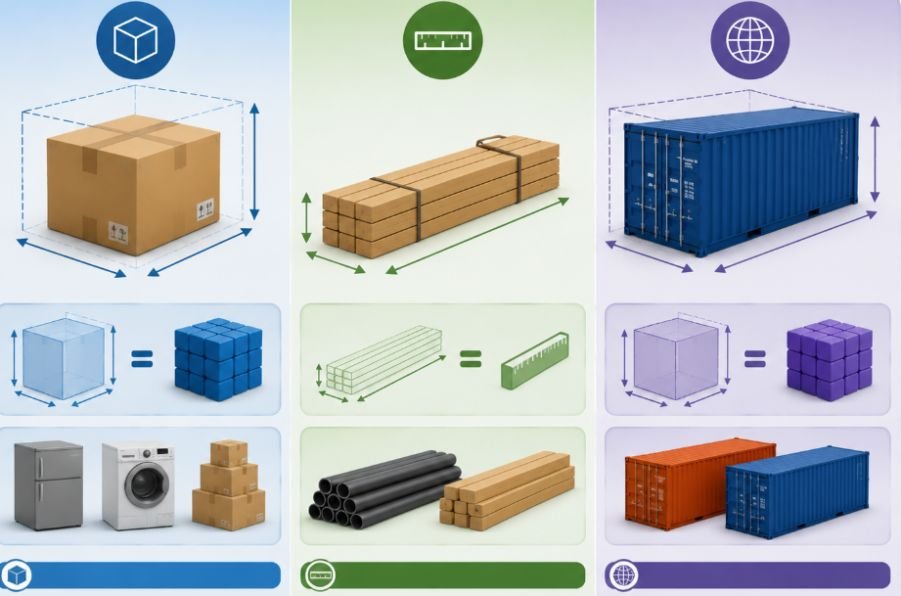
Cubic feet measure length, width and height. Linear feet measure how much trailer-floor length a shipment uses. A tall pallet and a short pallet can occupy the same linear footage while having very different cubic volumes.
CBM means cubic meters and is commonly used for international freight. One cubic foot equals approximately 0.0283 cubic meters. To convert cubic feet to CBM, multiply the cubic-foot total by 0.0283.
Common Measurement Mistakes
Do not round measurements down. If a packaged side measures 48.4 inches, entering 48 inches can understate the shipment. Many carriers expect dimensions to be rounded up to the next whole inch.
Irregular and cylindrical items often need to be measured at their widest and tallest exterior points. Carriers generally evaluate the rectangular space required to transport them, including empty space around curves.
Frequently Asked Questions
1. How Many Cubic Feet Is a Freight Package?
There is no fixed size, but a common 48-by-40-by-48-inch palletized package occupies approximately 53.3 cubic feet. Actual volume depends on the shipment’s packaged exterior dimensions.
2. What is the formula for freight cubic footage?
Multiply the exterior length, width and height in inches, then divide the result by 1,728.
3. Should the pallet be included in the measurement?
Yes. Include the pallet’s dimensions and weight because the carrier transports and allocates space for the complete packaged load.
4. Does cubic footage determine freight class?
Cubic footage helps calculate density, which can influence freight class. Handling, stowability and liability may also affect the final classification.
Final Thoughts
I consider cubic footage a simple measurement with significant financial consequences. A few inches of packaging, overhang or additional height can change volume, density and potentially the shipping quote. Using 53.3 cubic feet as a benchmark for a common loaded pallet is helpful, but measuring the finished shipment remains the most dependable approach.

Ryan Mitchell
Ryan Mitchell holds a degree in Civil Engineering and spent over a decade working in construction project estimation, where accurate volume and material calculations were part of his daily work — from concrete pours to landscaping material orders. He founded this site to bring that same precision to everyday calculations, helping DIYers, contractors, and students get fast, accurate cubic footage results without the guesswork. Ryan reviews every calculator and formula on this site for accuracy and writes guides based on real-world measurement scenarios he's encountered on job sites.