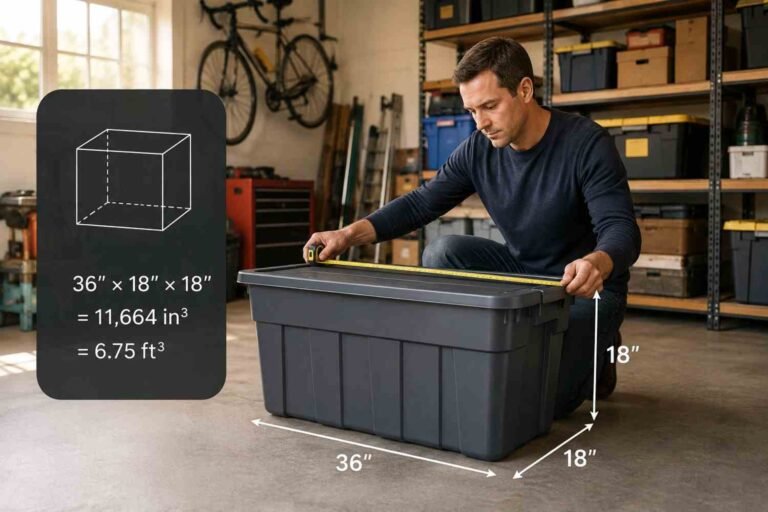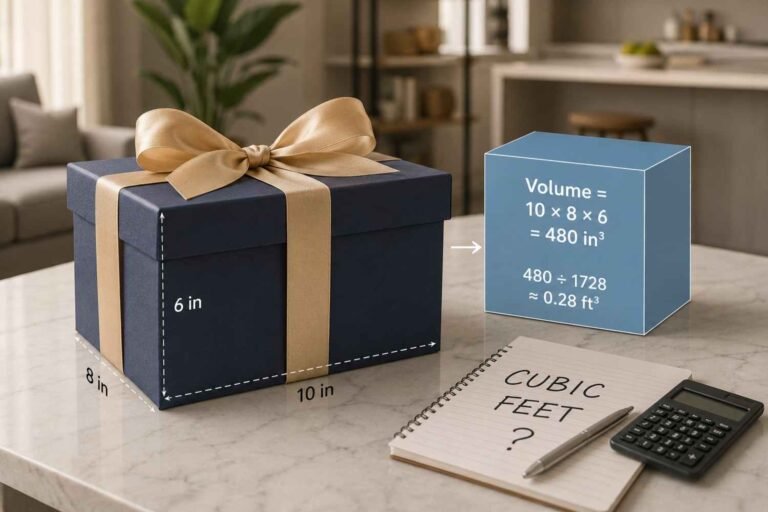

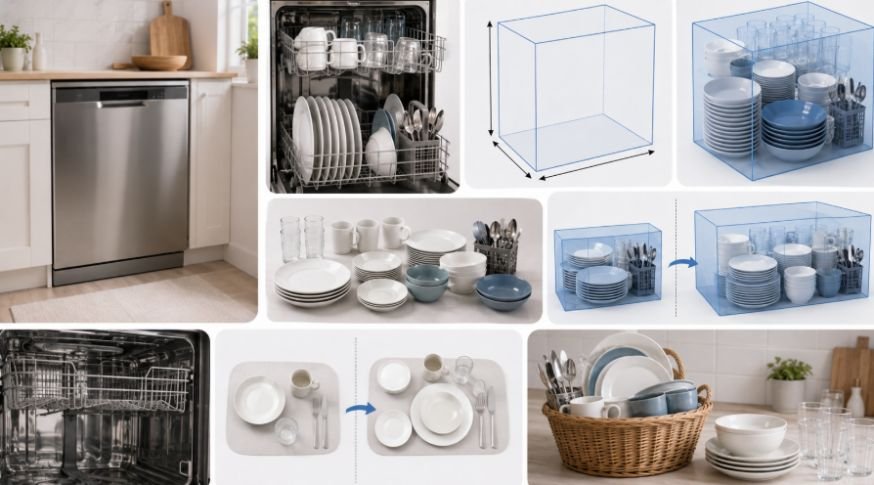
If you walk into an appliance store expecting to compare dishwashers by their volume in cubic feet, you are in for a confusing afternoon. Unlike refrigerators or stand-alone freezers, dishwasher manufacturers almost never list interior volume in cubic feet on the spec sheet. If you take out a tape measure and calculate the raw physical footprint, a standard full-size dishwasher occupies roughly 10 to 12 cubic feet of room under your kitchen counter, but its actual usable interior volume typically sits between 5 and 7 cubic feet.
Knowing this distinction is critical when you are starting out, moving into your first apartment, or attempting to stick to a tight kitchen renovation budget. Buying the wrong size appliance or miscalculating your cutout dimensions can lead to costly restocking fees and wasted money on custom cabinetry adjustments.
Why Appliance Brands Do Not Sell Dishwashers by the Cubic Foot
When shopping for cooling appliances, volume is king. You will easily spot metrics for a standard refrigerator or a standard freezer explicitly advertised in cubic feet because open, unstructured storage space determines how much food you can freeze or chill.
Dishwashers work completely differently. The interior is divided by slide-out tines, silverware baskets, and rotating spray arms that occupy physical space. Because usable interior volume varies wildly depending on how efficiently the rack system is designed, the appliance industry standardizes interior capacity through place settings rather than total volume.
According to guidelines established by the Association of Home Appliance Manufacturers (AHAM), a single place setting includes:
- One dinner plate, one salad plate, and one bowl
- One dinner cup and one saucer
- One drinking glass
- Five pieces of cutlery (dinner fork, salad fork, knife, dinner spoon, and teaspoon)
Instead of measuring empty air, place settings measure functional utility. Understanding this distinction saves budget-conscious buyers from overpaying for external volume when what they really need is smart internal geometry.
Standard Physical Dimensions and Real-World Capacity
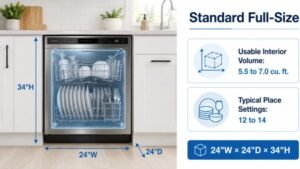
When comparing household appliance sizes, it can also help to understand about the dryer, since dryers are typically rated directly by internal cubic-foot capacity while dishwashers are more commonly compared by place settings.
Even though interior volume is measured in place settings, the exterior footprint matters immensely for fitting the unit into your layout.
| Dishwasher Type | Exterior Footprint | Usable Interior Volume | Typical Place Settings |
| Standard Full-Size | 24″W × 24″D × 34″H | 5.5 to 7.0 cu. ft. | 12 to 14 settings |
| Tall-Tub Standard | 24″W × 24″D × 34″H | 6.5 to 7.5 cu. ft. | 15 to 16+ settings |
| Compact / Built-In | 18″W × 24″D × 34″H | 3.5 to 4.5 cu. ft. | 6 to 8 settings |
| Countertop | 22″W × 20″D × 17″H | 1.5 to 2.2 cu. ft. | 4 to 6 settings |
When comparing laundry appliances, it is also useful to consider washing machine capacity, since washers are typically measured by their internal drum volume, making cubic-foot ratings more directly relevant than they are for dishwashers.
Decoding Exterior Footprint vs. Usable Space
To convert overall dimensions into total exterior volume, multiply width by depth by height in inches and divide by 1,728 (the number of cubic inches in a cubic foot):
Volume(cuft)=Width(in)Depth(in)Height(in)1728
A standard full-size dishwasher measures 24 inches wide, 24 inches deep, and 34 to 35 inches tall:
ExteriorVolume=242434172811.33cubicfeet
However, basement wall insulation, water channels, heating elements, and door mechanisms eat up nearly half of that physical footprint. That leaves you with roughly 6 cubic feet of actual washing space.
The “Tall-Tub” Advantage for Budget Shoppers
If you want maximum capacity without expanding your kitchen layout, look for tall-tub models. Older traditional dishwashers housed the motor and mechanical pumps directly beneath the washing tub, taking up substantial vertical real estate. Modern tall-tub designs use compact, side-mounted or redesigned bottom-mounted pump systems.
This design shift lowers the interior floor, expanding interior usable space by about 20%—raising capacity to 15 or 16 place settings within the exact same 24-inch exterior footprint. For young families or roommates trying to cut utility expenses, running one large tall-tub load instead of two smaller cycles translates directly to lower electricity and water bills.
How Dishwasher Efficiency Saves You Money

For anyone managing a strict budget, buying an appliance is only half the equation; operating costs matter just as much over time. Running dishes by hand in a sink full of hot running water can consume up to 20 gallons of water per session.
By comparison, certified residential dishwashers must meet strict resource limits. According to standards published by the U.S. Department of Energy (DOE), modern standard-capacity dishwashers must use no more than 5.0 gallons of water per cycle, while ENERGY STAR certified models bring that consumption down even further to around 3.2 gallons or less.
When you calculate utility rates over a standard 10-year lifespan, an efficient dishwasher pays for its initial price difference purely through reduced energy and water bills.
A Simple Step-by-Step Cabinet Space Test
Before spending your hard-earned savings on a new unit, perform this 3-step check to ensure your space is truly dishwasher-ready.
- Measure the Rough Opening: Measure your cabinetry cutout at three points (top, middle, bottom). You need a strict minimum width of 24 inches for standard models or 18 inches for compact models.
- Check Your Floor Depth: Measure from the back wall to the front edge of your cabinets. Ensure your kitchen floor finish extends underneath the cabinet cavity; installing a dishwasher over subflooring trapped by finished hardwood or tile can lock the machine in place, making future repairs impossible without tearing up your floor.
- Verify the Door Clearance Zone: Measure out at least 27 inches in front of your cabinet opening. The dishwasher door needs full clearance to fold down completely without hitting island counters, adjacent cabinet handles, or oven doors.
Common Misconceptions to Avoid

- Misconception 1: Bigger exterior dimensions mean more dish capacity.
Reality: Interior rack flexibility, adjustable tines, and third-level cutlery trays dictate how much you can wash, not exterior bulk. An 18-inch compact machine with smart racking often holds more dirty items than an older, poorly designed 24-inch model.
- Misconception 2: You can calculate exact dishwasher volume with a basic tape measure.
Reality: Measuring the inside walls with a tape measure gives an inflated number because it overlooks the space taken up by spray arms, detergent dispensers, and rack tracks. Rely on the place setting rating instead.
- Misconception 3: Countertop dishwashers do not save money.
Reality: If you are renting a small apartment where cabinetry modifications are banned, a countertop dishwasher (around 1.5 to 2 cubic feet) costs significantly less upfront and uses as little as 2 gallons of water per run.
Frequently Asked Questions
1. How many feet is a standard dishwasher?
A standard dishwasher is 2 feet wide (24 inches), 2 feet deep (24 inches), and roughly 2.8 feet tall (34 to 35 inches). It occupies roughly 11.3 cubic feet of total cabinet space.
2. How wide of a space is needed for a dishwasher?
A standard full-size dishwasher requires a cabinet opening that is exactly 24 inches wide. Compact or apartment-sized dishwashers require a 18-inch wide cutout space.
3. What is the typical capacity of a dishwasher?
Typical standard 24-inch dishwashers hold between 12 and 14 place settings. Tall-tub variants can hold up to 16 place settings, while compact 18-inch units hold about 6 to 8 settings.
4. What size is a full-size dishwasher?
A full-size dishwasher measures 24 inches wide, 24 inches deep, and 34 to 35 inches high. This standardized sizing allows it to slide cleanly under standard kitchen countertops.
Choosing the Right Dishwasher Capacity for Your Kitchen
While you will rarely find dishwashers sold by cubic feet, understanding that a full-size unit occupies about 11 to 12 cubic feet externally and delivers 5 to 7 cubic feet of usable internal volume helps you make sense of your kitchen layout. Instead of getting hung up on volume metrics, focus your budget on place setting ratings, ENERGY STAR certification, and tall-tub designs.
By measuring your cutout carefully and matching capacity to your actual lifestyle, you will protect your household budget while keeping your kitchen running smoothly.

Ryan Mitchell
Ryan Mitchell holds a degree in Civil Engineering and spent over a decade working in construction project estimation, where accurate volume and material calculations were part of his daily work — from concrete pours to landscaping material orders. He founded this site to bring that same precision to everyday calculations, helping DIYers, contractors, and students get fast, accurate cubic footage results without the guesswork. Ryan reviews every calculator and formula on this site for accuracy and writes guides based on real-world measurement scenarios he's encountered on job sites.