

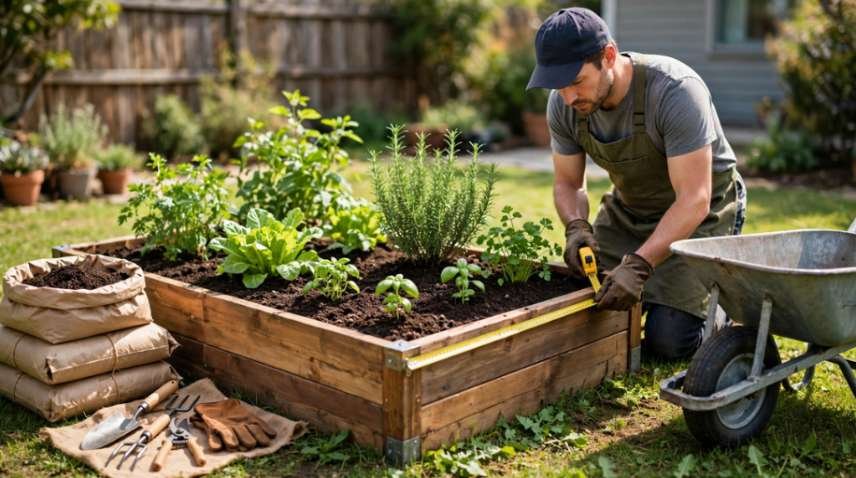
A garden bed can hold anywhere from a few cubic feet of soil to several dozen, depending on its length, width, and depth. When I plan a raised bed project, I calculate the volume first because buying too much soil wastes money, while buying too little creates extra trips.
The easiest way to find how many cubic feet is a garden bed is to multiply its length, width, and depth measurements in feet. Once I know the cubic feet, I can estimate soil bags, bulk deliveries, and even the total project cost. Soil calculators also use this same measurement method for raised beds and containers.
How to Calculate the Cubic Feet of a Garden Bed
A garden bed is usually a rectangular shape, making the calculation straightforward.
Garden Bed Volume Formula Explained
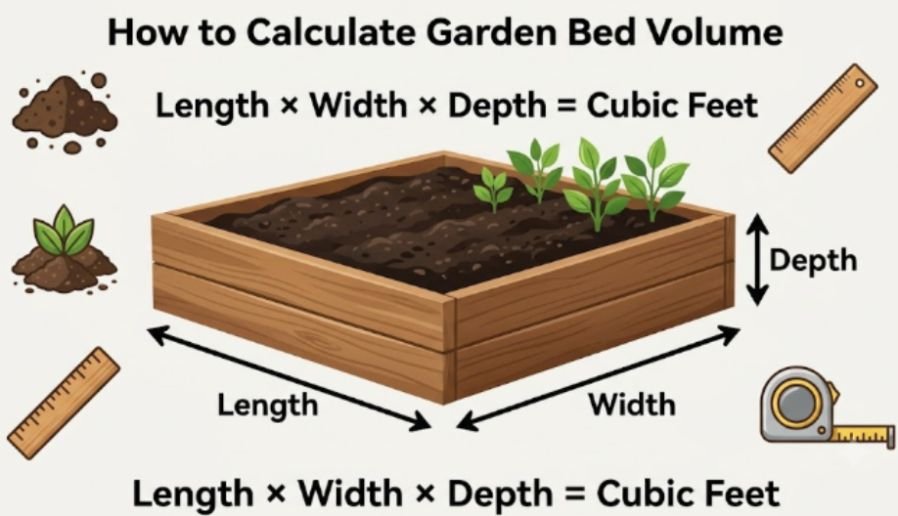
The formula I use is:
Cubic Feet = Length (ft) × Width (ft) × Depth (ft)
For example, a raised garden bed measuring:
- Length: 8 feet
- Width: 4 feet
- Depth: 1 foot
The calculation is:
8 × 4 × 1 = 32 cubic feet
That means the bed requires approximately 32 cubic feet of soil before accounting for settling.
If the bed has unusual shapes, such as circles or tiers, the calculation changes. However, most backyard raised beds use the simple length × width × depth formula.
Converting Inches Into Feet for Accurate Measurements
Many garden beds are sold with height measurements in inches instead of feet. I always convert the depth before calculating volume.
The conversion is:
Depth in inches ÷ 12 = Depth in feet
Examples:
- 6 inches = 0.5 feet
- 12 inches = 1 foot
- 18 inches = 1.5 feet
A 4-foot × 8-foot garden bed with an 18-inch depth would be:
4 × 8 × 1.5 = 48 cubic feet
This small conversion step prevents one of the most common mistakes when estimating soil needs.
Common Raised Garden Bed Sizes and Cubic Feet
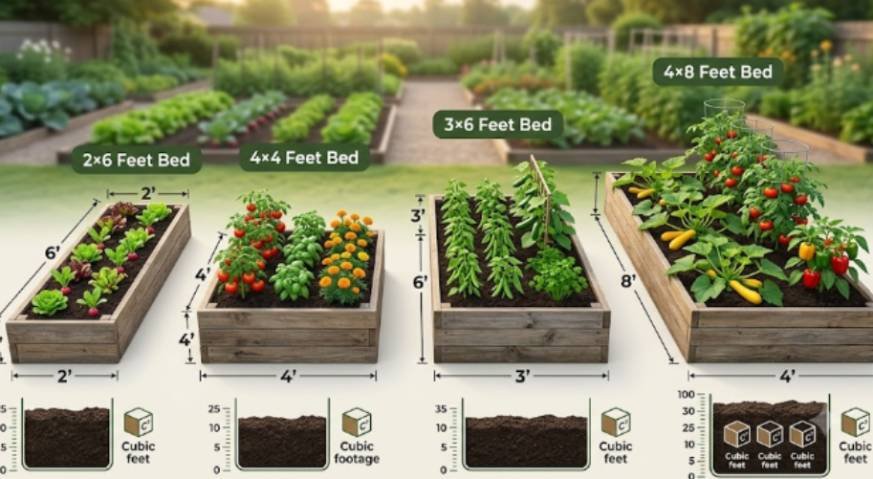
The table below shows common backyard garden beds with a 12-inch soil depth.
| Garden Bed Size | Depth | Approximate Soil Volume |
| 2 ft × 6 ft | 12 inches | 12 cubic feet |
| 4 ft × 4 ft | 12 inches | 16 cubic feet |
| 3 ft × 6 ft | 12 inches | 18 cubic feet |
| 4 ft × 8 ft | 12 inches | 32 cubic feet |
A 4-foot × 8-foot raised bed is one of the most popular sizes because it provides enough growing space while remaining accessible from both sides. It requires about 32 cubic feet of soil when filled to a 12-inch depth.
How Much Soil Do You Need for a Garden Bed?
Knowing the cubic feet is only the first step. The next challenge is deciding how to buy the soil.
Buying Soil Bags by Cubic Feet
Retail soil bags are usually labeled by cubic feet. Many garden soil and compost bags contain around 1.5 to 2 cubic feet of material.
For example:
A 4 × 4 × 1-foot garden bed needs 16 cubic feet.
If each bag contains 2 cubic feet:
16 ÷ 2 = 8 bags
If each bag contains 1.5 cubic feet:
16 ÷ 1.5 = about 11 bags
This calculation helps me compare different products before purchasing.
For a more detailed comparison, understanding how many cubic feet is a bag of soil can help estimate the exact number of bags required for any garden project.
Ordering Bulk Soil by Cubic Yards
Large garden beds are often cheaper to fill with bulk soil. Landscaping suppliers usually sell soil by cubic yards.
The conversion is:
1 cubic yard = 27 cubic feet
To convert cubic feet into cubic yards:
Cubic Feet ÷ 27 = Cubic Yards
For example:
32 cubic feet ÷ 27 = approximately 1.19 cubic yards
I usually round up when ordering bulk soil because deliveries are rarely worth scheduling for an exact minimum amount.
Factors That Change a Garden Bed’s Actual Soil Volume
The calculated volume represents a perfect box. Real garden beds rarely fill exactly that way.
Several factors affect the final amount of soil needed:
Soil settling: Fresh soil compresses after watering and time. I normally purchase about 10% extra to allow for compaction.
Bed design: Braces, support boards, liners, and internal structures reduce available space.
Plant requirements: Some vegetables need deeper soil than others. Root vegetables often need more depth than shallow-rooted herbs.
Filling method: Large beds may use organic materials at the bottom to reduce soil costs while still providing growing space.
Soil quality also matters. Healthy garden soil contains minerals, organic matter, water, and air that support plant growth.
If your bed also includes a concrete border or edging, my bag of concrete mix guide shows exact cubic-foot yields per bag so you can plan that material alongside your soil order.
My Simple Method for Estimating Garden Bed Soil Before Buying
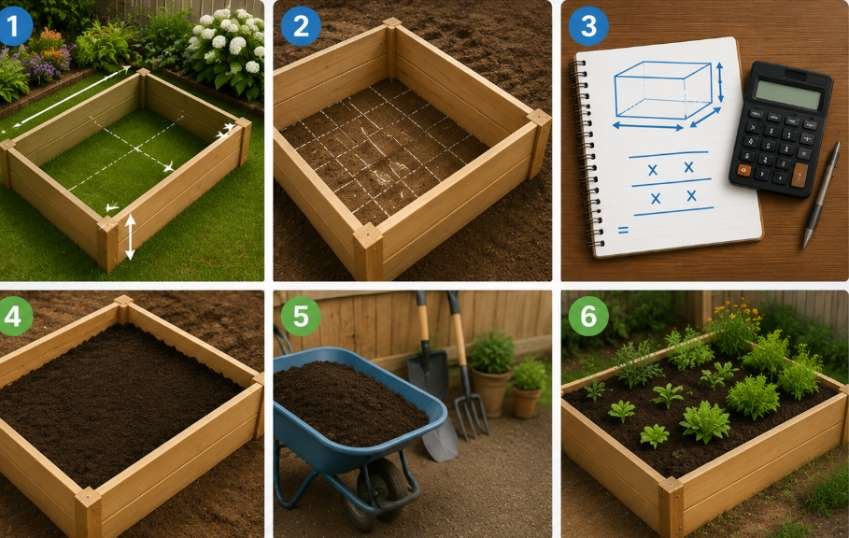
When I prepare a new raised bed, I follow a simple process:
First, I measure the inside dimensions instead of the outside frame. This gives a more realistic soil calculation.
Next, I convert the depth into feet and calculate the cubic feet.
After that, I decide whether bags or bulk soil make more financial sense.
Finally, I add a small extra amount because settling is unavoidable.
For example, a 4 × 8 × 1-foot bed equals 32 cubic feet. I would not order exactly 32 cubic feet of soil because the final soil level usually drops after watering and planting.
I also consider equipment capacity. If moving soil manually, wheelbarrow capacity helps estimate how many trips the project will require.
Frequently Asked Questions About Garden Bed Cubic Feet
1. How many cubic feet of soil does a 4×8 garden bed need?
A 4×8 garden bed that is 12 inches deep needs approximately 32 cubic feet of soil.
2. How do I calculate garden bed soil volume?
Multiply length × width × depth in feet to calculate cubic feet.
3. How many bags of soil do I need for a raised garden bed?
Divide the total cubic feet by the cubic feet listed on each soil bag.
4. Can I calculate how many cubic feet is a garden bed with uneven shapes?
Yes, but unusual shapes require dividing the bed into smaller sections and adding each volume together.
Final Thoughts: Measure Once, Fill Smartly
Calculating how many cubic feet is a garden bed is a small step that prevents expensive mistakes. I have found that measuring carefully before buying soil saves both time and money.
A simple length × width × depth calculation tells me exactly what I need, but adding real-world adjustments makes the estimate much more accurate. Soil settles, beds are rarely perfect rectangles, and plant choices affect depth requirements.
My best tip is simple: calculate your cubic feet first, then buy slightly more soil than the exact number. A little extra is far easier to manage than stopping halfway through a garden project with an empty bed.

Ryan Mitchell
Ryan Mitchell holds a degree in Civil Engineering and spent over a decade working in construction project estimation, where accurate volume and material calculations were part of his daily work — from concrete pours to landscaping material orders. He founded this site to bring that same precision to everyday calculations, helping DIYers, contractors, and students get fast, accurate cubic footage results without the guesswork. Ryan reviews every calculator and formula on this site for accuracy and writes guides based on real-world measurement scenarios he's encountered on job sites.


