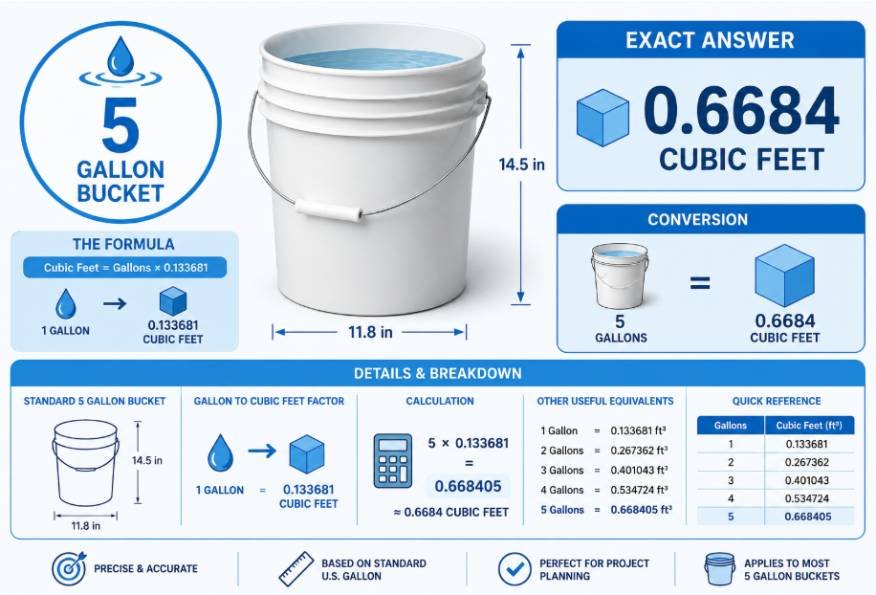
The answer to how many cubic feet in a 5 gallon bucket is 0.6684 cubic feet. For everyday projects, I call it 0.67 cubic feet or roughly two-thirds of a cubic foot. That figure applies when the container holds a true five US gallons.
I often use these buckets for soil, compost, gravel, and cleanup. The material changes, but the five-gallon volume does not.
How to Convert Five Gallons to Cubic Feet
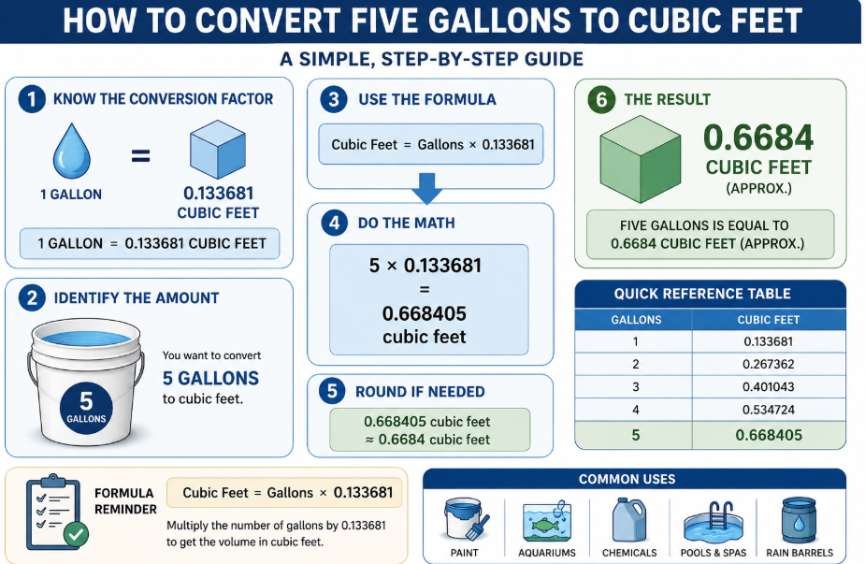
The National Institute of Standards and Technology lists one cubic foot as 7.480519 US gallons. Its official volume conversion tables also define one gallon as 0.1336806 cubic feet.
The calculation is:
5 × 0.1336806 = 0.668403 cubic feet
Rounded to four decimal places, that becomes 0.6684 cubic feet. Rounded for jobsite use, it becomes 0.67.
When someone asks how many cubic feet in a 5 gallon bucket, “about two-thirds” is a useful verbal answer. Use 0.6684 when estimating materials or scaling a recipe.
Nominal Capacity Versus Brim Capacity
A bucket sold as five gallons may hold more than five gallons when filled to its rim. The five-gallon rating can refer to a marked fill level below the top.
This difference explains why measurements taken from a bucket’s full exterior dimensions may produce more than 0.6684 cubic feet. Tapered walls, a thick base, and a wide rim also complicate the calculation.
Look for the molded five-gallon line. If precision matters, fill the bucket with measured one-gallon amounts and mark the true level.
Quick Five-Gallon Bucket Conversions
The most useful project estimates are:
- One five-gallon bucket equals 0.6684 cubic feet.
- One cubic foot equals about 1.50 five-gallon buckets.
- Ten buckets equal about 6.68 cubic feet.
- Twenty buckets equal about 13.37 cubic feet.
- One cubic yard equals about 40.4 five-gallon buckets.
A cubic yard contains 27 cubic feet. Dividing 27 by 0.6684 gives approximately 40.4 buckets. In practice, 41 level five-gallon loads exceed one cubic yard slightly.
These numbers answer how many cubic feet in a 5 gallon bucket without relying on the type of material inside it.
Does the Material Change the Bucket’s Volume?
No. Five gallons of soil, mulch, sand, gravel, or water occupy the same container volume when filled to the same mark.
What changes is density, weight, settlement, and the amount of bagged material required. Loose potting mix may settle after watering. Fluffy mulch contains large air pockets between particles, so a bag can look full while actually covering less ground than its volume suggests. Sand packs more tightly and weighs far more.”
Those characteristics can affect purchasing estimates. They do not turn a five-gallon bucket into a 0.75- or 0.8-cubic-foot container.
Soil, Compost, and Mulch
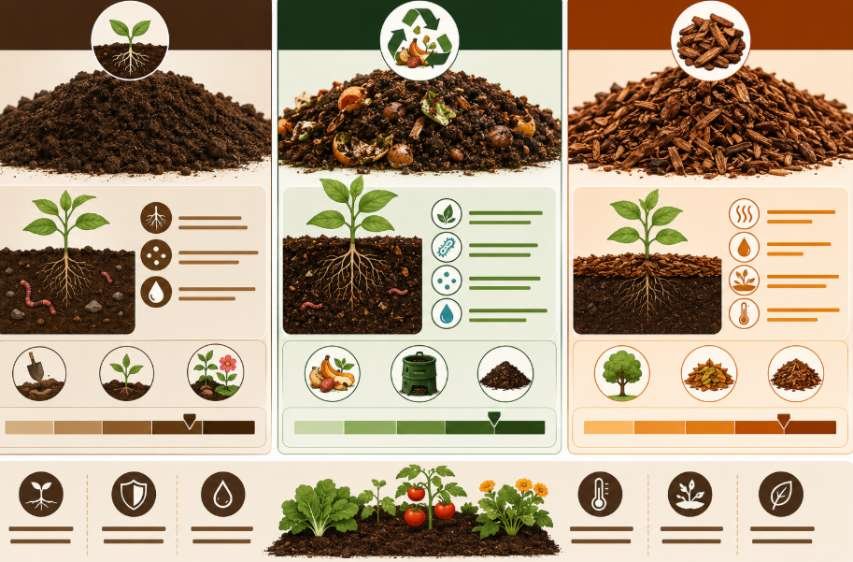
A level five-gallon bucket holds 0.6684 cubic feet of loose material. If compost settles by 10%, you may need roughly 0.74 cubic feet of uncompacted material to restore the bucket to the line.
That is a replenishment allowance, not the bucket’s new capacity.
The EPA explains that compost adds organic material and can improve soil properties. Its home composting resource also covers suitable compost ingredients and management practices.
If you are producing material rather than buying bags, estimate the capacity of a compost tumbler before counting how many bucket loads it can supply.
Sand and Gravel
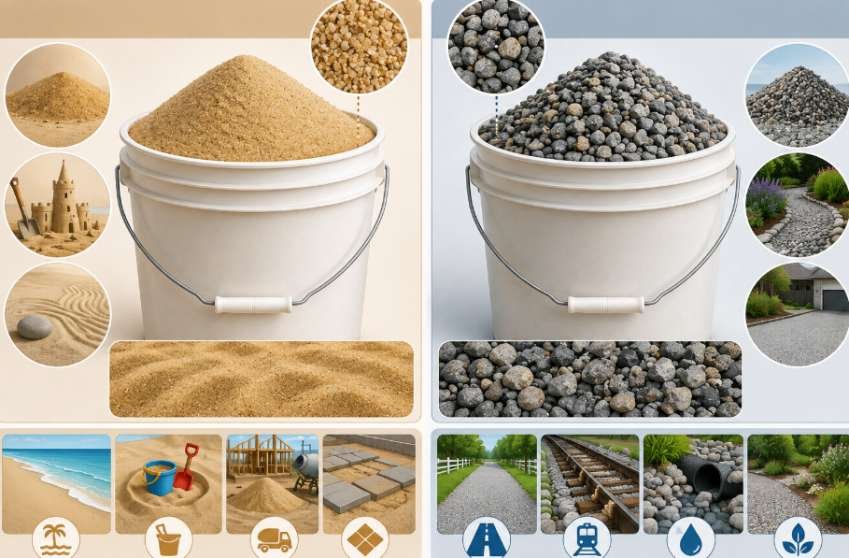
A bucket filled to the five-gallon mark still contains 0.6684 cubic feet of sand or gravel. However, these dense materials create a serious lifting load.
Moisture and particle size can change weight. Because a five-gallon bucket of dense material can become difficult to handle, following safe lifting practices can reduce strain when moving repeated bucket loads.
Avoid treating a general internet weight estimate as a guaranteed figure. Check the supplier’s density data, divide the load, and use safe lifting practices.
Using Five-Gallon Buckets for a Raised Bed
Suppose a garden bed measures 4 feet long, 2 feet wide, and 1 foot deep.
4 × 2 × 1 = 8 cubic feet
Divide the required volume by the bucket capacity:
8 ÷ 0.6684 = approximately 11.97 buckets
The mathematical result is about 12 five-gallon buckets. I would plan for 13 loads if the material may settle or spill.
For a larger 4-by-8-by-1-foot bed, the calculation becomes:
4 × 8 × 1 = 32 cubic feet
32 ÷ 0.6684 = approximately 47.87 buckets
That project requires about 48 level bucket loads. Measure a raised garden bed carefully a depth difference of just three inches can throw off your soil volume calculation enough to leave you short a full bag or two.”
The University of Minnesota Extension recommends a raised-bed mixture containing roughly one-half to two-thirds topsoil. The remainder can be plant-based compost. Its raised-bed guidance also warns that potting soil alone can dry too quickly in this setting.
Mixing Materials by Bucket Ratio
Buckets work well for repeatable mix ratios. A recipe of two buckets of topsoil and one bucket of compost creates three equal parts by volume.
At the five-gallon mark, that batch contains:
3 × 0.6684 = approximately 2.01 cubic feet
The result stays accurate only if every bucket reaches the same level. Do not heap one material and level another.
This ratio method also avoids confusing volume with weight. One bucket of compost and one bucket of damp sand have equal volumes but very different masses.
When I calculate how many cubic feet in a 5 gallon bucket for a mix, I record the fill line. That small step keeps later batches consistent.
Measuring an Unmarked Bucket
If the bucket has no reliable capacity mark, test it with known liquid volumes. Add one US gallon at a time and mark each level until you reach five gallons.
You can also estimate a straight-sided cylindrical container:
3.1416 × radius² × interior height = cubic inches
Divide cubic inches by 1,728 to obtain cubic feet. Standard utility buckets taper, so a simple cylinder calculation may overstate their actual capacity.
For a tapered bucket, use the truncated-cone formula:
V = ⅓ × 3.1416 × h × (R² + Rr + r²)
Here, “R” is the top interior radius, “r” is the bottom interior radius, and “h” is interior height. Keep all measurements in inches, then divide the result by 1,728.
Common Conversion Errors
The first error is dividing gallons by five. The correct cubic-foot divisor is 7.480519 gallons per cubic foot.
The second is confusing cubic feet with square feet. Square feet measure area, while cubic feet include depth.
Another error is assuming that compaction changes bucket capacity. Settlement changes how much loose material is needed, not the container’s physical volume.
Finally, exterior measurements can exaggerate usable capacity. Handles, rims, wall thickness, and a raised bottom do not hold material.
Frequently Asked Questions
1. Is a five-gallon bucket exactly two-thirds of a cubic foot?
Not exactly; it holds 0.6684 cubic feet, which is slightly more than two-thirds.
2. How many five-gallon buckets make one cubic foot?
You need approximately 1.5 level five-gallon buckets.
3. How many five-gallon buckets are in a cubic yard?
One cubic yard equals about 40.4 true five-gallon bucket loads.
4. Does a five-gallon bucket hold 0.8 cubic feet of soil?
No; it holds 0.6684 cubic feet at the five-gallon mark, although extra loose soil may be needed after settling.
Bucket Math Without the Dirt Drama
The exact answer to how many cubic feet in a 5 gallon bucket is 0.6684 cubic feet. Use 0.67 for quick estimates and 0.6684 when calculating a large order.
Mark the true five-gallon line before starting. Then level each load and add a separate allowance for spills or settlement. The bucket stays the same size—even when the material inside behaves like it has its own agenda.

Ryan Mitchell
Ryan Mitchell holds a degree in Civil Engineering and spent over a decade working in construction project estimation, where accurate volume and material calculations were part of his daily work — from concrete pours to landscaping material orders. He founded this site to bring that same precision to everyday calculations, helping DIYers, contractors, and students get fast, accurate cubic footage results without the guesswork. Ryan reviews every calculator and formula on this site for accuracy and writes guides based on real-world measurement scenarios he's encountered on job sites.