


A wheelbarrow can hold more material than most people expect, but the exact amount depends on its size, shape, and how it is filled. When I measure hauling needs for landscaping projects, I usually find that a standard wheelbarrow holds between 3 and 6 cubic feet.
The answer to how many cubic feet is a wheelbarrow depends on whether you are moving soil, mulch, gravel, or concrete. A small garden model may carry only 2 cubic feet, while a commercial construction wheelbarrow can handle around 6 cubic feet or more.
Knowing the true capacity helps me estimate how many trips I need, how much material to order, and whether my wheelbarrow is the right size for the job.
Average Wheelbarrow Capacity in Cubic Feet
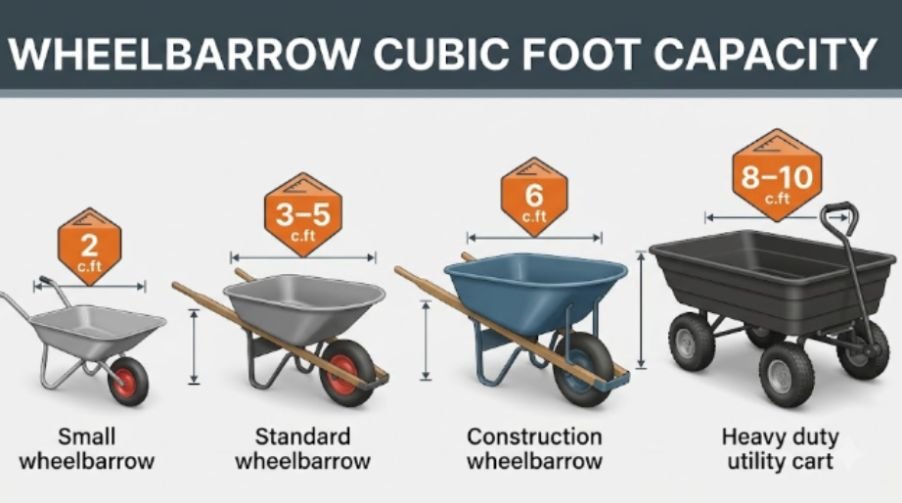
Most wheelbarrows sold in the United States fall into a few common capacity ranges. Manufacturers usually rate these sizes by volume, but the listed capacity often assumes a full, slightly rounded load.
| Wheelbarrow Type | Average Capacity |
| Small residential model | 2 cubic feet |
| Standard garden wheelbarrow | 3–5 cubic feet |
| Construction wheelbarrow | 6 cubic feet |
| Heavy-duty utility cart | 8–10 cubic feet |
A typical homeowner’s wheelbarrow usually falls between 3 and 5 cubic feet. This size works well for moving garden soil, compost, mulch, and small amounts of concrete.
Construction professionals often use 6-cubic-foot models because they balance capacity, durability, and maneuverability.
Standard Home and Garden Wheelbarrow Sizes
A 3-cubic-foot wheelbarrow is common for basic yard maintenance. It works well for flower beds, small landscaping jobs, and transporting bags of materials.
A larger 5-cubic-foot wheelbarrow reduces the number of trips but requires more effort when loaded with heavy materials.
Construction and Heavy-Duty Wheelbarrow Capacities
A 6-cubic-foot wheelbarrow is considered a standard heavy-duty option. Contractors often choose this size for concrete, gravel, and larger landscaping projects.
Some dual-wheel carts reach 8 to 10 cubic feet. These models are designed for stability and volume rather than tight maneuvering.
How Wheelbarrow Size Affects Material Calculations
Understanding capacity becomes useful when buying bulk materials. I use cubic feet measurements to estimate how many wheelbarrow trips a project requires.
One cubic yard equals 27 cubic feet. That means wheelbarrow capacity directly affects the number of loads needed.
Converting Wheelbarrow Loads to Cubic Yards
A 3-cubic-foot wheelbarrow requires about nine full loads to move one cubic yard of material.
A 6-cubic-foot wheelbarrow requires about four and a half loads for the same amount.
The calculation is simple:
Cubic yards × 27 = total cubic feet
Then:
Total cubic feet ÷ wheelbarrow capacity = number of loads
For example, a 2-cubic-yard mulch delivery contains 54 cubic feet. Using a 6-cubic-foot wheelbarrow would require about nine trips.
Real-World Example Using Soil and Concrete
When I move garden soil, I rarely fill the wheelbarrow perfectly level. Loose soil usually creates a rounded pile above the rim, increasing the apparent volume.
Concrete is different. A heavy wet mixture is harder to mound safely, so the practical working capacity is often lower.
Factors That Change a Wheelbarrow’s Actual Cubic Foot Capacity
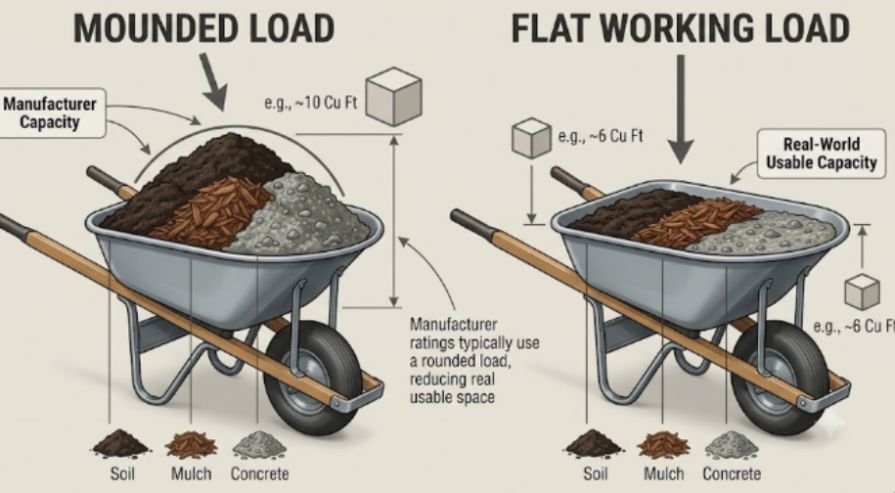
The advertised capacity is only part of the story. Several factors affect how much material you can realistically move.
Mounded Loads vs Flat Loads
Wheelbarrow manufacturers commonly measure capacity using a mounded load. This means the material rises above the top edge.
A flat-filled wheelbarrow may hold much less. For liquids such as wet concrete, the usable volume can be close to half the rated capacity because the material cannot safely stay piled.
Material Type and Weight Considerations
Volume does not equal weight. A wheelbarrow filled with mulch is much easier to push than one filled with wet soil or gravel.
Heavy materials can also limit how full you should load the wheelbarrow. The physical capacity may be higher than the practical carrying capacity.
How Many Cubic Feet of Common Materials Fit in a Wheelbarrow?
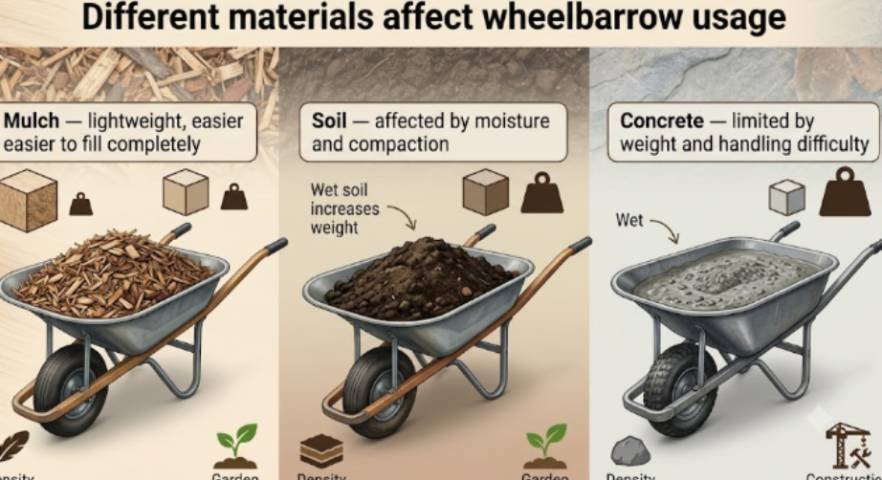
Different materials behave differently inside the same wheelbarrow.
Loose mulch fills spaces differently than compact soil. Gravel creates heavier loads because of its density. Concrete requires careful handling because weight becomes the limiting factor.
Concrete Mix Capacity
A 6-cubic-foot wheelbarrow can theoretically hold six cubic feet of dry material. However, when mixing concrete, I usually avoid filling it completely because the weight becomes difficult to control.
Mulch and Soil Capacity
Mulch is one of the easiest materials to estimate because it is lightweight and loosely packed.
Soil is more complicated because moisture and compaction change its density. A wet soil load can feel much heavier than the same volume of dry soil.
For garden projects, checking how many cubic feet is a bag of soil helps determine whether buying bags or ordering bulk material makes more sense.
Choosing the Right Wheelbarrow Size for Your Project
I choose wheelbarrow size based on the material and distance I need to move it.
A smaller 3-cubic-foot model works well for occasional gardening. A 6-cubic-foot wheelbarrow is better for frequent landscaping, construction, and larger property projects.
The largest wheelbarrow is not always the best choice. A full 10-cubic-foot cart may save trips but can become difficult to push on slopes or uneven ground.
A practical approach is to match capacity with your strength, terrain, and material weight.
Final Thoughts: Measure Smart Before You Start Moving
A wheelbarrow is a simple tool, but its capacity can change the entire workflow of a project. I always check cubic feet before ordering materials because a few extra calculations can prevent wasted trips and unnecessary purchases.
For most US homeowners, a 3-to-6-cubic-foot wheelbarrow covers everyday needs. If you know your wheelbarrow’s volume and your material quantity, you can estimate loads quickly and plan your project with fewer surprises.
The next time you buy soil, mulch, gravel, or concrete, measure first. A little preparation makes every load easier.
Frequently Asked Questions
1. How many cubic feet does a standard wheelbarrow hold?
A standard wheelbarrow usually holds 3 to 6 cubic feet, depending on its design and size.
2. How many wheelbarrow loads equal one cubic yard?
A 3-cubic-foot wheelbarrow requires about nine loads, while a 6-cubic-foot model needs about four and a half loads.
3. Can a wheelbarrow hold 1 cubic foot of concrete?
Yes, but the actual amount depends on the wheelbarrow size and the weight of the concrete mixture.
4. How many cubic feet is a wheelbarrow for mulch?
Most standard wheelbarrows hold about 3 to 6 cubic feet of mulch when filled according to their rated capacity.

Ryan Mitchell
Ryan Mitchell holds a degree in Civil Engineering and spent over a decade working in construction project estimation, where accurate volume and material calculations were part of his daily work — from concrete pours to landscaping material orders. He founded this site to bring that same precision to everyday calculations, helping DIYers, contractors, and students get fast, accurate cubic footage results without the guesswork. Ryan reviews every calculator and formula on this site for accuracy and writes guides based on real-world measurement scenarios he's encountered on job sites.


