
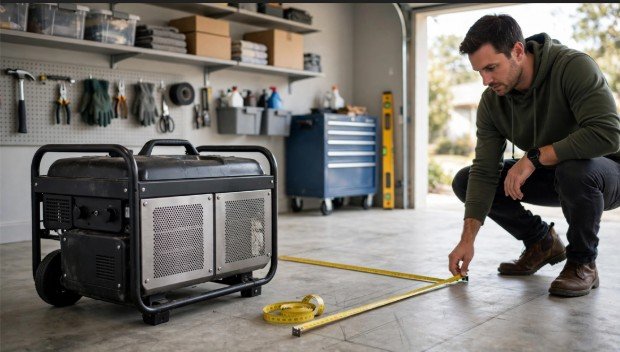
A generator can take up anywhere from 1.5 to 70 cubic feet, depending on its type, power output, and design. When I researched generator sizes for residential use, I found that most homeowners are comparing portable units between 5 and 10 cubic feet, while standby systems require much more space.
The answer to how many cubic feet is a generator depends on whether you need a small camping inverter, an emergency backup generator, or a whole-house standby system. The physical size matters because it affects storage, transportation, and installation planning.
I have found that many buyers focus only on wattage and forget about the actual space a generator occupies. Measuring cubic feet before purchasing helps avoid surprises when storing or installing the unit.
Average Generator Size in Cubic Feet by Type
Generators come in several categories, and each design has a different physical footprint. A small inverter generator may fit in a vehicle trunk, while a standby generator needs permanent outdoor space.
| Generator Type | Typical Power Range | Average Cubic Feet |
| Small inverter generator | 1,000–2,000 watts | 1.5–2.5 cubic feet |
| Portable home generator | 4,000–8,000 watts | 5–10 cubic feet |
| Mid-size standby generator | 10–14 kW | 25–35 cubic feet |
| Large standby generator | 20–26 kW | 40–70 cubic feet |
The numbers vary by manufacturer because generators with similar power ratings can have different engine layouts, fuel tanks, cooling systems, and protective covers.
Portable Generator Cubic Feet Size: Small to Medium Units
Small Inverter Generators: 1.5 to 2.5 Cubic Feet
Small inverter generators are designed for portability. These models usually produce between 1,000 and 2,000 watts and are popular for camping, tailgating, and small electronics.
A typical compact inverter generator may measure around:
- Length: 20 inches
- Width: 12 inches
- Height: 18 inches
Using the cubic feet formula, this equals about:
20 × 12 × 18 ÷ 1,728 = 2.5 cubic feet
These generators are easy to transport because manufacturers prioritize compact designs over maximum fuel capacity.
Portable Home Generators: 5 to 10 Cubic Feet
Standard portable generators provide more power for refrigerators, lights, sump pumps, and essential household appliances during outages.
Most 4,000–8,000-watt portable generators fall between 5 and 10 cubic feet.
A common example:
28 inches × 26 inches × 25 inches ÷ 1,728 = 10.5 cubic feet
Although the generator itself may occupy around 10 cubic feet, I recommend leaving additional storage room for handles, wheels, fuel containers, and safe ventilation.
Whole-House Generator Cubic Feet: Standby Generator Sizes
Mid-Size Standby Generators: 25 to 35 Cubic Feet
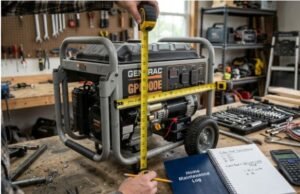
Standby generators permanently connect to a home’s electrical system. They typically sit outdoors and automatically start during a power outage.
A 10–14 kW standby generator often measures around:
- Length: 48 inches
- Width: 25 inches
- Height: 29 inches
The physical volume is approximately:
48 × 25 × 29 ÷ 1,728 = 20.1 cubic feet
However, manufacturers and installers often account for protective housing and installation requirements, making the practical space requirement closer to 25–35 cubic feet.
Large Standby Generators: 40 to 70 Cubic Feet
Large whole-house generators designed for bigger homes can exceed 20 kW and require larger engines, fuel systems, and cooling components.
These units may occupy 40 cubic feet or more. The generator’s physical size increases because higher output requires stronger internal components.
How to Calculate the Cubic Feet of a Generator
Finding the cubic feet of a generator is simple if you know its dimensions.
Cubic Feet Formula for Any Generator Model
Use this calculation:
Length (inches) × Width (inches) × Height (inches) ÷ 1,728 = Cubic Feet
The number 1,728 represents the number of cubic inches in one cubic foot.
Example Calculation Using Generator Dimensions
Suppose a portable generator measures:
- 30 inches long
- 24 inches wide
- 25 inches high
The calculation would be:
30 × 24 × 25 ÷ 1,728 = 10.4 cubic feet
This gives the approximate physical volume of the generator’s outer dimensions.
Why Generator Cubic Feet Matters Before Buying
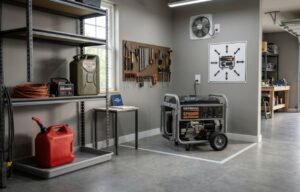
Storage Space vs Installation Space
The cubic feet measurement tells you how much physical space the generator occupies. However, it does not represent the full installation area.
Portable generators need additional room for safe operation, ventilation, and fuel storage. Standby generators also require clearance around the unit based on manufacturer instructions and local codes.
A generator that measures 25 cubic feet may need significantly more outdoor space after considering airflow and maintenance access.
Shipping Volume vs Actual Generator Size
Some online listings show shipping dimensions instead of the generator’s working dimensions. Packaging adds extra material, increasing the cubic feet measurement.
Before purchasing, check the manufacturer’s product specifications rather than relying only on shipping information.
Factors That Change a Generator’s Physical Size
Wattage and Power Output
Higher wattage generators usually require larger engines and fuel systems. A 25 kW standby generator will almost always be larger than a 2,000-watt inverter model.
However, power output alone does not determine size. Modern inverter technology allows some generators to produce strong output in smaller packages.
Fuel Type and Design
Gasoline, propane, and dual-fuel generators can have different dimensions because fuel storage and engine components affect the design.
Portable dual-fuel generators are often larger because they include additional fuel connections and controls.
Choosing the Right Generator Size for Your Space
When selecting a generator, I recommend checking three measurements:
- The generator’s cubic feet.
- The available storage or installation area.
- The required clearance around the unit.
A generator should fit your space without creating safety problems. A compact model may work better for occasional backup, while a larger standby unit makes sense for full-home protection.
If I store several pieces of equipment in the same garage or shed, comparing air compressor storage volume with generator dimensions helps me plan the available space more accurately.
Frequently Asked Questions
1. How many cubic feet is a portable generator?
Most portable generators are between 5 and 10 cubic feet, depending on their wattage and design.
2. How many cubic feet is a whole-house generator?
Whole-house standby generators usually range from 30 to 70 cubic feet.
3. How do I calculate generator cubic feet?
Multiply length, width, and height in inches, then divide by 1,728.
4. Does a higher watt generator always take more space?
Usually, but newer generator designs can provide higher output without a proportional increase in size.
The Space Check Before You Power Up
Knowing how many cubic feet is a generator helps you make a smarter purchase decision. A small inverter model may need only a few cubic feet, while a whole-house standby generator can require several dozen cubic feet.
Before buying, measure your available area and compare it with the manufacturer’s dimensions. The right generator is not only powerful enough for your needs—it should also fit safely where you plan to keep it.

Ryan Mitchell
Ryan Mitchell holds a degree in Civil Engineering and spent over a decade working in construction project estimation, where accurate volume and material calculations were part of his daily work — from concrete pours to landscaping material orders. He founded this site to bring that same precision to everyday calculations, helping DIYers, contractors, and students get fast, accurate cubic footage results without the guesswork. Ryan reviews every calculator and formula on this site for accuracy and writes guides based on real-world measurement scenarios he's encountered on job sites.