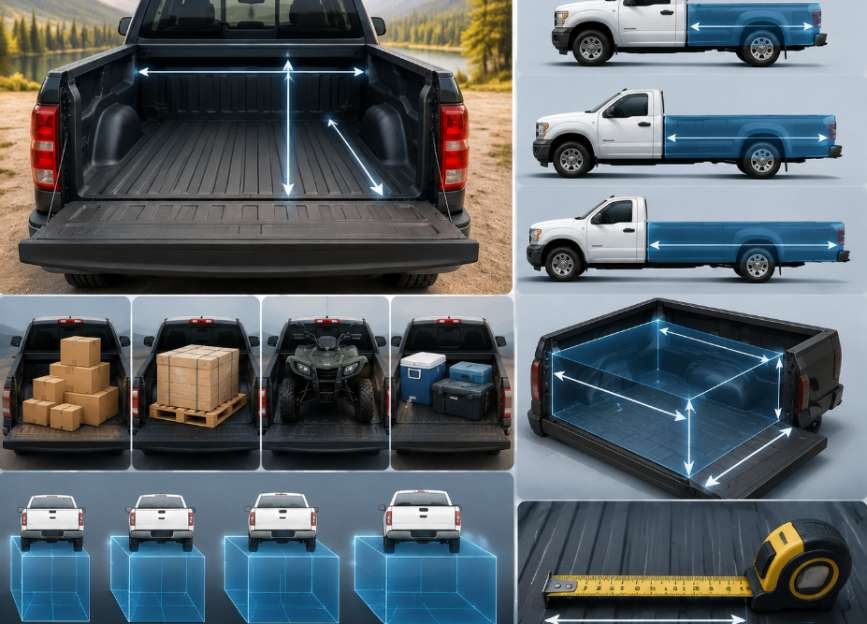
The first time I loaded a pickup truck for a home project, I quickly learned that a truck bed can look much larger than the space it actually provides. A few boxes, bags of mulch, or pieces of lumber can fill the cargo area faster than expected, which made me realize that estimating volume matters before starting any hauling job.
The answer to How Many Cubic Feet Is a Pickup Truck Bed? depends on more than just the truck model. Bed length, width, depth, and truck category all determine how much cargo space is available.
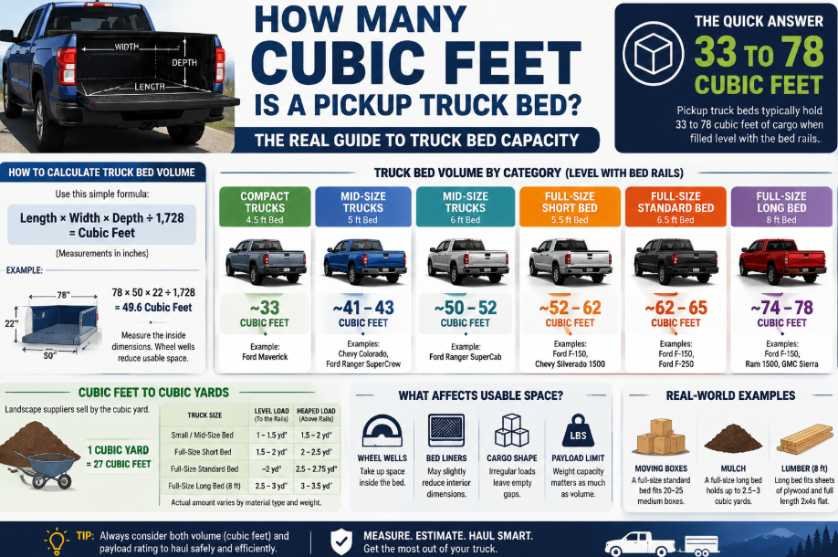
In the United States, pickup truck beds typically range from about 33 to 78 cubic feet when loaded level with the bed rails. Compact pickups offer smaller cargo areas, while full-size long-bed trucks provide enough space for larger equipment, landscaping materials, and construction supplies.
By understanding pickup truck bed volume, I can better plan what fits, avoid unnecessary trips, and make sure I stay within my truck’s safe payload limits.
What Is the Average Pickup Truck Bed Volume?
A typical pickup truck bed provides between 50 and 70 cubic feet of usable cargo volume, although smaller and larger configurations can fall outside this range.
Truck manufacturers design different bed sizes for different types of drivers. A compact pickup is easier to maneuver in cities, while a full-size long bed provides the extra room needed for contractors, farmers, and frequent haulers.
Here is a general breakdown of pickup bed capacity:
A compact truck with a 4.5-foot bed usually holds around 33 cubic feet. A midsize truck with a 5-foot bed commonly offers about 41 to 43 cubic feet, while a 6-foot midsize bed can provide approximately 50 to 52 cubic feet.
Full-size trucks offer the largest range. A short bed measuring around 5.5 feet generally provides about 52 to 62 cubic feet, a standard 6.5-foot bed offers around 62 to 65 cubic feet, and an 8-foot long bed can reach approximately 74 to 78 cubic feet.
How Much Cargo Space Does a Pickup Truck Bed Have by Size?
Compact Pickup Truck Bed Capacity
Compact trucks are designed for drivers who need occasional hauling capability without the size of a traditional full-size pickup.
Models such as the Ford Maverick typically provide around 33 cubic feet of cargo space. These trucks work well for carrying:
- Gardening supplies
- Small furniture
- Camping equipment
- Home improvement materials
For homeowners who mainly complete weekend projects, a compact truck often provides enough room without sacrificing everyday driving comfort.
Midsize Pickup Truck Bed Volume
Midsize trucks offer a balance between maneuverability and hauling ability. Popular US models include the Ford Ranger, Chevrolet Colorado, and Toyota Tacoma.
A midsize pickup bed generally provides about 41 to 52 cubic feet depending on the bed length. A 5-foot bed is usually closer to the lower range, while a 6-foot configuration provides additional storage space.
This size works well for:
- Lumber
- Outdoor equipment
- Toolboxes
- Moving boxes
- Recreational gear
Full-Size Pickup Truck Bed Capacity
Full-size pickups are among the most popular trucks in the United States because they combine passenger comfort with serious hauling capability.
The Ford F-150 is a good example because it comes with multiple bed lengths. A 5.5-foot bed provides about 52.8 cubic feet, a 6.5-foot bed offers around 62.3 cubic feet, and an 8-foot bed provides approximately 77.4 cubic feet of cargo volume. I use a truck bed volume tool when comparing different pickup configurations and estimating available cargo space.
The same concept applies to other full-size trucks, including the Chevrolet Silverado 1500, RAM 1500, and GMC Sierra. A longer cargo box creates more volume but may make parking and daily driving slightly more difficult.
How Do I Calculate the Cubic Feet of a Truck Bed?
When I want to calculate my own truck bed volume, I use a simple measurement formula:
Length × Width × Height ÷ 1,728 = Cubic Feet
I measure the inside dimensions of the bed in inches, multiply them together, and divide by 1,728 because one cubic foot equals 1,728 cubic inches.
For example, if my truck bed measures:
78 inches long × 50 inches wide × 22 inches deep
The calculation would be:
78 × 50 × 22 ÷ 1,728 = approximately 49.6 cubic feet
How Many Cubic Yards Fit in a Pickup Truck Bed?
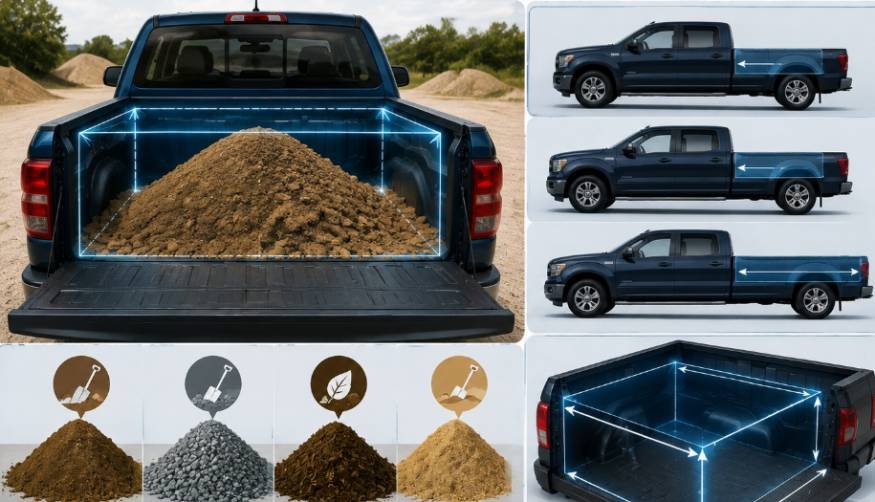
Many US homeowners ask about cubic yards because landscaping suppliers usually sell mulch, soil, gravel, and compost by the cubic yard.
Since:
1 cubic yard = 27 cubic feet
I can convert the truck bed volume by dividing cubic feet by 27.
A small or midsize pickup usually holds about 1 to 1.5 cubic yards of loose material when filled level with the bed.
A full-size standard pickup bed can typically hold around 2 cubic yards.
An 8-foot full-size truck bed may hold approximately 2.5 to 3 cubic yards if the material is piled above the bed rails.
However, I always consider weight before filling the entire bed. Gravel and wet soil can reach the truck’s payload limit before the bed reaches its maximum volume.
How Much Soil, Mulch, or Gravel Can Fit in a Pickup Truck?
The amount of material I can carry depends on both volume and weight.
Mulch, compost, and lightweight materials allow me to use more of the available truck bed capacity. Heavy materials like gravel, sand, and wet soil are different because they can exceed the payload rating before filling the bed completely.
For example, a full-size truck may physically hold several cubic yards of material, but carrying that much gravel may not be safe depending on the truck’s specifications.
Before loading, I check both the truck bed dimensions and the manufacturer’s payload rating.
What Reduces the Usable Space Inside a Pickup Truck Bed?
The advertised cargo volume represents a calculated measurement, not always the exact amount of usable storage space.
Several factors affect real-world capacity:
Wheel wells reduce the flat loading area, especially when carrying wide items.
Bed liners add protection but may slightly reduce interior dimensions.
Cargo shape also changes how efficiently I can use the space. Identical boxes stack easily, while furniture, tools, and irregular equipment often leave empty gaps.
This is why I treat cubic footage as an estimate rather than a guarantee that every inch of the truck bed can be filled.
Is a Longer Truck Bed Better for Hauling?
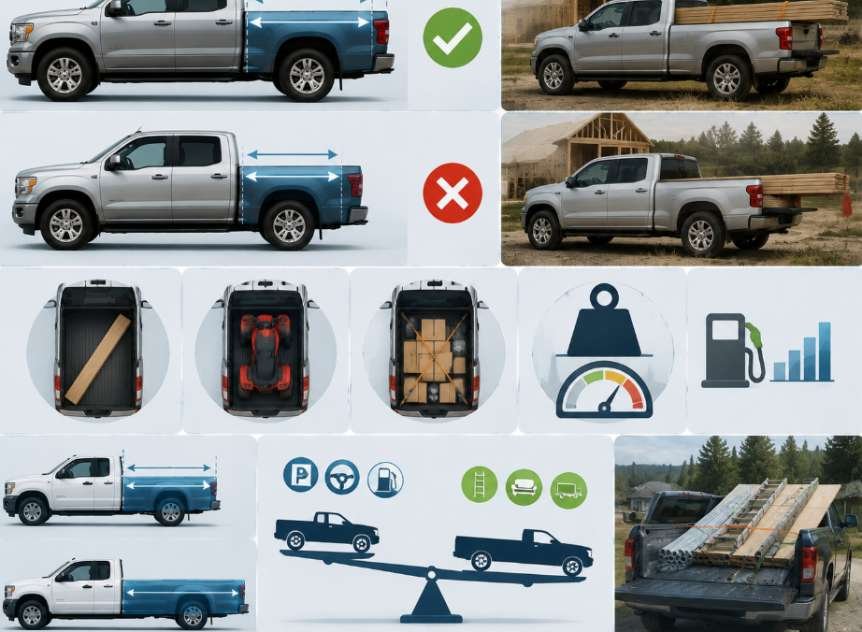
A longer pickup bed is usually better if I frequently transport construction materials, furniture, landscaping supplies, or professional equipment.
An 8-foot bed gives me significantly more room than a 5.5-foot short bed, but it can also increase the overall vehicle length and make tight parking spaces harder to navigate.
Frequently Asked Questions
1. How many cubic feet does a full-size pickup truck bed hold?
A full-size pickup truck bed typically holds between 52 and 78 cubic feet depending on whether it has a short bed, standard bed, or long bed configuration.
2. How do I find the cubic feet of my truck bed?
Measure the inside length, width, and depth of the truck bed in inches. Multiply those measurements and divide the result by 1,728 to calculate cubic feet.
3. How many cubic yards can fit in a pickup truck?
A pickup truck can usually carry about 1 to 2.5 cubic yards of loose material depending on the truck size, bed length, and material weight.
4. Does a bigger truck bed mean more carrying capacity?
A larger bed provides more physical space, but the truck’s payload rating determines how much weight it can safely carry.
Final Thoughts
When I calculate How Many Cubic Feet Is a Pickup Truck Bed, I look beyond the advertised number and consider the truck size, bed length, cargo type, and weight limits. Most pickup beds fall between 33 and 78 cubic feet, giving drivers a wide range of options for work, recreation, and home projects.
Whether I need to haul mulch for a backyard project, move furniture, or transport tools, understanding pickup bed volume helps me choose the right truck and load it safely. The best truck is not always the biggest one; it is the one that provides enough usable space for the jobs I actually need to complete.

Ryan Mitchell
Ryan Mitchell holds a degree in Civil Engineering and spent over a decade working in construction project estimation, where accurate volume and material calculations were part of his daily work — from concrete pours to landscaping material orders. He founded this site to bring that same precision to everyday calculations, helping DIYers, contractors, and students get fast, accurate cubic footage results without the guesswork. Ryan reviews every calculator and formula on this site for accuracy and writes guides based on real-world measurement scenarios he's encountered on job sites.