

A standard 10-inch twin mattress consumes roughly 16.5 cubic feet of space, yet thousands of first-time movers overpay for oversized rental trucks every single year. When you are moving out on a tight budget, guessing your cargo volume leads straight to wasted cash.
Knowing exact spatial dimensions prevents costly mistakes during moves or when renting a storage unit. If you have ever wondered how many cubic feet is a twin mattress, the math comes down to three basic factors: length, width, and thickness.
The Math Behind Twin Mattress Volume
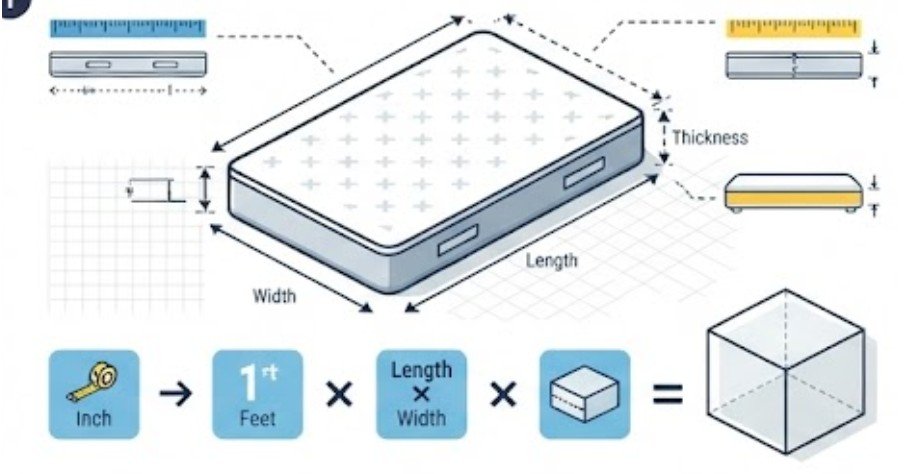
A standard twin mattress in the United States measures 38 inches wide by 75 inches long. While surface dimensions remain static across brands, thickness varies significantly based on internal materials like memory foam or innerspring coils.
To convert these measurements into cubic feet, convert inches into feet before multiplying the parameters:
$$\text{Volume} = \text{Length (ft)} \times \text{Width (ft)} \times \text{Thickness (ft)}$$
For a standard 10-inch model:
- Width: $38 \text{ inches} \div 12 = 3.17 \text{ feet}$
- Length: $75 \text{ inches} \div 12 = 6.25 \text{ feet}$
- Surface Area: $3.17 \times 6.25 = 19.8 \text{ square feet}$
- Thickness: $10 \text{ inches} \div 12 = 0.83 \text{ feet}$
Multiplying $19.8 \text{ sq ft} \times 0.83 \text{ ft}$ yields approximately 16.5 cubic feet.
Cubic Feet Volume Breakdown by Thickness
Mattress depth determines final volume. Extra padding or pillow tops add height that quickly consumes truck space.
| Mattress Thickness | Volume in Cubic Feet | Ideal Moving Box/Space Equivalent |
| 8-inch (Basic/Bunk) | 13.2 cu. ft. | ~3 Large Moving Boxes |
| 10-inch (Standard) | 16.5 cu. ft. | ~4 Large Moving Boxes |
| 12-inch (Pillow-Top) | 19.8 cu. ft. | ~5 Large Moving Boxes |
Calculating exact dimensions for every household item keeps rental costs low. For instance, understanding the cubic-foot capacity of a washing machine can help you estimate total cargo volume and optimize space alongside your mattress.
Why Volume Calculations Save Real Money

First-time renters often make financial decisions based on guesswork. The U.S. Department of Transportation highlights logistics optimization as a primary way consumers avoid transit surcharges. Renting a 15-foot truck when a 10-foot truck suffices can cost an extra $40 to $100 per day, plus higher fuel consumption.
| Cargo Space Optimization Guide | Description |
| Vertical Placement | Use vertical storage techniques to maximize available height. Place items upright and secure them against the wall or side panels to free up valuable floor space while maintaining stability during transport. Ideal for boxes, tools, equipment, and stacked cargo. |
| Compressed Vacuum Storage | Use vacuum compression bags for soft items such as memory foam, bedding, clothing, and fabric-based cargo. Reduces item volume and depth by up to 50%, creating more usable cargo capacity and easier organization. |
| Modular Packing Systems | Arrange cargo using stackable bins, adjustable dividers, and modular containers. This prevents wasted gaps, improves accessibility, and allows faster loading and unloading. |
| Weight Distribution Planning | Place heavier items low and close to the vehicle’s center of gravity. Balanced weight placement improves vehicle handling, reduces strain on suspension, and increases safety during travel. |
| Multi-Layer Packing Strategy | Create layers based on access frequency: frequently used items on top, emergency tools and essentials within reach, and long-term storage items at the bottom. This minimizes unnecessary unloading. |
| Unused Space Utilization | Take advantage of hidden areas such as corners, gaps between larger items, under-seat spaces, and overhead compartments. Small storage solutions can significantly increase total cargo efficiency. |
| Secure Fastening Methods | Use straps, nets, hooks, and locking systems to prevent movement during transit. Properly secured cargo reduces damage risk and keeps the storage area organized. |
| Digital Cargo Planning | Use inventory apps or digital planning tools to map available space before loading. This helps estimate capacity, track stored items, and optimize future packing layouts. |
Packing a truck efficiently depends on spatial layout. Placing a twin mattress flat takes up nearly 20 square feet of floor space. Standing it vertically on its side reduces its floor footprint to less than 3 square feet, leaving ample room for boxes and furniture.
4-Step Checklist for Moving a Twin Mattress on a Budget
Moving on a budget requires careful planning. Follow this simple checklist to protect your mattress while keeping costs minimal:
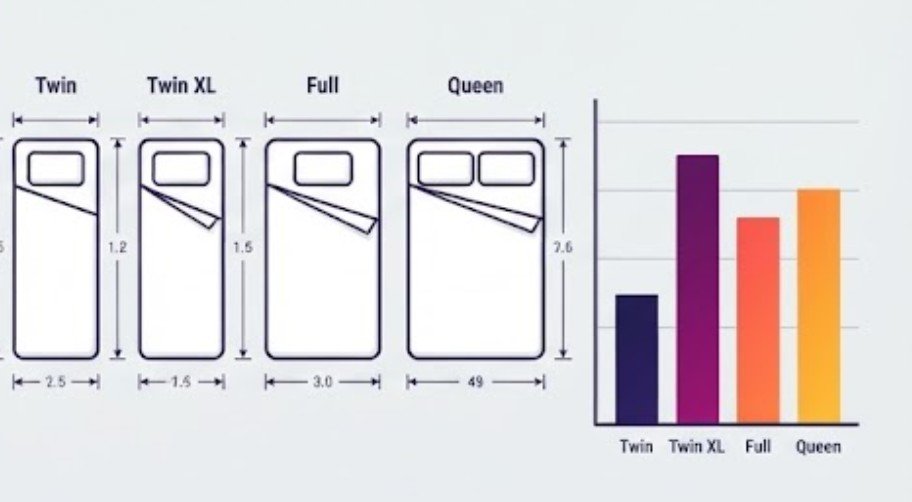
- Measure Mattress Thickness: Use a tape measure from the bottom seam to the top edge. Do not guess depth.
- Determine Compressibility: Pure foam mattresses compress safely in vacuum bags, cutting depth up to 50%. Never attempt to compress innerspring mattresses, as bending metal coils damages the internal structure.
- Invest in a Heavy-Duty Mattress Bag: A $10 tear-resistant plastic bag prevents dirt, moisture, and pest damage during transit. If you’re bagging bedding separately, it also helps to know how many cubic feet is a blanket, so you don’t underestimate the extra space blankets and pillows add to your load.
- Map Your Rental Space: Factor in the vertical height of your moving vehicle. Ensure the interior cargo height accommodates a 75-inch mattress stored upright.
Exceptions and Real-World Limitations
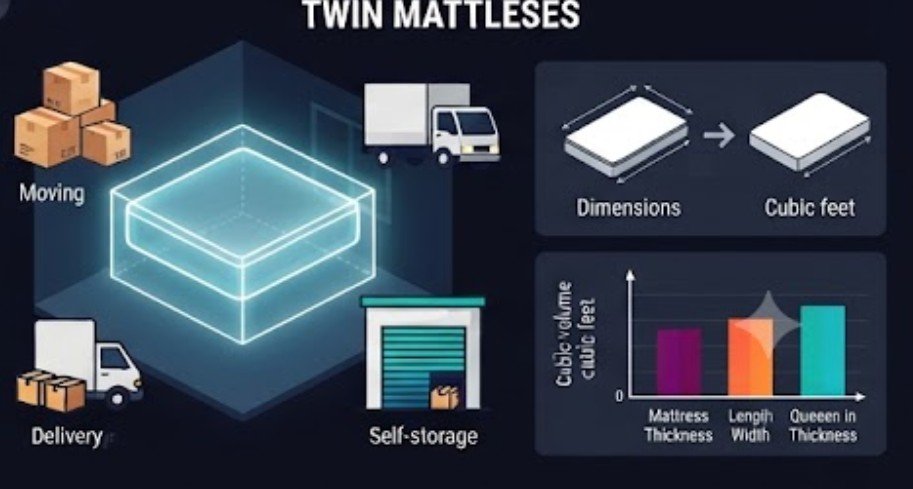
Calculations on paper assume rigid box shapes, but mattresses yield under pressure.
- Bed Frames & Box Springs: A twin box spring adds another 13 to 16 cubic feet of rigid volume because it cannot compress.
- Irregular Loading Spaces: Curved van walls and wheel wells reduce usable cubic footage. Allow a 10% buffer when calculating total cargo volume.
- Weight Distribution Rules: The Occupational Safety and Health Administration emphasizes proper weight distribution to prevent load shifts, which matters even more in a minivan’s tighter cargo space. Secure upright mattresses with ratchet straps against the minivan’s interior walls to keep them stable during transit.
Frequently Asked Questions
1. Is a twin XL basically a full?
No. A twin XL is 38 inches wide by 80 inches long, matching a full’s length but remaining 16 inches narrower than a standard full mattress.
2. What is the minimum room size needed for a twin bed?
A room measuring at least 7 feet by 10 feet provides adequate space for a twin bed, nightstand, and comfortable walking clearance.
3. Are there two sizes of twin mattresses?
Yes. Standard twin (38″ x 75″) and Twin XL (38″ x 80″) are the two common variations in North America.
4. How many cubic feet is a full mattress?
A standard 10-inch thick full mattress (54″ x 75″) equals approximately 23.4 cubic feet of total volume.
Calculating spatial volume protects your budget when moving into a new space. A standard twin mattress takes up between 13.2 and 19.8 cubic feet depending on thickness. By measuring before loading and utilizing vertical space, you can select the smallest viable rental truck and avoid paying for empty air.

Ryan Mitchell
Ryan Mitchell holds a degree in Civil Engineering and spent over a decade working in construction project estimation, where accurate volume and material calculations were part of his daily work — from concrete pours to landscaping material orders. He founded this site to bring that same precision to everyday calculations, helping DIYers, contractors, and students get fast, accurate cubic footage results without the guesswork. Ryan reviews every calculator and formula on this site for accuracy and writes guides based on real-world measurement scenarios he's encountered on job sites.


