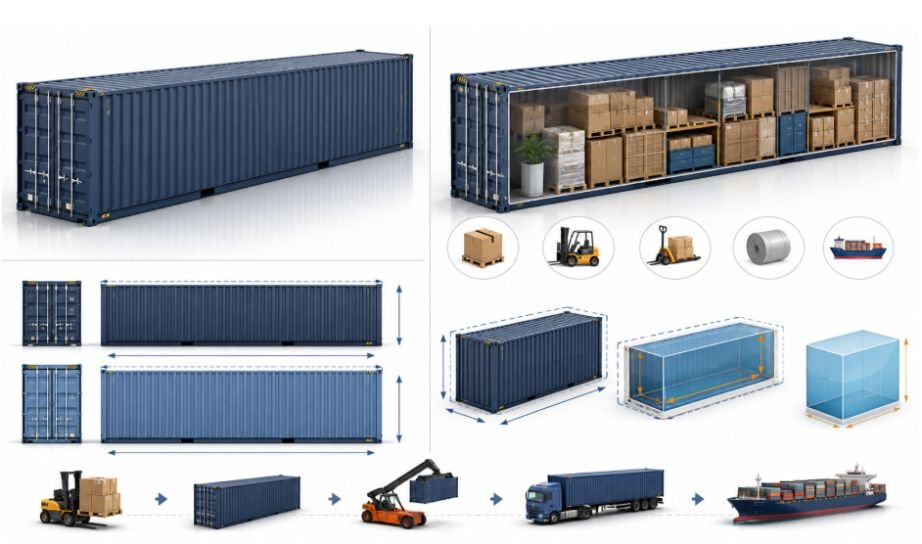
A shipping container may look like a simple steel box, but choosing the right size requires more than knowing its length. When I first compared container options for storage and transportation, I discovered that a 40-foot container’s advertised size does not always match the space you can actually use. The walls, height differences, loading methods, and cargo shapes all affect the final capacity.
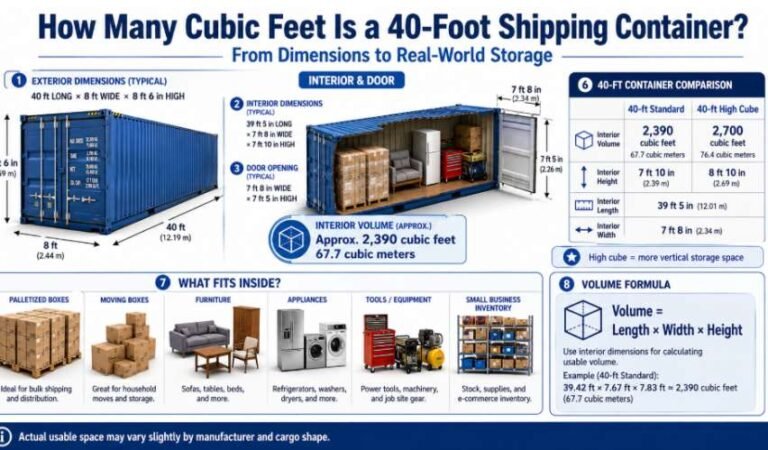
The most common question buyers and businesses ask is: How Many Cubic Feet Is a 40-Foot Shipping Container? A standard 40-foot shipping container offers approximately 2,389–2,390 cubic feet of internal volume, while a 40-foot high cube container provides nearly 2,700 cubic feet of additional storage capacity.
Whether you are planning a household move, expanding business inventory storage, or searching for a secure on-site storage solution in the US, understanding the true cubic footage helps you choose the right container without wasting money on unnecessary space.
In this guide, I’ll break down the exact dimensions, usable cargo capacity, pallet limits, and practical storage possibilities of a 40-foot shipping container.
How Many Cubic Feet Does a Typical Cargo Trailer Hold?
Cargo trailers vary widely in size and purpose, ranging from compact enclosed models for personal hauling to large freight trailers used in commercial transportation for moving palletized goods, equipment, and other cargo over long distances. Their actual usable capacity depends on the trailer’s interior length, width, and height rather than its exterior dimensions alone.
For most consumer and small-business users, common enclosed cargo trailer dimensions include:
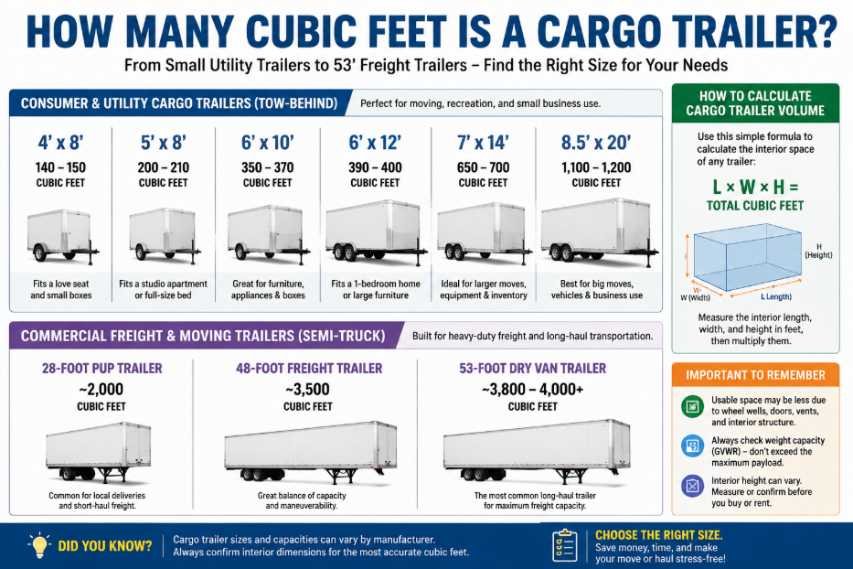
| Cargo Trailer Size | Approximate Capacity |
| 4×8 cargo trailer | 140–150 cubic feet |
| 5×8 cargo trailer | 200–210 cubic feet |
| 6×10 cargo trailer | 350–370 cubic feet |
| 6×12 cargo trailer | About 396 cubic feet |
| 7×14 cargo trailer | 650–700 cubic feet |
| 8.5×20 cargo trailer | 1,100–1,200 cubic feet |
A 6×12 cargo trailer is one of the most common choices in the US because it provides enough room for furniture, household belongings, motorcycles, tools, and business equipment without requiring a large commercial vehicle. A typical 6×12 enclosed trailer offers nearly 400 cubic feet of storage space.
How Do You Calculate Cargo Trailer Cubic Feet?
The easiest way to perform a trailer volume calculation is to multiply the interior measurements:
Length × Width × Height = Total Cubic Feet
For example, if a trailer has:
- 12 feet of interior length
- 6 feet of interior width
- 6 feet of interior height
The calculation would be:
12 × 6 × 6 = 432 cubic feet
However, the actual usable storage capacity may be slightly lower because trailer walls, wheel wells, doors, flooring, and interior framing reduce available space.
Using a cubic feet calculator can make this process easier when comparing different trailer models.
How Much Space Does a 6×12 Cargo Trailer Have?
A 6×12 cargo trailer volume is one of the most searched measurements because this size works well for personal and commercial hauling.
Comparing trailer capacity with pickup truck cargo space can also help readers understand which option offers enough room for their particular hauling needs.
A standard 6×12 enclosed cargo trailer provides approximately 396 cubic feet of storage capacity.
This size is commonly used for:
- Apartment and small home moves
- Landscaping equipment
- Construction tools
- Motorcycles and recreational equipment
- Business deliveries
- Storage transportation
For many US households, a 6×12 trailer provides a practical balance between towing ability and storage capacity.
Commercial Cargo Trailers Can Hold Thousands of Cubic Feet
The phrase “cargo trailer” does not only refer to small enclosed trailers. In transportation and logistics, commercial cargo trailers are much larger and are designed for long-distance freight movement.
Common commercial trailer capacities include:
| Commercial Trailer Type | Approximate Cubic Feet |
| 28-foot pup trailer | Around 2,000 cubic feet |
| 48-foot freight trailer | Around 3,500 cubic feet |
| 53-foot dry van trailer | 3,500–4,000+ cubic feet |
A 53-foot dry van is one of the most common freight trailers used in the United States. Depending on the interior dimensions, these trailers can provide around 4,000 cubic feet of cargo space.
These trailers are used for transporting:
- Consumer goods
- Electronics
- Packaged products
- Industrial materials
- Warehouse inventory
- Palletized freight
Unlike consumer trailers, commercial trailers are designed around maximum cargo efficiency, weight distribution, and nationwide transportation requirements.
What Can Fit Inside Different Cargo Trailer Sizes?
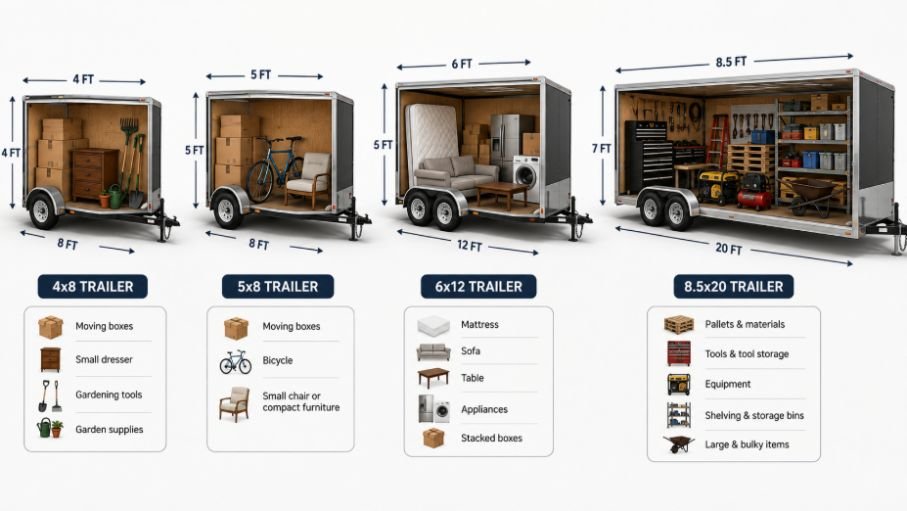
Knowing the cubic capacity is helpful, but most people want to know what they can actually carry.
A small 4×8 cargo trailer works well for lighter loads such as:
- Several moving boxes
- Small furniture pieces
- Gardening equipment
- Personal belongings
A 5×8 trailer is often suitable for studio apartments or small moves.
A 6×12 trailer can typically handle larger household items, including:
When planning a larger move, comparing trailer capacity with moving truck storage space can also help determine which option provides enough room for household belongings.
- Beds
- Sofas
- Tables
- Appliances
- Multiple boxes
Larger enclosed trailers and freight trailers are better suited for contractors, businesses, and commercial shipping needs.
Why Advertised Trailer Size Is Different From Usable Space
One common mistake is assuming exterior measurements equal interior capacity. Manufacturers advertise trailer dimensions based on size classifications, but the actual storage area depends on the inside measurements.
Several factors reduce usable cargo volume:
Interior Structure
Walls, insulation, flooring, and support beams take up space.
Door Clearance
A trailer may have enough cubic feet for an item, but the item still needs to fit through the opening.
Wheel Wells and Equipment
Wheel wells, shelves, cabinets, and tie-down systems can reduce available storage.
Cargo Shape
Oddly shaped items often leave unused gaps, meaning the full cubic footage is rarely filled perfectly.
How Do I Choose the Right Cargo Trailer Size?
When choosing a cargo trailer, I recommend considering what you are transporting rather than selecting a trailer based only on size.
For moving:
- Small apartment: 4×8 or 5×8 trailer
- One-bedroom home: 5×8 or 6×10 trailer
- Larger household: 6×12 or larger trailer
For businesses, focus on both volume and weight capacity. A trailer may have enough room but still exceed its maximum payload rating if you are carrying heavy equipment or materials.
The best cargo trailer size guide should consider both cubic feet and real-world usability.
Frequently Asked Questions
1. How many cubic feet is a 6×12 cargo trailer?
A typical 6×12 cargo trailer provides about 396 cubic feet of storage space. The exact amount can vary depending on interior height and design features.
2. How many cubic feet is a 53-foot trailer?
A 53-foot dry van trailer usually provides between 3,500 and 4,000 cubic feet of cargo space depending on the trailer’s interior dimensions.
3. What formula is used for trailer volume?
The standard formula is length multiplied by width multiplied by height. Measurements should be taken from the interior of the trailer for the most accurate result.
4. Is a cargo trailer better than a moving truck?
It depends on the job. Cargo trailers are convenient for smaller moves and equipment hauling, while moving trucks and commercial trailers provide much larger storage capacity for bigger loads.
Final Thoughts
When comparing cargo trailers, I always look beyond the advertised size and focus on actual usable storage space. A compact trailer may be perfect for a weekend project, while a commercial freight trailer can handle thousands of cubic feet of goods across the country.
The answer to how many cubic feet a cargo trailer can hold can range from about 140 cubic feet in a small utility trailer to more than 4,000 cubic feet in a large commercial dry van. Understanding dimensions, capacity, and real-world usage makes it much easier to select the right trailer for your needs.
If you want to estimate the exact volume of any trailer based on its length, width, and height, you can use the cubic feet calculator to get a quick and accurate measurement.

Ryan Mitchell
Ryan Mitchell holds a degree in Civil Engineering and spent over a decade working in construction project estimation, where accurate volume and material calculations were part of his daily work — from concrete pours to landscaping material orders. He founded this site to bring that same precision to everyday calculations, helping DIYers, contractors, and students get fast, accurate cubic footage results without the guesswork. Ryan reviews every calculator and formula on this site for accuracy and writes guides based on real-world measurement scenarios he's encountered on job sites.