

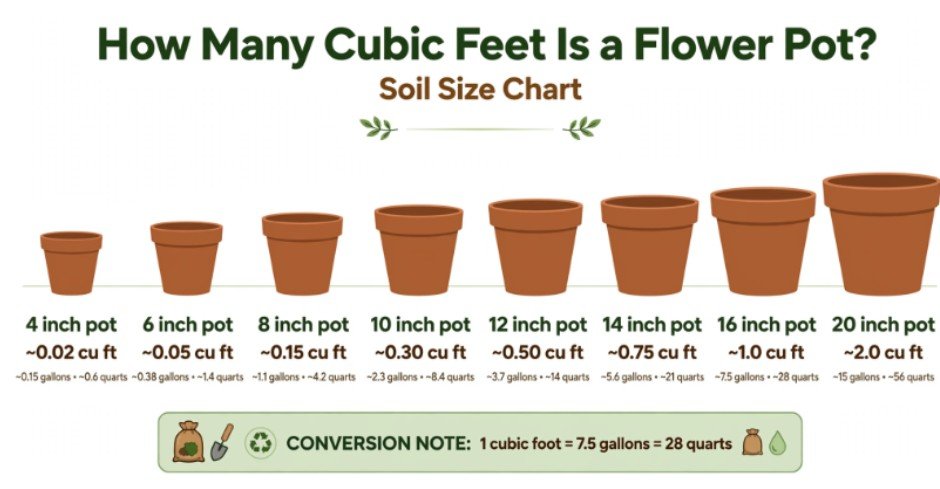
The last time I repotted several patio plants, I bought soil based only on pot diameter. I ran out halfway through the job. The problem was simple: diameter does not tell me the complete volume.
So, how many cubic feet is a flower pot? Most common pots hold about 0.1 to 1.5 cubic feet. A typical 12-inch tapered pot needs approximately 0.58 cubic feet of potting mix. The exact amount depends on its interior width, depth, taper, and the plant’s root ball.
Quick Answer: Average Flower Pot Capacity
There is no universal flower pot capacity. A small tabletop pot may hold less than 0.1 cubic foot. A large patio container can require more than 1.5 cubic feet.
For quick shopping estimates, I use these general ranges:
| Pot diameter | Approximate soil capacity | Approximate US dry quarts |
| 6 inches | 0.07 cubic feet | 1.8 quarts |
| 8 inches | 0.17 cubic feet | 4.4 quarts |
| 10 inches | 0.33 cubic feet | 8.5 quarts |
| 12 inches | 0.58 cubic feet | 14.9 quarts |
| 14 inches | 0.91 cubic feet | 23.4 quarts |
| 16 inches | 1.36 cubic feet | 35.0 quarts |
These figures are planning estimates for common tapered containers. Two pots with the same upper diameter may have different depths and base widths.
Flower Pot Soil Volume Chart Explained
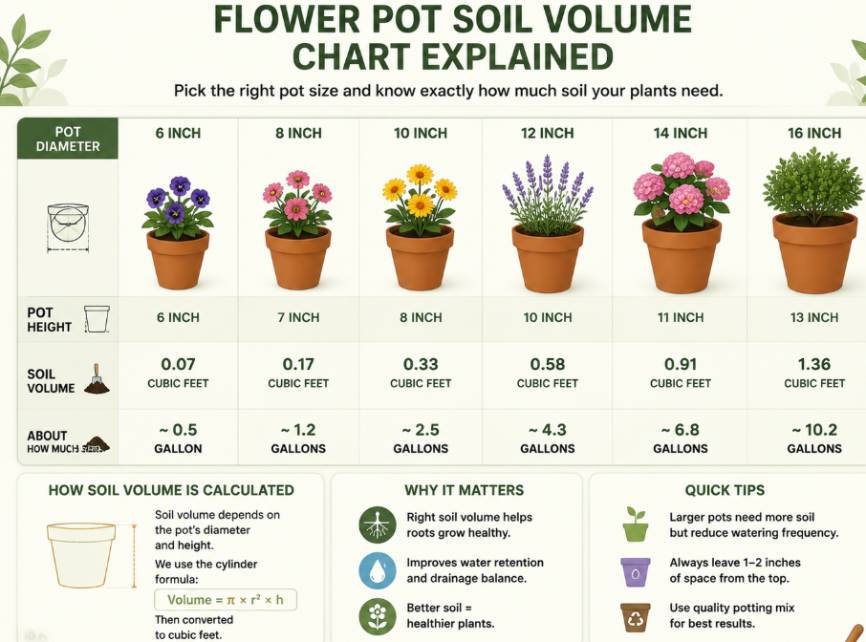
The chart gives a useful answer when someone asks how many cubic feet is a flower pot, but it should not replace interior measurements. Manufacturers often list a pot by its top diameter. That measurement may include a thick rim and does not describe its usable cavity.
Nursery containers can also be labeled by trade size rather than exact liquid or dry capacity. I check the product specifications before ordering large amounts of mix.
One cubic foot equals 1,728 cubic inches and about 25.7 US dry quarts. These conversions come from the NIST Handbook 44 measurement tables.
Why Pot Diameter Does Not Reveal Exact Soil Capacity
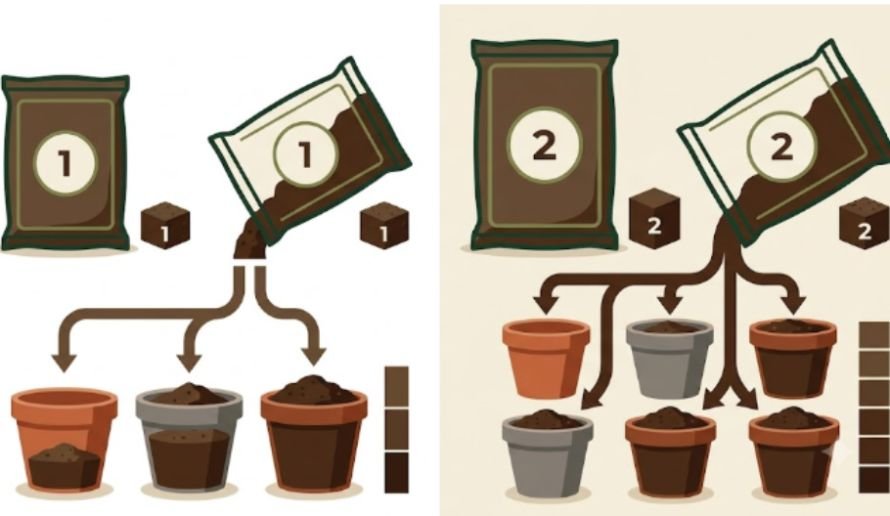
When I estimate how many cubic feet is a flower pot, I look at its complete interior shape. Depth and base width can change the answer as much as the top diameter.
Tapered Sides Reduce Interior Volume
Most round flower pots resemble a truncated cone rather than a cylinder. Their bases are narrower than their openings. A basic cylinder calculation therefore overestimates the required soil.
A decorative pot may taper sharply or have thick walls. Self-watering containers lose more space to reservoirs, inserts, and false bottoms.
Plants and Watering Space Displace Potting Mix
A rooted plant occupies part of the container. I also leave roughly one inch below the rim for watering. Penn State Extension recommends leaving this space when repotting houseplants so water does not immediately spill over the edge.
Potting mix settles after watering. Buying about 5% to 10% more than the calculated requirement gives me enough material for topping up later.
How to Calculate Flower Pot Volume
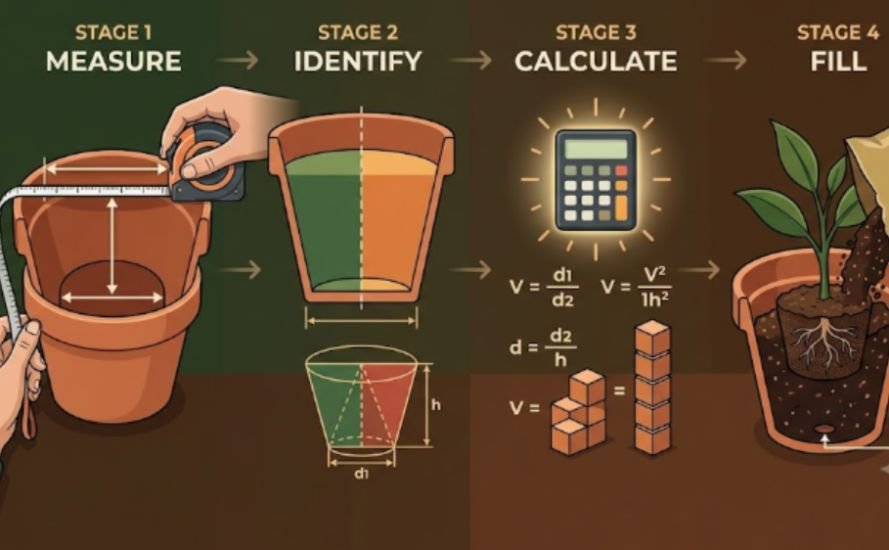
Accurate measurements provide a better result than relying on the pot’s advertised size. I measure the interior dimensions, not the exterior walls or rim.
Round Cylindrical Pot Formula
For a straight-sided round pot, use:
Volume in cubic feet = 3.1416 × radius² × interior height ÷ 1,728
The radius equals half the interior diameter. Keep every measurement in inches before dividing by 1,728.
Tapered Flower Pot Formula
For a pot with a narrower base, use the truncated-cone formula:
Volume = 3.1416 × height × (R² + Rr + r²) ÷ 3
In this formula, R is the top interior radius, r is the bottom interior radius, and height is the usable depth. Divide the cubic-inch result by 1,728.
This approach makes how many cubic feet is a flower pot easier to answer without treating every round container like a perfect cylinder.
Square and Rectangular Planter Formula
Multiply the interior length by the interior width and usable depth. Then divide by 1,728:
Cubic feet = length × width × depth ÷ 1,728
The same principle works when estimating raised garden bed volume. Large or irregular planters can be divided into simple sections and calculated separately.
Worked Example for a 12-Inch Flower Pot
Suppose I have a tapered pot with a 12-inch top interior diameter, an 8-inch bottom diameter, and an 11-inch usable depth.
The top radius is 6 inches, while the bottom radius is 4 inches:
3.1416 × 11 × (6² + 6 × 4 + 4²) ÷ 3 = 875.46 cubic inches
Now I convert cubic inches to cubic feet:
875.46 ÷ 1,728 = 0.51 cubic feet
A straight-sided cylinder using the 12-inch top diameter would produce 0.72 cubic feet. That is about 41% more than the tapered-pot result. This comparison is my key practical finding: using only the top diameter can cause significant overbuying.
After allowing for minor settling, I would reserve about 0.55 cubic feet of mix. An established root ball would lower the amount needed at planting time.
How Many Flower Pots Will a Bag of Soil Fill?
After calculating how many cubic feet is a flower pot, divide the bag’s stated volume by the capacity of one empty pot.
A one-cubic-foot bag can theoretically fill about three 10-inch pots. It can fill roughly one and three-quarter 12-inch pots. A two-cubic-foot bag can fill about six 10-inch pots or three to four 12-inch pots.
Actual coverage changes when plants already have large root balls. Spillage, settling, and leaving space below the rim also affect the final number.
The same volume planning matters when calculating garden bed capacity. For moving loose mix, wheelbarrow capacity can help estimate how many loads you will need.
Choosing the Right Amount of Potting Mix
I avoid filling containers with ordinary garden soil. It can compact inside a pot and restrict drainage. Penn State Extension recommends a purchased soilless potting mix for containers because garden soil is often too heavy.
Drainage matters as much as volume. The University of Minnesota Extension recommends containers with drainage holes so plants do not sit in water. The university also warns that oversized pots can make moisture levels harder to judge.
Before buying soil, I follow four practical steps: measure the interior, use the correct shape formula, subtract the root-ball space, and add a small settling allowance. This produces a more useful answer than relying on diameter alone.
Frequently Asked Questions
1. How much soil does a 12-inch flower pot hold?
A standard tapered 12-inch pot holds about 0.58 cubic feet, although its exact depth and bottom width can change the amount.
2. How many flower pots will one cubic foot of soil fill?
One cubic foot typically fills about three 10-inch pots or fewer than two empty 12-inch pots.
3. How do I calculate soil for a tapered flower pot?
Use the truncated-cone formula with the pot’s top radius, bottom radius, and usable interior depth.
4. Is pot size measured from the inside or outside?
Retail sizes usually describe the outer top diameter, but soil calculations should use interior measurements.
The Dirt Is Settled: Buy Smarter, Pot Better
When I need to know how many cubic feet is a flower pot, I never trust the label alone. I measure the usable interior and account for taper, roots, watering space, and settling.
For a fast estimate, a 12-inch pot needs about 0.58 cubic feet. For a precise purchase, calculate each container and add 5% to 10%. That small buffer saves a second trip to the garden center without leaving an unnecessary bag in the garage.

Ryan Mitchell
Ryan Mitchell holds a degree in Civil Engineering and spent over a decade working in construction project estimation, where accurate volume and material calculations were part of his daily work — from concrete pours to landscaping material orders. He founded this site to bring that same precision to everyday calculations, helping DIYers, contractors, and students get fast, accurate cubic footage results without the guesswork. Ryan reviews every calculator and formula on this site for accuracy and writes guides based on real-world measurement scenarios he's encountered on job sites.


